 中文
中文 English
MOSFET Selection for Efficient Power Management: ZVN4306GTA, DMN6140L-13 vs. China Alternatives VBJ1695, VB1695
Number of views:9999
 Back to previous page
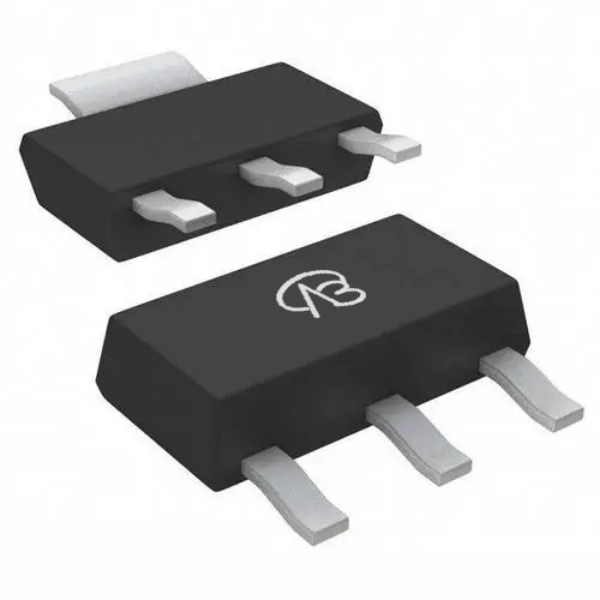
Comparative Analysis: ZVN4306GTA (N-channel, SOT-223) vs. VBJ1695
Analysis of the Original Model (ZVN4306GTA) Core:
This is a 60V N-channel MOSFET from DIODES in a SOT-223 package. Its design core is to minimize on-resistance while maintaining excellent switching performance, making it ideal for efficient power management. Key advantages include a continuous drain current (Id) of 2.1A and an on-resistance (RDS(on)) of 220mΩ at 10V gate drive.
Compatibility and Differences of the Domestic Alternative (VBJ1695):
VBsemi's VBJ1695 is also in a SOT-223 package and serves as a pin-to-pin compatible alternative. The main differences are in electrical parameters: VBJ1695 offers a significantly lower on-resistance of 76mΩ at 10V and a higher continuous current rating of 4.5A, while maintaining the same 60V drain-source voltage rating.
Key Application Areas:
Original Model ZVN4306GTA: Suitable for medium-current switching applications up to 2.1A in 60V systems where SOT-223 package is preferred, such as power management in consumer electronics, adapter circuits, or LED drivers.
Alternative Model VBJ1695: Better suited for applications requiring lower conduction loss and higher current capability (up to 4.5A) within the same voltage and package footprint, offering a performance upgrade in similar circuits.
Comparative Analysis: DMN6140L-13 (N-channel, SOT-23) vs. VB1695
Analysis of the Original Model (DMN6140L-13) Core:
This is a 60V N-channel MOSFET from DIODES in a compact SOT-23 package. It represents a new generation designed to minimize on-resistance while keeping excellent switching performance. Its key features include a continuous drain current of 2.3A and an on-resistance of 170mΩ at a 4.5V gate drive.
Compatibility and Differences of the Domestic Alternative (VB1695):
VBsemi's VB1695 is a direct pin-to-pin alternative in the SOT-23-3 package. It shows enhanced performance: a lower on-resistance of 75mΩ at 10V (86mΩ at 4.5V) and a higher continuous current rating of 4A, compared to the original's 2.3A, while maintaining the 60V voltage rating.
Key Application Areas:
Original Model DMN6140L-13: Ideal for space-constrained applications requiring efficient switching at currents up to 2.3A in 60V systems, such as load switches, battery management, or signal switching in portable devices.
Alternative Model VB1695: More suitable for applications demanding higher current capacity (up to 4A) and significantly lower on-resistance in the same ultra-compact SOT-23 footprint, providing a performance boost in power management and switching circuits.
Conclusion:
This analysis reveals two distinct upgrade paths with domestic alternatives:
For the SOT-223 package, VBJ1695 offers a substantial improvement in both current handling (4.5A vs. 2.1A) and on-resistance (76mΩ vs. 220mΩ) over the ZVN4306GTA.
For the SOT-23 package, VB1695 provides a significant upgrade in current capability (4A vs. 2.3A) and a much lower on-resistance (75mΩ vs. 170mΩ) compared to the DMN6140L-13.
The core takeaway is precise requirement matching. These domestic alternatives not only offer solid compatibility but also deliver enhanced performance in key parameters, giving engineers more flexible and resilient options for design optimization and cost control. Understanding each device's specifications is key to leveraging its full potential in your circuit.

Download PDF document
 Download now


