 中文
中文 English
MOSFET Selection for Low to Medium Power Applications: ZVN3310A, DMT10H025SSS-13 vs. China Alternatives VBR9N1219, VBA1102N
Number of views:9999
 Back to previous page
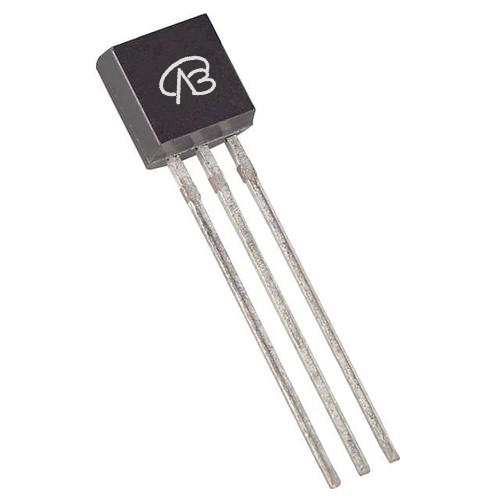
Comparative Analysis: ZVN3310A (N-channel) vs. VBR9N1219
Analysis of the Original Model (ZVN3310A) Core:
This is a 100V, N-channel MOSFET from DIODES in a through-hole TO-92 package. Its design focuses on providing reliable high-voltage switching for low-current applications. Key features include a drain current of 200mA and an on-resistance of 10Ω at 10V gate drive. It is a fundamental choice for basic high-voltage, low-power switching.
Compatibility and Differences of the Domestic Alternative (VBR9N1219):
VBsemi's VBR9N1219 is also offered in a TO-92 package, providing a form-factor compatible alternative. The key differences are in electrical parameters: VBR9N1219 has a significantly lower voltage rating (20V) but offers vastly superior current capability (4.8A) and much lower on-resistance (18mΩ @10V). This represents a shift from high-voltage/low-current to lower-voltage/higher-current performance.
Key Application Areas:
Original Model ZVN3310A: Ideal for simple, high-voltage signal switching, isolation, or low-power auxiliary circuits in offline power supplies, where current demands are minimal (below 200mA).
Alternative Model VBR9N1219: Suited for applications requiring higher load current and lower conduction loss in lower voltage domains (e.g., 12V-20V systems), such as power switches for peripherals, fan control, or low-side switches in DC-DC converters.
Comparative Analysis: DMT10H025SSS-13 (N-channel) vs. VBA1102N
This comparison shifts to surface-mount, medium-power MOSFETs where low on-resistance and efficient switching are critical.
Analysis of the Original Model (DMT10H025SSS-13) Core:
This 100V N-channel MOSFET from DIODES uses an SOP-8 package. It is engineered to minimize conduction loss with a low RDS(on) of 23mΩ at 10V while handling a continuous current of 7.4A. It balances good switching performance with thermal capability in a compact footprint, targeting efficient power management.
Compatibility and Differences of the Domestic Alternative (VBA1102N):
VBsemi's VBA1102N offers a direct pin-to-pin compatible alternative in an SOP-8 package. It matches the 100V voltage rating and provides enhanced performance: a higher continuous current of 10.4A and a lower on-resistance of 20mΩ at 10V. This makes it a "drop-in upgrade" for improved efficiency and current handling.
Key Application Areas:
Original Model DMT10H025SSS-13: An excellent choice for medium-power 48V-100V applications requiring efficient switching, such as primary-side switches in low-power SMPS, motor drives for small appliances, or power management in telecom/industrial modules.
Alternative Model VBA1102N: Perfect for upgrade scenarios or new designs where lower conduction loss and higher current capacity are desired within the same 100V range. It is well-suited for more demanding DC-DC conversion, motor control, and power distribution stages.
Conclusion:
This analysis reveals two distinct substitution strategies:
For the ZVN3310A, the alternative VBR9N1219 is not a direct parametric match but offers a compelling solution for different needs—shifting the application focus from high-voltage signal switching to higher-current, lower-voltage power switching.
For the DMT10H025SSS-13, the alternative VBA1102N provides a true performance-enhanced, pin-compatible replacement, offering lower RDS(on) and higher current in the same voltage class.
The core takeaway remains requirement matching. Domestic alternatives like VBR9N1219 and VBA1102N provide valuable options for supply chain resilience, cost optimization, and even performance gains in specific upgrade paths, giving engineers greater flexibility in their design decisions.

Download PDF document
 Download now


