 中文
中文 English
MOSFET Selection for Low-Power and High-Current Applications: ZVN0124A, DMNH6022SSD-13 vs. China Alternatives VBR9N2001K, VBA3615
Number of views:9999
 Back to previous page
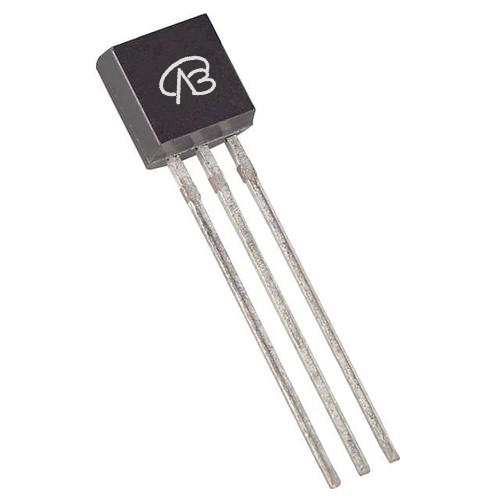
Comparative Analysis: ZVN0124A (N-channel) vs. VBR9N2001K
Analysis of the Original Model (ZVN0124A) Core:
This is a 240V N-channel MOSFET from DIODES in a classic TO-92 package. Its design core is to provide a simple, cost-effective high-voltage switching solution for low-current applications. Key features include a high drain-source voltage (Vdss) of 240V, a continuous drain current (Id) of 160mA, and an on-resistance (RDS(on)) of 16Ω at 10V gate drive. It is characterized by its high voltage capability and suitability for low-power signal switching.
Compatibility and Differences of the Domestic Alternative (VBR9N2001K):
VBsemi's VBR9N2001K is also offered in a TO-92 package, providing basic pin-to-pin compatibility. The main differences lie in the electrical parameters: VBR9N2001K has a slightly lower voltage rating (200V vs. 240V) but offers significantly improved conduction performance. Its on-resistance is much lower at 1000mΩ (1Ω) @10V, and it supports a higher continuous current of 0.6A. This makes it a more robust switch for applications within its voltage range.
Key Application Areas:
Original Model ZVN0124A: Ideal for classic low-power, high-voltage signal switching applications where minimal current is required. Typical uses include:
Telephone handset circuits and other telecom interface switching.
High-voltage signal isolation or level shifting in low-current paths.
Simple load switching in high-voltage, micro-power control circuits.
Alternative Model VBR9N2001K: Better suited for applications requiring higher current handling (up to 0.6A) and lower conduction loss than the original part, within a 200V system. It is a suitable upgrade where improved efficiency is needed in similar circuit topologies.
Comparative Analysis: DMNH6022SSD-13 (N-channel) vs. VBA3615
This comparison shifts focus to high-current, low-voltage applications where efficiency and thermal performance are paramount.
Analysis of the Original Model (DMNH6022SSD-13) Core:
This is a 60V N-channel MOSFET from DIODES in an SO-8 package, representing a design focused on minimizing conduction loss. Its core advantages are:
Low On-Resistance: An RDS(on) as low as 27mΩ at 10V gate drive, reducing power loss during conduction.
High Current Capability: A continuous drain current rating of 22.6A, suitable for medium-to-high power applications.
Optimized Package: The SO-8 package offers a good balance between power handling (2.1W Pd) and board space.
Compatibility and Differences of the Domestic Alternative (VBA3615):
VBsemi's VBA3615 is a dual N-channel MOSFET in an SOP-8 package. While not a single-die equivalent, it can serve as a functional alternative in many circuits. Its key performance highlights include:
Superior Conduction Performance: It features an even lower on-resistance of 12mΩ @10V per channel.
High Current Rating: Each channel supports a continuous current of 10A. When channels are paralleled, it can handle significant total current.
Dual-Die Design: Offers design flexibility for synchronous rectification or driving two separate loads.
Key Application Areas:
Original Model DMNH6022SSD-13: Excellent for space-constrained, high-efficiency power management applications requiring a single high-current switch. Typical uses include:
Synchronous rectification in DC-DC converters (12V/24V/48V systems).
Motor drives for small appliances, fans, or tools.
Load switches and power distribution in servers, telecom, or computing equipment.
Alternative Model VBA3615: A versatile choice offering enhanced performance and flexibility. It is well-suited for:
High-efficiency synchronous buck converter designs where its low RDS(on) reduces losses.
Circuits that can benefit from or be adapted to use a dual MOSFET, potentially saving board space.
Applications demanding lower conduction loss and robust current handling within the 60V range.
Summary
This analysis reveals two distinct selection pathways based on application needs:
For low-power, high-voltage signal switching, the original ZVN0124A provides a straightforward 240V solution in a basic package. Its domestic alternative VBR9N2001K trades some voltage headroom (200V) for significantly better current handling (0.6A) and lower on-resistance, making it a performance-enhanced option for suitable voltage domains.
For high-current, low-voltage power switching, the original DMNH6022SSD-13 offers an excellent balance of low RDS(on) (27mΩ) and high current (22.6A) in a single SO-8 package. The domestic alternative VBA3615 presents a compelling dual-MOSFET solution with even lower RDS(on) (12mΩ per channel) and flexible 10A channels, enabling higher efficiency and design adaptability in 60V systems.
The core conclusion is that selection depends on precise requirement matching. Domestic alternatives like VBR9N2001K and VBA3615 not only provide viable backups but also offer performance enhancements or greater flexibility in specific parameters. This gives engineers more options for design optimization, cost control, and supply chain resilience. Understanding each device's design intent and parameter implications is key to unlocking its full potential in your circuit.

Download PDF document
 Download now


