 中文
中文 English
MOSFET Selection for High-Voltage and Dual-Channel Applications: SPP20N60C3, IRF7341TRPBF vs. China Alternatives VBM165R20S, VBA3638
Number of views:9999
 Back to previous page
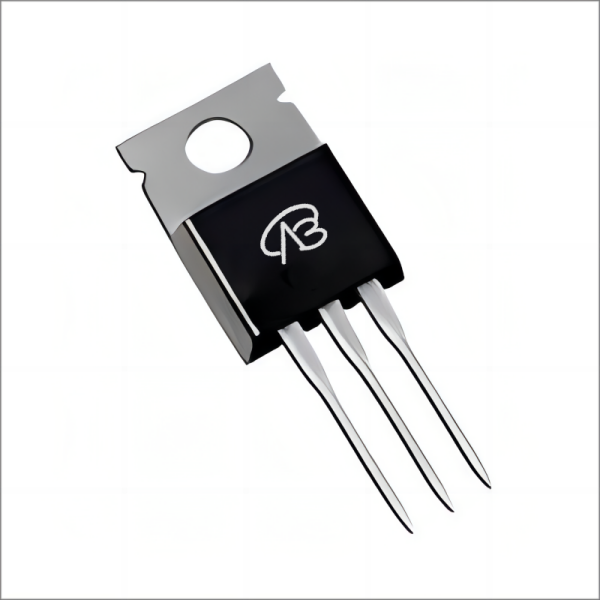
Comparative Analysis: SPP20N60C3 (High-Voltage N-Channel) vs. VBM165R20S
Analysis of the Original Model (SPP20N60C3) Core:
This is a 600V N-channel MOSFET from Infineon in a TO-220 package. Its design core leverages revolutionary high-voltage technology to achieve an exceptional balance of high breakdown voltage, low conduction loss, and robust switching capability in a standard isolated package. Key advantages include: a low on-resistance of 190mΩ at 10V gate drive, a high continuous drain current of 20.7A, and a very high power dissipation rating of 208W. It features ultra-low gate charge for fast switching, high dv/dt capability, high peak current handling, and is housed in a fully isolated package (2500 VAC for 1 minute).
Compatibility and Differences of the Domestic Alternative (VBM165R20S):
VBsemi's VBM165R20S is a direct form-fit and function alternative in the TO-220 package. The main differences lie in the electrical parameters: VBM165R20S offers a higher voltage rating (650V vs. 600V) and a significantly lower on-resistance (160mΩ @10V vs. 190mΩ). The continuous current rating is comparable at 20A. This indicates that the alternative model provides enhanced voltage margin and potentially lower conduction losses.
Key Application Areas:
Original Model SPP20N60C3: Its combination of high voltage, current capability, and robust switching characteristics makes it ideal for demanding high-voltage applications. Typical uses include:
Switch-Mode Power Supplies (SMPS): PFC stages, flyback/forward converter primary sides.
Motor Drives: Inverters for appliances, fans, and industrial controls.
Lighting: Electronic ballasts, LED driver circuits.
Alternative Model VBM165R20S: With its higher voltage rating and lower RDS(on), it is well-suited for similar high-voltage applications where enhanced efficiency, higher voltage headroom, or potential thermal performance is desired, serving as a powerful upgrade or direct replacement path.
Comparative Analysis: IRF7341TRPBF (Dual N-Channel) vs. VBA3638
This dual N-channel MOSFET focuses on providing compact, efficient switching solutions for medium-power, multi-channel circuit designs.
Analysis of the Original Model (IRF7341TRPBF) Core:
This Infineon part integrates two 55V N-channel MOSFETs in a space-saving SO-8 package. Its design pursuit is to offer a balanced performance of low on-resistance and reliable operation in a minimal footprint. Core advantages include: an on-resistance of 50mΩ per channel at 10V gate drive, a continuous current rating of 4.7A per channel, and the board space savings of a dual-die integration.
Compatibility and Differences of the Domestic Alternative (VBA3638):
VBsemi's VBA3638 is a pin-to-pin compatible dual N-channel alternative in an SOP8 package. It represents a "performance-enhanced" choice: It achieves comprehensive surpassing in key parameters. While the voltage rating is similar (60V vs. 55V), the VBA3638 offers a higher continuous current per channel (7A vs. 4.7A) and a dramatically lower on-resistance (28mΩ @10V vs. 50mΩ @10V). This translates to significantly reduced conduction losses and higher current-handling capability in the same footprint.
Key Application Areas:
Original Model IRF7341TRPBF: Its dual-channel integration and balanced parameters make it a classic choice for space-constrained, medium-current applications. For example:
Synchronous Rectification in DC-DC Converters: As low-side switches in multi-phase buck converters.
Load & Power Distribution Switching: In motherboards, networking equipment, and consumer electronics.
Motor Drive H-Bridge Circuits: For driving small brushed DC or stepper motors.
Alternative Model VBA3638: With its superior current capability and much lower RDS(on), it is ideal for upgraded scenarios demanding higher efficiency, greater power density, or higher load currents within the same SO-8 footprint. It is excellent for next-generation DC-DC converters, more powerful motor drives, or any application seeking to reduce losses in a dual-switch configuration.
Conclusion
In summary, this comparative analysis reveals two clear selection paths:
For high-voltage, high-power applications requiring robustness and efficiency, the original model SPP20N60C3, with its proven 600V/20.7A capability and fully isolated TO-220 package, remains a strong benchmark for SMPS and motor drives. Its domestic alternative VBM165R20S offers a compelling upgrade path with a higher 650V rating and lower 160mΩ RDS(on), making it suitable for designs seeking enhanced performance margins or direct replacement with potential efficiency gains.
For space-constrained, dual N-channel applications where low loss and high current density are critical, the original model IRF7341TRPBF provides a reliable, balanced solution in an SO-8 package. The domestic alternative VBA3638 delivers significant "performance enhancement," with its 7A current rating and ultra-low 28mΩ RDS(on), opening the door for higher-efficiency, higher-power-density designs in the same board space.
The core conclusion is: Selection is about precise requirement matching. In the context of supply chain diversification, domestic alternative models not only provide viable backup options but also achieve significant surpassing in specific parameters like voltage rating, RDS(on), and current handling. This offers engineers greater flexibility, resilience, and performance headroom in their design trade-offs and cost-control strategies. Understanding the design philosophy and parametric implications of each device is key to unlocking its full potential in your circuit.

Download PDF document
 Download now


