 中文
中文 English
MOSFET Selection for Medium-Voltage Switching: SPD04P10PLGBTMA1, 2N7002H6327 vs. China Alternatives VBE2103M, VB162K
Number of views:9999
 Back to previous page
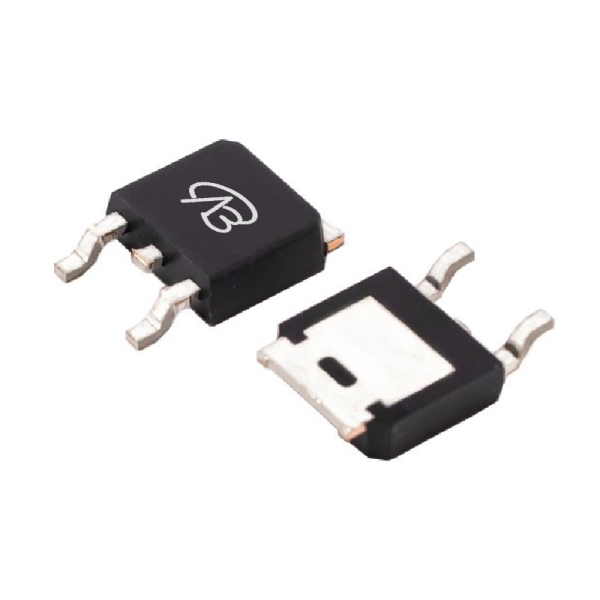
Comparative Analysis: SPD04P10PLGBTMA1 (P-channel) vs. VBE2103M
Analysis of the Original Model (SPD04P10PLGBTMA1) Core:
This is a 100V P-channel MOSFET from Infineon in a TO-252-3 package. It is designed for medium-voltage switching applications where reliability and logic-level drive are important. Its key features include a high drain-source voltage (Vdss) of -100V, a continuous drain current (Id) of -4.2A, and an avalanche rating for ruggedness. The on-resistance is 850mΩ at 4.5V gate drive. It is AEC-Q101 qualified, making it suitable for automotive and industrial environments.
Compatibility and Differences of the Domestic Alternative (VBE2103M):
VBsemi’s VBE2103M is also a P-channel MOSFET in a TO-252 package, offering a direct pin-to-pin alternative. The main differences are in electrical performance: VBE2103M has the same -100V voltage rating but significantly lower on-resistance of 220mΩ (at 10V gate drive) and a higher continuous current rating of -10A. This gives it better conduction loss and higher current capability in similar applications.
Key Application Areas:
Original Model SPD04P10PLGBTMA1: Well-suited for medium-voltage, moderate-current switching where logic-level drive and automotive-grade reliability are needed. Typical uses include:
Power switching in 48V automotive systems (e.g., ECU load switches).
Industrial control circuits requiring avalanche ruggedness.
Low-side or high-side switches in AC-DC power supplies.
Alternative Model VBE2103M: Ideal for applications that demand lower conduction loss and higher current capacity (up to 10A) at 100V, such as:
More efficient power path management in telecom or industrial equipment.
Upgraded designs where reduced RDS(on) leads to better thermal performance.
Comparative Analysis: 2N7002H6327 (N-channel) vs. VB162K
Analysis of the Original Model (2N7002H6327) Core:
This is a classic 60V N-channel small-signal MOSFET from Infineon in a SOT-23 package. It is designed for low-power switching and signal amplification where space is limited. Key features include a 60V drain-source voltage, 300mA continuous current, and logic-level gate drive. Its on-resistance is 3Ω at 10V gate drive. It offers fast switching, avalanche capability, and is halogen-free per IEC 61249-2-21.
Compatibility and Differences of the Domestic Alternative (VB162K):
VBsemi’s VB162K is an N-channel MOSFET in a SOT-23-3 package, providing a direct pin-to-pin replacement. Its parameters are closely matched: same 60V voltage rating, same 300mA continuous current, and similar on-resistance (2.8Ω at 10V gate drive). This makes it a highly compatible alternative for drop-in replacement in existing designs.
Key Application Areas:
Original Model 2N7002H6327: Perfect for low-current switching, signal isolation, or amplification in compact circuits. Common applications include:
Load switching for sensors, LEDs, or peripheral modules in consumer electronics.
Signal level shifting and interface protection circuits.
Battery-powered devices where low gate charge and small size are critical.
Alternative Model VB162K: Serves as a reliable domestic substitute for the same low-power switching and signal control tasks, offering a supply chain alternative without sacrificing performance in standard 60V/300mA applications.
Conclusion:
This comparison highlights two distinct selection approaches:
For P-channel applications at 100V, the original SPD04P10PLGBTMA1 provides a robust, AEC-Q101 qualified solution for automotive and industrial switching. Its domestic alternative VBE2103M offers a performance-enhanced option with significantly lower on-resistance (220mΩ vs. 850mΩ) and higher current capability (10A vs. 4.2A), making it suitable for designs prioritizing efficiency and power handling.
For N-channel small-signal switching at 60V, the classic 2N7002H6327 remains a reliable choice for low-current circuits. The domestic alternative VB162K provides a nearly identical parameter match, ensuring seamless replacement and supply chain diversification for cost-sensitive or risk-mitigation projects.
The core insight is that selection depends on precise requirement matching. Domestic alternatives not only offer viable backups but can also provide performance advantages or cost benefits, giving engineers greater flexibility in design optimization and supply chain resilience. Understanding each device’s specifications and design intent is key to leveraging its full value in your circuit.

Download PDF document
 Download now


