 中文
中文 English
MOSFET Selection for Power Switching and Signal Control: IRFR540ZTRPBF, BSS138NH6433XTMA1 vs. China Alternatives VBE1104N, VB162K
Number of views:9999
 Back to previous page
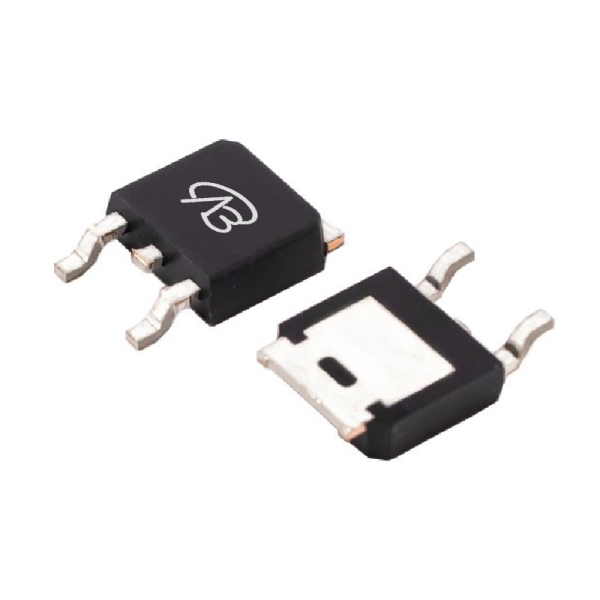
Comparative Analysis: IRFR540ZTRPBF (N-channel Power MOSFET) vs. VBE1104N
Analysis of the Original Model (IRFR540ZTRPBF) Core:
This is a 100V N-channel HEXFET power MOSFET from Infineon in a DPAK (TO-252AA) package. Its design core leverages advanced processing technology to achieve extremely low on-resistance per unit silicon area. Key advantages include: a continuous drain current (Id) of 35A, an on-resistance (RDS(on)) of 28.5mΩ @ 10V, a high junction operating temperature of 175°C, fast switching speed, and an improved repetitive avalanche rating. These features combine to make it a highly efficient and reliable device for a wide range of applications.
Compatibility and Differences of the Domestic Alternative (VBE1104N):
VBsemi's VBE1104N is also an N-channel MOSFET in a TO-252 package, offering a potential pin-to-pin compatible alternative. The key parameters show a strong match: both are rated for 100V drain-source voltage (Vdss). The VBE1104N offers a slightly higher continuous current rating of 40A and a comparable on-resistance of 30mΩ @ 10V. This indicates that the domestic alternative provides similar, even marginally enhanced, conduction performance in the same power class.
Key Application Areas:
Original Model IRFR540ZTRPBF: Ideal for medium-to-high power switching applications requiring robustness and efficiency. Typical uses include:
Switch-Mode Power Supplies (SMPS): As the main switch in AC-DC or DC-DC converters.
Motor Drives: Controlling brushed DC or stepper motors in industrial equipment, automotive systems.
Power Management: Inverters, load switches, and solenoid/relay drivers.
Alternative Model VBE1104N: Well-suited as a direct replacement or new design choice for the same 100V power switching applications, offering equivalent voltage handling with potentially lower conduction losses due to its current and RDS(on) specifications.
Comparative Analysis: BSS138NH6433XTMA1 (N-channel Small-Signal MOSFET) vs. VB162K
Analysis of the Original Model (BSS138NH6433XTMA1) Core:
This is a 60V N-channel, enhancement-mode, logic-level MOSFET from Infineon in a compact SOT-23 package. Its design pursues reliable signal switching and control in minimal space. Core features include: a drain-source voltage (Vdss) of 60V, a continuous drain current (Id) of 230mA, an on-resistance (RDS(on)) of 3.5Ω @ 10V, dv/dt capability, and compliance with automotive AEC-Q101 standards. It is characterized by low gate drive requirements and is halogen-free per IEC 61249-2-21.
Compatibility and Differences of the Domestic Alternative (VB162K):
VBsemi's VB162K is also an N-channel MOSFET in an SOT23-3 package, representing a direct form-factor alternative. Electrically, it matches the original's 60V Vdss rating. However, there are notable differences: the VB162K has a higher rated continuous current of 0.3A (300mA) but also a significantly higher on-resistance (2800mΩ or 2.8Ω @ 10V compared to 3.5Ω). This suggests the alternative may be better suited for very low-current signal switching where voltage rating and package are critical, albeit with higher conduction loss.
Key Application Areas:
Original Model BSS138NH6433XTMA1: Excels in space-constrained, low-power signal interface and control circuits requiring qualification. Typical applications include:
Load Switching for ICs/Modules: Power gating for sensors, memory, or peripherals.
Level Translation: Interface between logic families with different voltage levels.
Automotive & Industrial Control Systems: Signal switching in ECU, BMS, or PLC I/O modules.
Alternative Model VB162K: Serves as a package-compatible alternative for similar 60V signal switching applications where the current requirement is very low (under 300mA) and the higher RDS(on) is acceptable within the system's power budget.
Conclusion:
This analysis reveals two distinct substitution strategies:
1. For 100V-class power switching applications, the domestic alternative VBE1104N presents a strong, potentially enhanced, compatible solution to the IRFR540ZTRPBF, matching its voltage rating while offering competitive current and on-resistance performance for efficient power conversion and control.
2. For 60V-class small-signal control applications, the domestic alternative VB162K offers a pin-to-pin compatible option for the BSS138NH6433XTMA1, suitable for very low-current switching needs where the SOT-23 footprint and voltage rating are paramount, despite its higher on-resistance.
The core takeaway is that selection hinges on precise requirement matching. Domestic alternatives like VBE1104N and VB162K provide viable backup options and design flexibility, enhancing supply chain resilience. Understanding each device's parameter implications ensures engineers can leverage their value effectively in circuit design trade-offs.

Download PDF document
 Download now


