 中文
中文 English
MOSFET Selection for Medium-Power Applications: IRFR120NTRPBF, IRLR7843TRPBF vs. China Alternatives VBE1101M, VBE1303
Number of views:9999
 Back to previous page
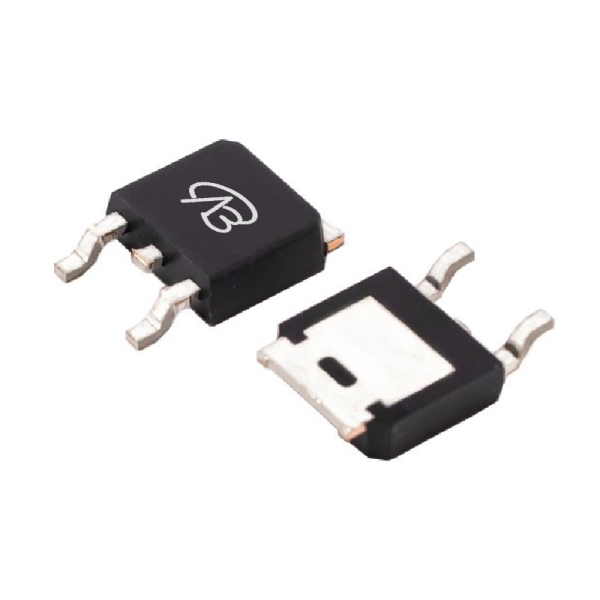
Comparative Analysis: IRFR120NTRPBF (N-channel) vs. VBE1101M
Analysis of the Original Model (IRFR120NTRPBF) Core:
This is a 100V N-channel MOSFET from Infineon in a DPAK (TO-252AA) package. Its design focuses on providing a robust solution for medium-voltage applications. Key advantages include a high drain-source voltage (Vdss) of 100V, a continuous drain current (Id) of 9.4A, and an on-resistance (RDS(on)) of 210mΩ at 10V gate drive. It offers a reliable balance of voltage withstand and current handling in a standard package.
Compatibility and Differences of the Domestic Alternative (VBE1101M):
VBsemi's VBE1101M is a pin-to-pin compatible alternative in the same TO-252 package. The main differences are in electrical parameters: VBE1101M matches the 100V voltage rating but offers significantly improved performance—a lower on-resistance of 114mΩ at 10V and a higher continuous current rating of 15A.
Key Application Areas:
Original Model IRFR120NTRPBF: Suitable for medium-voltage switching applications requiring up to 100V rating and around 9A current, such as power supplies, motor controls, or DC-DC converters in industrial and automotive systems.
Alternative Model VBE1101M: Ideal for upgrades or new designs where lower conduction loss and higher current capability (up to 15A) are desired within the same 100V voltage class, offering improved efficiency and thermal performance.
Comparative Analysis: IRLR7843TRPBF (N-channel) vs. VBE1303
This comparison highlights the pursuit of ultra-low on-resistance and high current handling in lower voltage applications.
Analysis of the Original Model (IRLR7843TRPBF) Core:
This 30V N-channel MOSFET from Infineon is designed for high-current, low-voltage switching. Its core advantages are an extremely low on-resistance of 3.3mΩ at 10V gate drive and a very high continuous drain current rating of 161A, making it excellent for minimizing conduction losses in high-current paths.
Compatibility and Differences of the Domestic Alternative (VBE1303):
VBsemi's VBE1303 is a direct alternative in a TO-252 package. It matches the 30V voltage rating and delivers competitive, even enhanced, performance: an on-resistance of 2mΩ at 10V (and 3mΩ at 4.5V) with a continuous current rating of 100A.
Key Application Areas:
Original Model IRLR7843TRPBF: Excels in applications demanding minimal voltage drop and very high current switching up to 161A, such as synchronous rectification in low-voltage high-current DC-DC converters, motor drives, or power distribution in servers and telecom equipment.
Alternative Model VBE1303: Provides a strong alternative for scenarios requiring up to 100A current with exceptionally low on-resistance (2mΩ@10V), suitable for high-efficiency power stages, motor controls, and load switches where reducing conduction loss is critical.
Summary
This analysis reveals two distinct selection paths based on voltage and current needs:
For 100V-class medium-current applications, the original IRFR120NTRPBF offers a proven solution, while its domestic alternative VBE1101M provides a compatible upgrade with lower RDS(on) and higher current capability for improved efficiency.
For 30V-class high-current applications, the original IRLR7843TRPBF sets a high standard with ultra-low resistance and very high current, ideal for the most demanding circuits. The domestic alternative VBE1303 stands as a compelling performance-competitive option, offering remarkably low on-resistance and high current handling in the same package.
The core conclusion is that selection depends on precise requirement matching. Domestic alternatives like VBE1101M and VBE1303 not only provide viable backups but also offer performance enhancements in key parameters, giving engineers greater flexibility in design trade-offs and cost control within a diversified supply chain. Understanding each device's design focus and parameter implications is essential to leverage its full value in the circuit.

Download PDF document
 Download now


