 中文
中文 English
MOSFET Selection for High-Current Power Applications: IRFR1010ZTRPBF, BSC016N04LS G vs. China Alternatives VBE1606, VBQA1302
Number of views:9999
 Back to previous page
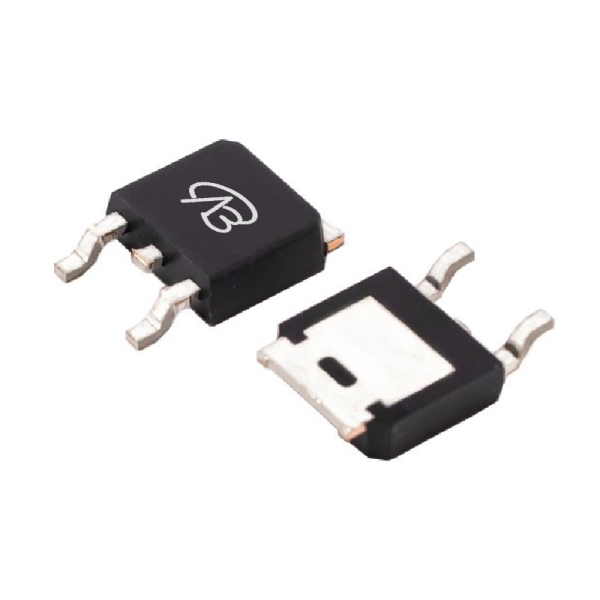
Comparative Analysis: IRFR1010ZTRPBF (N-channel) vs. VBE1606
Analysis of the Original Model (IRFR1010ZTRPBF) Core:
This is a 55V N-channel HEXFET power MOSFET from Infineon in a DPAK package. Its design core leverages advanced processing technology to achieve extremely low on-resistance per silicon area. Key advantages include: a low on-resistance of 5.8mΩ at a 10V gate drive, an exceptionally high continuous drain current rating of 91A, a high 175°C junction operating temperature, fast switching speed, and improved repetitive avalanche rating. These features combine to make it an extremely efficient and reliable device for a wide array of applications.
Compatibility and Differences of the Domestic Alternative (VBE1606):
VBsemi's VBE1606 is an N-channel MOSFET in a TO252 package. While not a direct pin-to-pin match for the DPAK, it serves as a functional alternative in many high-current circuits. The key differences lie in its electrical parameters: VBE1606 has a slightly higher voltage rating (60V vs. 55V) and a significantly lower on-resistance of 4.5mΩ at 10V. Its continuous current rating is also very high at 97A, surpassing the original part.
Key Application Areas:
Original Model IRFR1010ZTRPBF: Its combination of high current (91A), moderate voltage (55V), and robust DPAK package makes it ideal for a broad range of high-current switching applications. Typical uses include:
High-current DC-DC converters and voltage regulators.
Motor drives and controllers for industrial equipment.
Power management in automotive systems (non-safety critical).
Inverter and UPS systems.
Alternative Model VBE1606: With its superior on-resistance (4.5mΩ) and current capability (97A), it is an excellent performance-enhanced alternative. It is particularly suitable for applications where lower conduction loss and higher efficiency are paramount, such as in upgraded or new designs for high-efficiency power supplies, motor drives, and battery management systems requiring minimal voltage drop.
Comparative Analysis: BSC016N04LS G (N-channel) vs. VBQA1302
This comparison focuses on N-channel MOSFETs optimized for high-frequency switching and ultra-low loss in compact, high-power-density applications.
Analysis of the Original Model (BSC016N04LS G) Core:
This is a 40V N-channel MOSFET from Infineon in a TDSON-8-EP (5x6) package. It is specifically designed for fast switching in Switch-Mode Power Supplies (SMPS) and DC/DC converters. Its core advantages are:
Ultra-Low Conduction Loss: An extremely low on-resistance of 1.6mΩ at 10V gate drive and 50A, minimizing I²R losses.
Optimized for DC/DC: Features logic-level gate drive, excellent FOM (Gate Charge x RDS(on)), and low thermal resistance in a thermally enhanced package.
High Reliability: 100% avalanche tested, halogen-free, and compliant with relevant industry standards.
Compatibility and Differences of the Domestic Alternative (VBQA1302):
VBsemi's VBQA1302 is also an N-channel MOSFET in a DFN8(5x6) package, offering direct pin-to-pin compatibility. It presents a compelling "performance-enhanced" alternative:
It achieves a lower on-resistance of 1.8mΩ at 10V (compared to 1.6mΩ, a very close match).
It boasts a significantly higher continuous current rating of 160A (vs. 100A).
It features a lower gate threshold voltage (1.7V vs. typical logic-level), enhancing driveability.
Key Application Areas:
Original Model BSC016N04LS G: Its ultra-low RDS(on) and fast switching characteristics make it an ideal choice for high-efficiency, high-frequency power conversion. Typical applications include:
Synchronous rectification and high-side/low-side switches in high-current DC/DC converters (e.g., for servers, telecom, GPU VRMs).
High-frequency SMPS primary or secondary side switches.
Point-of-load (POL) converters demanding high power density.
Alternative Model VBQA1302: With its massive 160A current rating and very low on-resistance, it is perfectly suited for next-generation applications pushing the limits of power density and efficiency. It is an excellent drop-in upgrade for scenarios requiring higher current headroom, lower thermal stress, and future-proofing designs, such as in advanced computing, high-power motor drives, and energy storage systems.
Conclusion
In summary, this analysis reveals two distinct selection pathways for high-current applications:
For robust, general-purpose high-current switching in a DPAK package, the original IRFR1010ZTRPBF, with its 91A rating and 5.8mΩ RDS(on), offers proven reliability for motor drives and power converters. Its domestic alternative VBE1606 provides a performance boost with lower RDS(on) (4.5mΩ) and higher current (97A), making it a superior choice for new designs prioritizing maximum efficiency and current capability.
For ultra-high-efficiency, high-frequency switching in a compact TDSON/DFN package, the original BSC016N04LS G sets a high standard with its 1.6mΩ RDS(on) and 100A rating, making it a top-tier choice for advanced SMPS and DC/DC converters. The pin-to-pin compatible domestic alternative VBQA1302 delivers a remarkable "performance leap," combining a very low 1.8mΩ RDS(on) with an extraordinary 160A current rating, opening the door for groundbreaking power density in next-generation computing and drive systems.
The core takeaway is that selection is driven by precise requirement matching. In the context of supply chain diversification, domestic alternatives like VBE1606 and VBQA1302 not only provide viable backup options but also offer significant parameter advantages in key areas, granting engineers greater flexibility, resilience, and performance headroom in their design trade-offs and cost optimization strategies. Understanding the design philosophy and parameter implications of each device is essential to unlocking its full potential within your circuit.

Download PDF document
 Download now


