 中文
中文 English
MOSFET Selection for Medium to High Voltage Power Applications: IRFL4315TRPBF, IRFS4127TRLPBF vs. China Alternatives VBJ1152M, VBGL1201N
Number of views:9999
 Back to previous page
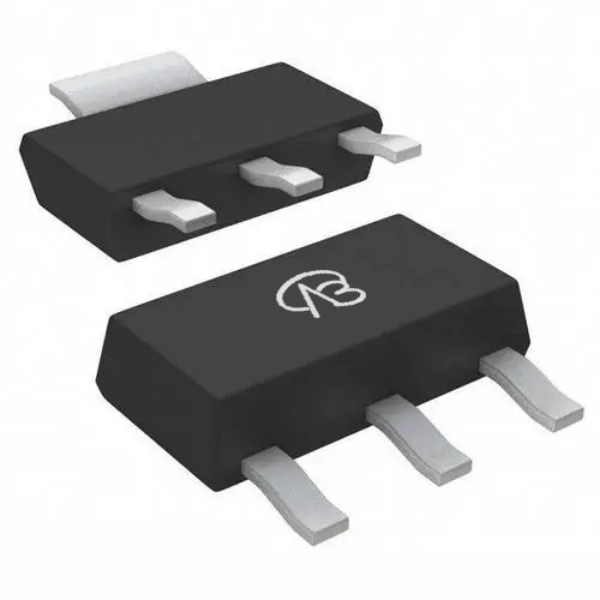
Comparative Analysis: IRFL4315TRPBF (N-channel) vs. VBJ1152M
Analysis of the Original Model (IRFL4315TRPBF) Core:
This is a 150V N-channel MOSFET from Infineon in a compact SOT-223 package. Its design core focuses on high-frequency switching efficiency in lower-power applications. Key advantages include: optimized switching characteristics with low gate-to-drain charge to minimize switching losses, fully characterized capacitance (including effective Coss) for simplified design, and fully characterized avalanche ratings. It features a continuous drain current (Id) of 2.6A and an on-resistance (RDS(on)) of 185mΩ @ 10V.
Compatibility and Differences of the Domestic Alternative (VBJ1152M):
VBsemi's VBJ1152M is also offered in an SOT-223 package, providing a form-factor compatible alternative. The key differences are in electrical parameters: while both are 150V N-channel devices, VBJ1152M has a slightly higher on-resistance of 283mΩ @ 10V and a comparable continuous current rating of 3A.
Key Application Areas:
Original Model IRFL4315TRPBF: Its strengths in low switching loss make it ideal for high-frequency DC-DC converters where efficiency at high switching frequencies is paramount.
Alternative Model VBJ1152M: Serves as a viable alternative for 150V applications where the primary requirement is package compatibility and basic functionality, and where the slightly higher conduction loss is acceptable within the 3A current range.
Comparative Analysis: IRFS4127TRLPBF (N-channel) vs. VBGL1201N
This comparison shifts to high-power applications where high current capability and ruggedness are the primary design pursuits.
Analysis of the Original Model (IRFS4127TRLPBF) Core:
This is a 200V N-channel MOSFET from Infineon in a D2PAK (TO-263) package, designed for demanding power stages. Its core advantages are:
High Current Handling: A robust continuous drain current rating of 72A.
Low Conduction Loss: A low on-resistance of 22mΩ @ 10V.
Enhanced Ruggedness: Features improved gate, avalanche, and dynamic dV/dt robustness, along with an enhanced body diode for high dV/dt and dI/dt capability.
Compatibility and Differences of the Domestic Alternative (VBGL1201N):
VBsemi's VBGL1201N represents a performance-enhanced alternative in a compatible TO-263 package. It achieves significant surpassing in key parameters: the same 200V voltage rating, but a dramatically higher continuous current of 100A and a much lower on-resistance of 11mΩ @ 10V.
Key Application Areas:
Original Model IRFS4127TRLPBF: Its balance of 200V rating, 72A current, and 22mΩ RDS(on) with proven ruggedness makes it an excellent choice for high-efficiency synchronous rectification in Switch-Mode Power Supplies (SMPS) and Uninterruptible Power Supplies (UPS).
Alternative Model VBGL1201N: Is ideally suited for upgraded or new designs requiring higher power density and lower conduction losses. Its 100A/11mΩ performance makes it a strong candidate for next-generation SMPS, high-power DC-DC converters, or motor drives where maximizing efficiency and current throughput is critical.
Summary and Selection Paths:
This analysis reveals two distinct selection paths based on application needs:
1. For high-frequency, lower-power (sub-3A) 150V applications such as DC-DC converters, the original IRFL4315TRPBF offers optimized fast-switching performance. Its domestic alternative VBJ1152M provides a pin-compatible option with a slightly higher RDS(on), suitable for cost-sensitive designs where ultimate switching efficiency is less critical.
2. For high-current, rugged 200V applications like synchronous rectification in SMPS/UPS, the original IRFS4127TRLPBF delivers a reliable, well-characterized solution. The domestic alternative VBGL1201N emerges as a compelling performance-enhanced option, offering significantly lower RDS(on) and higher current capability for designers seeking to push efficiency and power density limits.
Core Conclusion: The choice is not about absolute superiority but precise requirement matching. In the context of supply chain diversification, domestic alternatives like VBJ1152M and VBGL1201N not only provide viable backup options but also, in the case of VBGL1201N, demonstrate significant parameter surpassing. This offers engineers greater flexibility and resilience in design trade-offs and cost control. A deep understanding of each device's design philosophy and parameter implications is key to unlocking its full value in your circuit.

Download PDF document
 Download now


