 中文
中文 English
MOSFET Selection for Medium-Power Switching: IRFL4310TRPBF, IRL2505PBF vs. China Alternatives VBJ1322, VBM1615
Number of views:9999
 Back to previous page
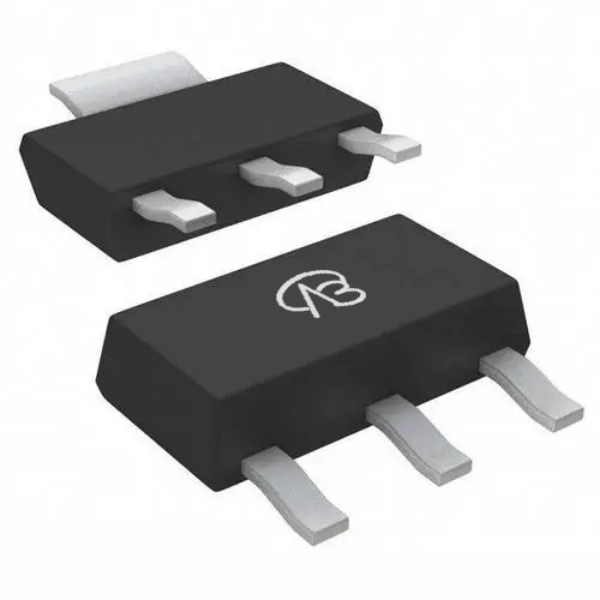
Comparative Analysis: IRFL4310TRPBF (N-channel) vs. VBJ1322
Analysis of the Original Model (IRFL4310TRPBF) Core:
This Infineon part is a 100V N-channel MOSFET in a compact SOT-223 package. Its design core is to provide a reliable high-voltage switch for low-to-medium current applications. Key features include a drain-source voltage (Vdss) of 100V, a continuous drain current (Id) of 2.2A, and an on-resistance (RDS(on)) of 200mΩ at 10V gate drive. It suits circuits where space is limited but a higher voltage blocking capability is required.
Compatibility and Differences of the Domestic Alternative (VBJ1322):
VBsemi's VBJ1322 is also offered in an SOT-223 package, providing good footprint compatibility. The key differences are in electrical parameters: VBJ1322 has a lower voltage rating (30V) but offers significantly better conduction performance. Its RDS(on) is only 19mΩ @10V, and it supports a much higher continuous current of 7A.
Key Application Areas:
Original Model IRFL4310TRPBF: Ideal for applications where the primary requirement is a high voltage rating (up to 100V) at relatively lower currents (around 2A). Examples include:
Switching in offline low-power auxiliary power supplies.
High-side or low-side switching in 48V-60V system peripherals.
Protection circuits or load switches requiring 100V withstand capability.
Alternative Model VBJ1322: Better suited for lower-voltage systems (≤30V) where low conduction loss and higher current capability (up to 7A) are critical. Typical uses include:
Load switches and power management in 12V/24V consumer electronics.
DC-DC converter switches where low RDS(on) improves efficiency.
Motor drives for small fans or pumps in low-voltage systems.
Comparative Analysis: IRL2505PBF (N-channel) vs. VBM1615
This comparison shifts focus to high-current, low-on-resistance applications. The original model IRL2505PBF is designed for robust power handling.
Analysis of the Original Model (IRL2505PBF) Core:
This Infineon MOSFET in a TO-220AB package is built for high-current switching. Its core advantages are:
High Current Capacity: A continuous drain current rating of 104A.
Low On-Resistance: RDS(on) as low as 8mΩ at 10V gate drive, minimizing conduction losses.
Robust Package: The TO-220AB package facilitates good thermal performance for its power level.
Compatibility and Differences of the Domestic Alternative (VBM1615):
VBsemi's VBM1615, also in a TO-220 package, serves as a pin-to-pin compatible alternative with notable performance differences. It features a slightly higher voltage rating (60V vs. 55V) and offers a superior on-resistance of 11mΩ @10V. While its rated continuous current (60A) is lower than the IRL2505PBF's 104A, it remains suitable for many high-current applications.
Key Application Areas:
Original Model IRL2505PBF: Excels in applications demanding very high continuous current (up to 104A) at 55V. Common uses include:
High-current DC-DC converters and voltage regulators.
Motor drives for industrial tools, e-bikes, or automotive systems.
Uninterruptible Power Supply (UPS) systems and inverter circuits.
Alternative Model VBM1615: A strong candidate for high-efficiency switching where the current requirement is within 60A and a slightly higher voltage margin (60V) is beneficial. Its very low RDS(on) ensures minimal power loss. Applications include:
Synchronous rectification in medium-to-high power SMPS.
Motor controllers and solenoid drivers in the 30V-48V range.
Upgraded designs seeking lower conduction loss than typical 55V/100A-class MOSFETs.
Conclusion
This analysis reveals two distinct replacement strategies based on application priorities:
For high-voltage, lower-current switching needs, the original IRFL4310TRPBF (100V, 2.2A) is tailored for circuits where voltage withstand is paramount. Its domestic alternative VBJ1322 shifts the focus, offering much lower RDS(on) and higher current (7A) in a lower 30V category, making it optimal for efficiency-critical designs in standard voltage domains.
For high-current, low-loss switching, the original IRL2505PBF (55V, 104A) sets a benchmark for extreme current handling. The domestic alternative VBM1615 (60V, 60A) provides a compelling balance with excellent RDS(on), suitable for a wide array of high-efficiency applications where its current rating is sufficient.
The core takeaway is that selection is driven by precise application requirements. Domestic alternatives like VBJ1322 and VBM1615 not only offer supply chain diversification but also present advantageous performance in key parameters such as on-resistance, providing engineers with valuable options for optimizing performance, cost, and design resilience.

Download PDF document
 Download now


