 中文
中文 English
MOSFET Selection for High-Power Switching Applications: IPT059N15N3ATMA1, IRF1404PBF vs. China Alternatives VBGQT11505, VBM1402
Number of views:9999
 Back to previous page
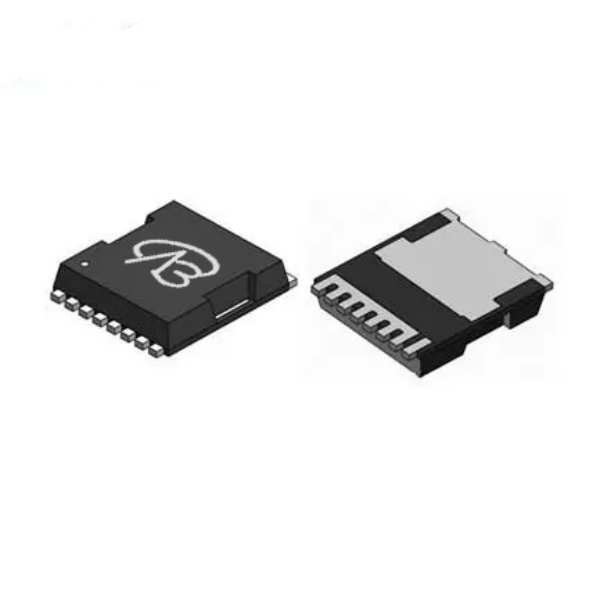
Comparative Analysis: IPT059N15N3ATMA1 (N-channel) vs. VBGQT11505
Analysis of the Original Model (IPT059N15N3ATMA1) Core:
This is a 150V N-channel MOSFET from Infineon in an HSOF-8 package. Its design core is to achieve an excellent figure of merit (FOM) for high-frequency switching and synchronous rectification. Key advantages are: a low on-resistance of 5.9mΩ at 10V gate drive, a high continuous drain current of 155A, and a maximum operating temperature of 175°C. It features superior gate charge to on-resistance product, very low RDS(on), and is suitable for demanding applications.
Compatibility and Differences of the Domestic Alternative (VBGQT11505):
VBsemi's VBGQT11505 is offered in a TOLL package and serves as a high-performance alternative. The key parameters show a compelling match: same voltage rating (150V), a slightly higher continuous current (170A), and a lower on-resistance of 5mΩ (@10V). It utilizes SGT (Shielded Gate Trench) technology for improved switching performance.
Key Application Areas:
Original Model IPT059N15N3ATMA1: Ideal for high-frequency switching and synchronous rectification in applications like server/telecom power supplies, high-power DC-DC converters, and motor drives where 150V breakdown and high efficiency at 155A are required.
Alternative Model VBGQT11505: Suited as a direct upgrade or alternative for the same 150V applications, offering lower conduction loss (5mΩ) and higher current capability (170A), beneficial for designs seeking higher power density or margin.
Comparative Analysis: IRF1404PBF (N-channel) vs. VBM1402
This comparison focuses on ultra-low on-resistance MOSFETs for high-current applications at lower voltages.
Analysis of the Original Model (IRF1404PBF) Core:
This is a classic 40V N-channel MOSFET from Infineon in a TO-220AB package. Its core strength lies in an extremely low on-resistance of 4mΩ at 10V, enabling it to handle a massive continuous current of 202A. It is designed for minimal conduction loss in high-current paths.
Compatibility and Differences of the Domestic Alternative (VBM1402):
VBsemi's VBM1402, also in a TO-220 package, presents a highly competitive alternative. It matches the 40V rating and offers a very high continuous current of 180A. Its standout feature is an even lower on-resistance of 2mΩ at 10V gate drive, significantly reducing conduction losses compared to the original.
Key Application Areas:
Original Model IRF1404PBF: Excellent for high-current switching, battery management systems (BMS), power tools, and low-voltage DC-DC converters where minimizing voltage drop and heat generation at currents up to 202A is critical.
Alternative Model VBM1402: An excellent choice for applications requiring the lowest possible conduction loss. Its 2mΩ RDS(on) makes it ideal for upgrading efficiency in high-current 40V circuits like motor drives, solenoid drivers, or as a replacement in existing designs using the IRF1404PBF for better thermal performance.
Conclusion:
This analysis reveals two distinct selection paths for high-power applications:
For 150V systems requiring high current and good switching performance, the original IPT059N15N3ATMA1 offers a proven solution with 155A capability and 5.9mΩ RDS(on). Its domestic alternative VBGQT11505 provides a compelling option with slightly better on-resistance (5mΩ) and higher current rating (170A), suitable for performance-enhanced designs.
For 40V ultra-high-current applications, the original IRF1404PBF sets a benchmark with 202A current and 4mΩ resistance. The domestic alternative VBM1402 challenges this with a remarkably low 2mΩ RDS(on) at 180A, making it a superior choice for minimizing conduction losses where the full 202A is not required.
The core conclusion is that selection depends on precise requirement matching. Domestic alternatives like VBGQT11505 and VBM1402 not only provide viable backups but also offer performance advantages in key parameters, giving engineers greater flexibility in design optimization and cost control for high-power switching solutions.

Download PDF document
 Download now


