 中文
中文 English
MOSFET Selection for High-Power Applications: IPP330P10NMAKSA1, IRLB8743PBF vs. China Alternatives VBM2104N, VBM1302
Number of views:9999
 Back to previous page
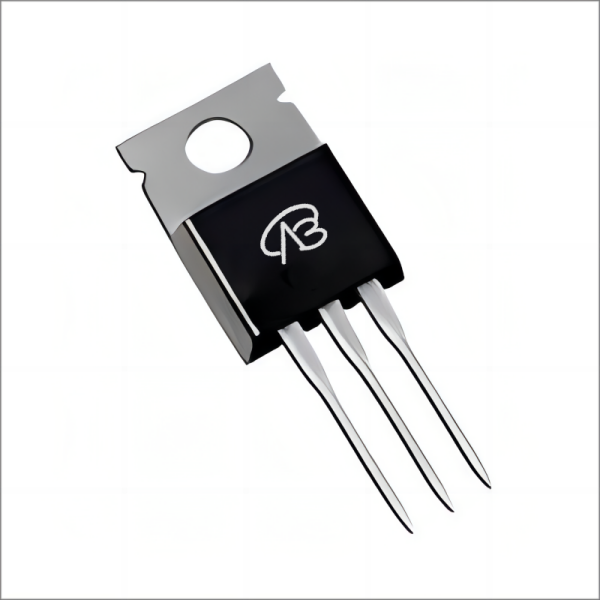
Comparative Analysis: IPP330P10NMAKSA1 (P-channel) vs. VBM2104N
Analysis of the Original Model (IPP330P10NMAKSA1) Core:
This is a 100V P-channel MOSFET from Infineon in a TO-220-3 package. Its design core is to provide high-current switching with robust reliability in industrial environments. Key advantages include: a high continuous drain current rating of 62A, a low on-resistance of 33mΩ at a 10V gate drive, and features like 100% avalanche testing. It is characterized as an enhancement-mode device, fully compliant with industrial standards, and is halogen-free per IEC61248-2-21.
Compatibility and Differences of the Domestic Alternative (VBM2104N):
VBsemi's VBM2104N is a direct pin-to-pin compatible alternative in the TO-220 package. The key parameters show a high degree of alignment: identical -100V drain-source voltage, the same 33mΩ on-resistance at 10V gate drive, and a slightly lower but still robust continuous current rating of -50A compared to the original's 62A.
Key Application Areas:
Original Model IPP330P10NMAKSA1: Its high voltage and current ratings make it ideal for demanding high-side switching applications in industrial power systems, such as motor drives, power supplies, and inverter circuits where a P-channel device is required for simplified gate driving.
Alternative Model VBM2104N: Serves as a highly competitive domestic alternative for the same high-voltage P-channel application spaces, particularly where supply chain diversification or cost optimization is needed, offering nearly identical on-resistance performance.
Comparative Analysis: IRLB8743PBF (N-channel) vs. VBM1302
This N-channel MOSFET is engineered for applications demanding extremely low conduction loss and high current capability.
Analysis of the Original Model (IRLB8743PBF) Core:
This 30V N-channel MOSFET from Infineon, in a TO-220AB package, is optimized for high-frequency, high-current scenarios. Its core advantages are:
Exceptional Current Handling: A very high continuous drain current rating of 150A.
Ultra-Low Conduction Loss: An extremely low on-resistance of 3.2mΩ at 10V gate drive (even lower at 4.5V).
Application-Specific Optimization: Designed for high-frequency synchronous buck converters in computer processor power delivery and UPS/inverter applications, featuring fully characterized avalanche ratings.
Compatibility and Differences of the Domestic Alternative (VBM1302):
VBsemi's VBM1302 is a performance-matched alternative in the same TO-220 package. It not only matches the 30V voltage rating but also offers competitive enhancements: a slightly lower on-resistance of 2mΩ at 10V gate drive and a high continuous current rating of 140A, closely approaching the original's benchmark.
Key Application Areas:
Original Model IRLB8743PBF: The go-to choice for high-frequency, high-current DC-DC conversion, especially as the low-side switch in synchronous buck regulators for server, desktop, and GPU power stages (VRMs), as well as in UPS and inverter systems.
Alternative Model VBM1302: An excellent domestic alternative for the same demanding N-channel applications, providing potentially lower conduction loss and ample current capability for next-generation high-efficiency power supplies and motor drives.
Conclusion:
In summary, this analysis reveals two viable substitution paths with strong domestic alternatives:
For high-voltage P-channel applications, the original IPP330P10NMAKSA1 sets a standard with its 62A current and 33mΩ RDS(on). The domestic alternative VBM2104N provides a near-identical electrical performance profile, making it a reliable and competitive substitute for industrial power designs.
For ultra-low-loss N-channel applications, the original IRLB8743PBF is a benchmark with its 150A current and 3.2mΩ RDS(on). The domestic alternative VBM1302 not only matches this performance closely but offers a marginally lower RDS(on) of 2mΩ and 140A current, positioning it as a performance-competitive option for high-efficiency power conversion.
The core conclusion is that selection depends on precise requirement matching. In the context of supply chain diversification, these domestic alternative models (VBM2104N, VBM1302) provide not just feasible backups but also performance-competitive options, offering engineers greater flexibility in design trade-offs and cost control. Understanding the specific parameter implications of each device is key to maximizing its value in the circuit.

Download PDF document
 Download now


