 中文
中文 English
MOSFET Selection for High-Power Switching Applications: IPP086N10N3 G, IPP023N10N5 vs. China Alternatives VBM1101N, VBM1105
Number of views:9999
 Back to previous page
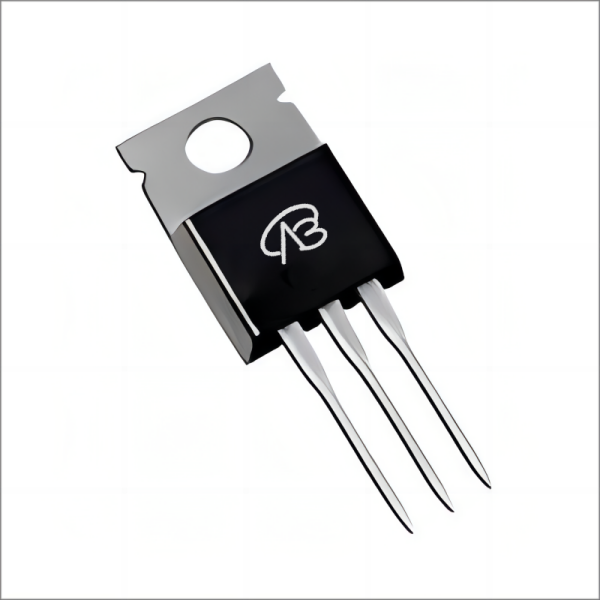
Comparative Analysis: IPP086N10N3 G (N-channel) vs. VBM1101N
Analysis of the Original Model (IPP086N10N3 G) Core:
This is a 100V N-channel MOSFET from Infineon in a standard TO-220-3 package. Its design core focuses on achieving an excellent gate charge (Qg) × RDS(on) product (FOM) for high-frequency switching efficiency. Key advantages include: a very low on-resistance of 8.6mΩ at a 10V gate drive, a high continuous drain current rating of 80A, and a maximum operating junction temperature of 175°C. It is optimized for applications requiring a balance of low conduction loss and fast switching.
Compatibility and Differences of the Domestic Alternative (VBM1101N):
VBsemi's VBM1101N is a direct pin-to-pin compatible alternative in the TO-220 package. The main differences are in the electrical parameters: VBM1101N offers a comparable 100V voltage rating and a slightly higher continuous current rating of 100A. However, its on-resistance is marginally higher at 9mΩ (@10V) compared to the original's 8.6mΩ. It maintains a similar threshold voltage and trench technology.
Key Application Areas:
Original Model IPP086N10N3 G: Its excellent FOM makes it ideal for high-frequency switching and synchronous rectification in medium-to-high power applications, such as:
Switch-Mode Power Supplies (SMPS): Primary-side or secondary-side switching in AC-DC converters.
Motor Drives: Inverters for motor control in industrial equipment or appliances.
DC-DC Converters: High-current buck or boost converters.
Alternative Model VBM1101N: A suitable alternative for applications where the slightly higher RDS(on) is acceptable, but the benefit of a higher current rating (100A) and domestic supply chain is valuable. It fits well in similar high-power switching circuits.
Comparative Analysis: IPP023N10N5 (N-channel) vs. VBM1105
This comparison shifts to ultra-low on-resistance MOSFETs designed for minimizing conduction losses in very high-current paths.
Analysis of the Original Model (IPP023N10N5) Core:
The IPP023N10N5 represents a performance-optimized 100V N-channel MOSFET. Its core advantage is an extremely low on-resistance of just 2.3mΩ at 10V gate drive, coupled with a high continuous current capability of 120A. It is specifically optimized for a low FOMoss, making it exceptional for applications where conduction loss is the dominant factor. It also features a 175°C maximum junction temperature.
Compatibility and Differences of the Domestic Alternative (VBM1105):
VBsemi's VBM1105 is a pin-to-pin compatible alternative in the TO-220 package. It matches the original's 100V rating and 120A continuous current capability. The key parameter difference is the on-resistance: VBM1105 specifies 5mΩ (@10V), which is higher than the original's 2.3mΩ. This indicates the original model retains an advantage in ultra-low conduction loss for the most demanding applications.
Key Application Areas:
Original Model IPP023N10N5: Its ultra-low RDS(on) of 2.3mΩ makes it the premier choice for the highest efficiency demands in:
Synchronous Rectification: Secondary-side rectification in high-current server/telecom power supplies.
High-Current DC-DC Converters: Point-of-load (POL) converters and VRMs.
Inverter and Motor Drive Systems: Where minimizing I²R losses is critical for thermal performance.
Alternative Model VBM1105: Serves as a robust alternative for applications that require the high current (120A) capability but where the specific ultra-low RDS(on) of the original is not absolutely critical. It offers a cost-effective and supply-chain-resilient solution for many high-power switching scenarios.
Conclusion
In summary, this analysis presents two distinct selection pathways for 100V N-channel MOSFETs:
For applications prioritizing an excellent FOM for high-frequency switching, the original IPP086N10N3 G, with its 8.6mΩ RDS(on) and 80A rating, is a strong benchmark. Its domestic alternative VBM1101N offers a compatible package, a higher 100A current rating, and a slightly higher 9mΩ RDS(on), making it a viable alternative where current headroom is valued.
For applications where minimizing conduction loss is paramount, the original IPP023N10N5, with its exceptional 2.3mΩ RDS(on) and 120A rating, is a top-tier choice for the most efficiency-sensitive designs. The domestic alternative VBM1105 matches the current rating but with a higher 5mΩ RDS(on), positioning it as a capable alternative for many high-power applications where absolute minimum RDS(on) can be traded for other benefits.
The core takeaway is that selection is driven by precise application requirements. In the context of supply chain diversification, domestic alternatives like VBM1101N and VBM1105 provide not only feasible backup options but also competitive performance in key areas, offering engineers greater flexibility and resilience in design and cost optimization.

Download PDF document
 Download now


