 中文
中文 English
MOSFET Selection for High-Voltage and High-Current Applications: IPD60R400CE, IPB020N08N5ATMA1 vs. China Alternatives VBE16R15S, VBGL1803
Number of views:9999
 Back to previous page
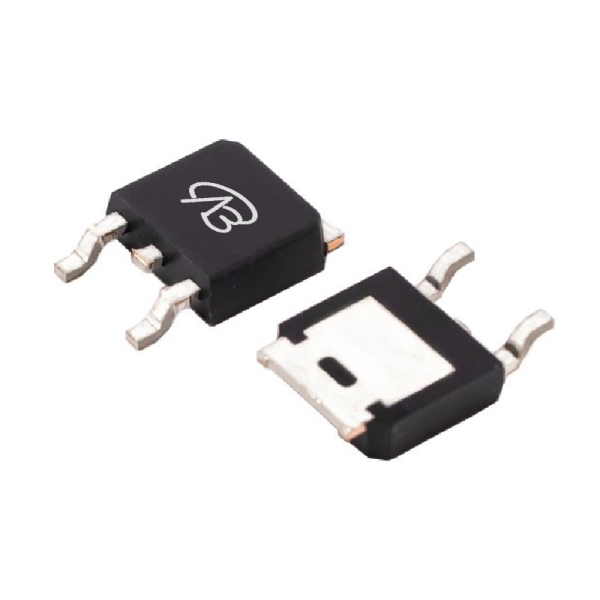
Comparative Analysis: IPD60R400CE (High-Voltage N-channel) vs. VBE16R15S
Analysis of the Original Model (IPD60R400CE) Core:
This is a 650V N-channel CoolMOS CE series MOSFET from Infineon, utilizing a TO-252 (DPAK) package. Its design core is based on the revolutionary superjunction (SJ) principle, offering a cost-optimized solution for high-voltage applications. Key advantages include a high drain-source voltage (Vdss) of 650V, a continuous drain current (Id) of 14.7A, and an on-resistance (RDS(on)) of 400mΩ at 10V gate drive. It combines the benefits of fast-switching superjunction MOSFETs with excellent cost-effectiveness, targeting cost-sensitive applications in consumer and lighting markets.
Compatibility and Differences of the Domestic Alternative (VBE16R15S):
VBsemi's VBE16R15S is also offered in a TO-252 package and serves as a pin-to-pin compatible alternative. The main differences lie in the electrical parameters: VBE16R15S features a slightly lower voltage rating (600V vs. 650V) but offers significantly improved performance in key areas. It boasts a lower on-resistance of 240mΩ (at 10V) and a higher continuous current rating of 15A, promising potentially lower conduction losses and a higher current margin.
Key Application Areas:
Original Model IPD60R400CE: Its 650V rating and CoolMOS CE technology make it ideal for cost-sensitive, high-voltage switching applications.
Consumer SMPS: Power supplies for TVs, adapters, and LED lighting drivers.
Lighting Ballasts: Electronic ballasts for fluorescent and HID lighting.
Industrial Auxiliary Power: Lower-power auxiliary power supplies in industrial systems.
Alternative Model VBE16R15S: With its lower RDS(on) and robust current rating, it is suitable for applications requiring enhanced efficiency and current handling within a 600V range, potentially serving as a performance-upgrade alternative in similar high-voltage switch-mode power supplies.
Comparative Analysis: IPB020N08N5ATMA1 (High-Current N-channel) vs. VBGL1803
This N-channel MOSFET is designed for high-current, low-voltage applications where minimizing conduction loss is paramount.
Analysis of the Original Model (IPB020N08N5ATMA1) Core:
This 80V N-channel MOSFET from Infineon uses a TO-263-3 (D2PAK) package. Its core pursuit is an exceptional balance of ultra-low on-resistance and high current capability for high-frequency switching and synchronous rectification. Key advantages are:
Outstanding Conduction Performance: An extremely low RDS(on) of 2.5mΩ at 6V gate drive, coupled with a very high continuous drain current of 173A.
Excellent Figure of Merit (FOM): Features a low gate charge (Qg) × RDS(on) product, enabling high-frequency operation with good efficiency.
Robust Construction: 100% avalanche tested, halogen-free, and compliant with RoHS standards.
Compatibility and Differences of the Domestic Alternative (VBGL1803):
VBsemi's VBGL1803, also in a TO-263 package, presents itself as a direct, high-performance alternative. While the voltage rating is identical (80V), the key parameters show a slight variance: VBGL1803 offers a slightly higher RDS(on) of 3.1mΩ (at 10V) and a slightly lower continuous current rating of 150A compared to the original's 173A. It utilizes SGT (Shielded Gate Trench) technology.
Key Application Areas:
Original Model IPB020N08N5ATMA1: Its ultra-low RDS(on) and very high current rating make it an ideal choice for high-efficiency, high-current applications.
Synchronous Rectification in High-Current DC-DC Converters: For server power supplies, telecom rectifiers, and high-end computing.
Motor Drives and Inverters: For high-power brushless DC (BLDC) motor drives, e-bikes, and power tools.
Battery Protection Circuits / Power Distribution: In high-current discharge paths for energy storage systems or electric vehicles.
Alternative Model VBGL1803: Serves as a highly capable domestic alternative for applications requiring high-current switching at 80V. Its 150A rating and 3.1mΩ RDS(on) make it suitable for most high-current DC-DC conversion and motor drive scenarios, offering a reliable and potentially cost-effective option.
Conclusion
In summary, this comparative analysis reveals two distinct selection paths based on application voltage and current demands:
For high-voltage (600-650V) applications prioritizing cost-effectiveness, the original IPD60R400CE with its proven CoolMOS CE technology offers a reliable solution for consumer and lighting markets. Its domestic alternative VBE16R15S provides a compatible option with potentially lower conduction loss (240mΩ), making it a viable candidate for efficiency-focused designs within a 600V framework.
For high-current, low-voltage (~80V) applications where minimizing conduction loss is critical, the original IPB020N08N5ATMA1 sets a high benchmark with its ultra-low 2.5mΩ RDS(on) and massive 173A current capability. The domestic alternative VBGL1803 offers a strong, package-compatible solution with robust specifications (3.1mΩ, 150A), suitable for a wide range of high-power switching and motor drive applications.
The core conclusion is that selection depends on precise requirement matching. In the context of supply chain diversification, domestic alternatives like VBE16R15S and VBGL1803 not only provide feasible backup options but also offer competitive performance, giving engineers greater flexibility and resilience in design trade-offs and cost control. Understanding the design philosophy and parameter implications of each device is key to maximizing its value in the circuit.

Download PDF document
 Download now


