 中文
中文 English
MOSFET Selection for High-Power Density Applications: IPB038N12N3GATMA1, BSC070N10NS3GATMA1 vs. China Alternatives VBGL11505, VBGQA1105
Number of views:9999
 Back to previous page
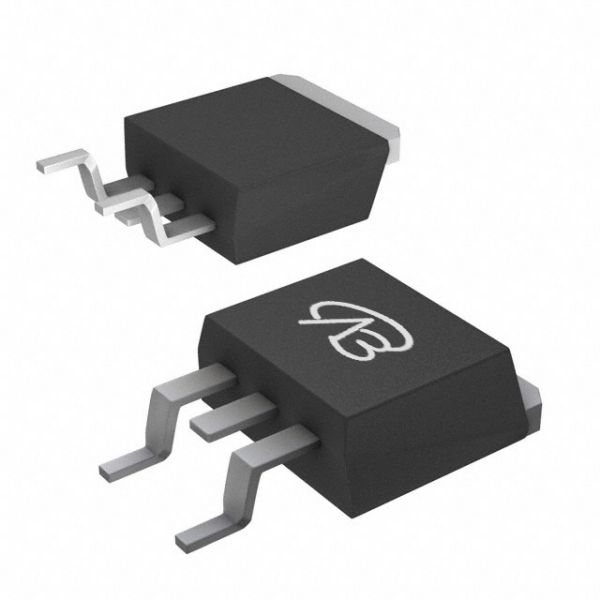
Comparative Analysis: IPB038N12N3GATMA1 (N-channel) vs. VBGL11505
Analysis of the Original Model (IPB038N12N3GATMA1) Core:
This is a 120V N-channel MOSFET from Infineon in a TO-263-3 (D2PAK) package. Its design core is to deliver extremely low conduction loss and high current capability for demanding power stages. Key advantages are: a very low on-resistance of 4.1mΩ at a 10V gate drive, a high continuous drain current rating of 120A, and an excellent figure of merit (FOM). It is rated for 175°C junction temperature, making it robust for high-power applications requiring high-frequency switching and synchronous rectification.
Compatibility and Differences of the Domestic Alternative (VBGL11505):
VBsemi's VBGL11505 is also offered in a TO-263 package and serves as a pin-to-pin compatible alternative. The main differences are in electrical parameters: VBGL11505 has a higher voltage rating (150V vs. 120V) and a slightly higher continuous current (140A vs. 120A). However, its on-resistance is higher at 5.6mΩ (@10V) compared to the original's 4.1mΩ.
Key Application Areas:
Original Model IPB038N12N3GATMA1: Ideal for high-current, medium-voltage applications where minimizing conduction loss is paramount. Typical uses include:
Synchronous rectification in high-power 48V/60V DC-DC converters (e.g., for servers, telecom).
Motor drives and inverters for industrial equipment and e-mobility.
High-frequency switching power supplies where low RDS(on) and good FOM are critical.
Alternative Model VBGL11505: Suited for applications requiring a higher voltage margin (up to 150V) and potentially higher peak current (140A), where the slightly higher RDS(on) is acceptable. It offers a robust alternative in systems with variable voltage spikes or in designs upgrading voltage rails.
Comparative Analysis: BSC070N10NS3GATMA1 (N-channel) vs. VBGQA1105
This comparison focuses on high-performance MOSFETs in a more compact power package, balancing current density, switching performance, and thermal dissipation.
Analysis of the Original Model (BSC070N10NS3GATMA1) Core:
This Infineon 100V N-channel MOSFET uses the TDSON-8 (6x5) package. Its design pursues high current density and efficient power handling in a small footprint. Core advantages include: a low on-resistance of 7mΩ at 10V drive, a high continuous current of 90A, and the thermal benefits of a package with an exposed pad for improved heat sinking, making it suitable for space-constrained, high-power applications.
Compatibility and Differences of the Domestic Alternative (VBGQA1105):
VBsemi's VBGQA1105 uses a DFN8(5x6) package, which is functionally similar and offers direct compatibility in many layouts. It presents a significant "performance-enhanced" alternative: it matches the 100V voltage rating but offers a higher continuous current (105A vs. 90A) and a lower on-resistance of 5.6mΩ (@10V) compared to the original's 7mΩ.
Key Application Areas:
Original Model BSC070N10NS3GATMA1: Excellent for compact designs requiring high efficiency and current in a 100V system. Typical applications:
Low-side switches in high-current buck/boost converters (e.g., for computing, POL modules).
Motor drives in compact robotics, drones, or power tools.
High-density power supplies where package size and thermal performance are balanced.
Alternative Model VBGQA1105: An upgraded choice for applications demanding lower conduction losses and higher current capability within a similar compact footprint. Ideal for enhancing efficiency in existing 100V designs or for new projects pushing power density limits, such as advanced motor controllers or high-efficiency DC-DC stages.
Conclusion:
This analysis reveals two distinct selection paths for high-power applications:
1. For high-current, medium-voltage (120V) applications where minimizing conduction loss (RDS(on)) is critical, the original IPB038N12N3GATMA1 with its 4.1mΩ offers a performance edge. Its domestic alternative VBGL11505 provides a viable, pin-compatible option with higher voltage (150V) and current (140A) ratings, suitable for designs prioritizing voltage margin and ruggedness, accepting a slight increase in RDS(on).
2. For compact, high-current 100V applications, the original BSC070N10NS3GATMA1 offers a great balance of 90A current and 7mΩ RDS(on) in a thermally efficient package. The domestic alternative VBGQA1105 emerges as a performance-enhanced option, delivering lower RDS(on) (5.6mΩ) and higher current (105A), making it a compelling choice for upgrades or new designs seeking higher efficiency and power density.
The core takeaway is that selection hinges on precise requirement matching. Domestic alternatives not only provide supply chain resilience but also offer competitive, and in some cases superior, parameter sets, giving engineers greater flexibility in design optimization and cost-performance trade-offs.

Download PDF document
 Download now


