 中文
中文 English
MOSFET Selection for Automotive and High-Current Applications: DMTH4007LK3Q-13, DMP2004UFG-13 vs. China Alternatives VBE1405, VBQF2205
Number of views:9999
 Back to previous page
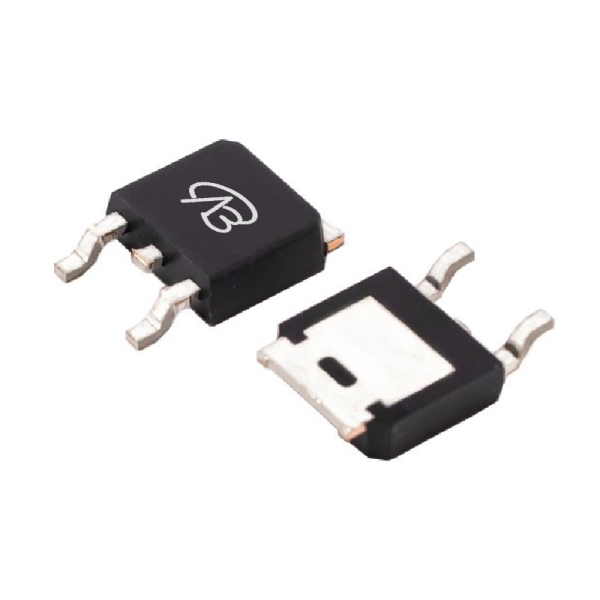
Comparative Analysis: DMTH4007LK3Q-13 (N-channel) vs. VBE1405
Analysis of the Original Model (DMTH4007LK3Q-13) Core:
This is an AEC-Q101 qualified, PPAP-capable N-channel MOSFET from DIODES in a TO-252 package, designed specifically for the harsh environment of automotive applications. Its design core is to provide high reliability and strong performance under stringent conditions. Key advantages include: a high continuous drain current rating of 70A, a drain-source voltage (Vdss) of 40V, and a low on-resistance of 9.8mΩ at a 4.5V gate drive. This combination makes it exceptionally suitable for high-current switching where robustness is paramount.
Compatibility and Differences of the Domestic Alternative (VBE1405):
VBsemi's VBE1405, also in a TO-252 package, serves as a pin-to-pin compatible alternative. It shows a significant performance enhancement in key electrical parameters: while maintaining the same 40V voltage rating, it offers a higher continuous current of 85A and a substantially lower on-resistance of 6mΩ (@4.5V) and 5mΩ (@10V).
Key Application Areas:
Original Model DMTH4007LK3Q-13: Its automotive-grade qualification and robust 70A current capability make it an ideal choice for critical 12V/24V automotive systems. Typical applications include:
Engine Management Systems: For injector or ignition coil drivers.
Body Control Electronics: Powering window lifts, seat controls, or LED lighting drivers.
Automotive DC-DC Converters: Serving as the main switch in power conversion modules.
Alternative Model VBE1405: With its superior current handling (85A) and lower conduction loss (6mΩ), it is perfectly suited for upgraded or new designs requiring higher efficiency and power density within the same form factor. It is an excellent choice for high-performance automotive applications, industrial motor drives, or high-current DC-DC converters where minimizing loss is critical.
Comparative Analysis: DMP2004UFG-13 (P-channel) vs. VBQF2205
This P-channel MOSFET is engineered for applications demanding very high current in a compact solution.
Analysis of the Original Model (DMP2004UFG-13) Core:
The design pursuit of this MOSFET is maximizing current capacity while maintaining manageable conduction losses in a space-efficient package. Its core advantages are:
Exceptional Current Handling: A remarkably high continuous drain current of 115A at a Vdss of -20V.
Low On-Resistance: An RDS(on) as low as 7mΩ at a 2.5V gate drive, which helps reduce power dissipation during conduction.
High Power Dissipation: A Pd of 52W indicates good thermal performance for its class.
Compatibility and Differences of the Domestic Alternative (VBQF2205):
VBsemi's VBQF2205, in a compact DFN8(3x3) package, presents a highly competitive alternative. While the package differs from the original (requiring board layout adjustment), it offers compelling electrical characteristics: a similar -20V voltage rating, a very high continuous current of -52A, and an impressively low on-resistance of 6mΩ (@4.5V) and 4mΩ (@10V).
Key Application Areas:
Original Model DMP2004UFG-13: Its ultra-high 115A current rating makes it targeted for extreme high-current load switching or power distribution applications, potentially in server power supplies, high-end computing, or specialized industrial equipment where minimizing the number of parallel devices is beneficial.
Alternative Model VBQF2205: With its excellent combination of -52A current, ultra-low RDS(on) (down to 4mΩ), and a compact DFN package, it is ideally suited for high-efficiency, space-constrained applications requiring a high-side P-channel switch. Typical uses include:
High-Current Load Switches in portable devices or modules.
Power Path Management in battery-powered systems.
Synchronous Rectification or High-Side Switching in compact, high-power-density DC-DC converters.
Conclusion
In summary, this comparative analysis reveals two distinct selection strategies:
For automotive-grade, high-reliability N-channel applications, the original model DMTH4007LK3Q-13, with its AEC-Q101 certification and robust 70A/9.8mΩ performance, remains the default choice for qualified automotive designs. Its domestic alternative VBE1405 offers a significant "performance upgrade" path with higher current (85A) and lower resistance (6mΩ), making it an excellent option for enhancing efficiency in new automotive designs or for demanding industrial applications.
For ultra-high-current P-channel switching, the original DMP2004UFG-13 stands out with its exceptional 115A current capability. The domestic alternative VBQF2205 takes a different approach, offering a compact, high-efficiency solution with a still-very-high -52A current and remarkably low on-resistance in a small DFN package, ideal for modern power-dense designs where space and efficiency are premium.
The core conclusion is that selection is driven by specific application priorities: certified ruggedness and proven performance versus enhanced efficiency and power density. In the context of supply chain diversification, domestic alternatives like VBE1405 and VBQF2205 not only provide viable backup options but also deliver superior parameters in key areas, offering engineers greater flexibility and resilience in design trade-offs and cost optimization. A deep understanding of each device's design philosophy and parameter implications is essential to unlock its full potential within your circuit.

Download PDF document
 Download now


