 中文
中文 English
MOSFET Selection for High-Power Density Applications: DMT10H025SK3-13, DMTH46M7SFVW-7 vs. China Alternatives VBE1102N, VBQF1405
Number of views:9999
 Back to previous page
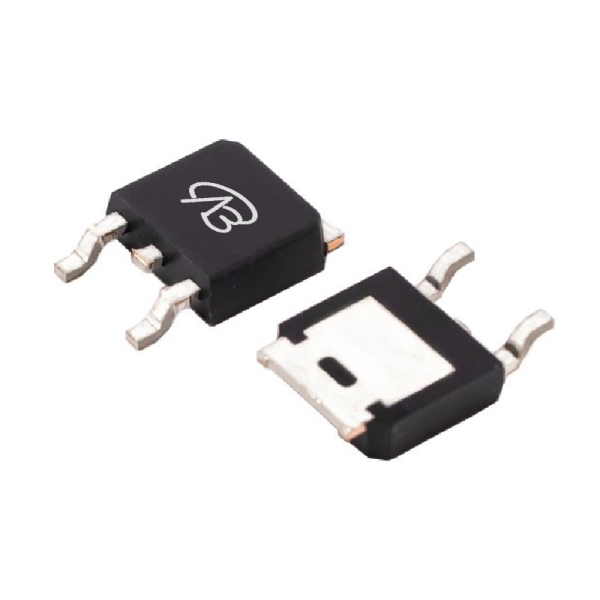
Comparative Analysis: DMT10H025SK3-13 (N-channel) vs. VBE1102N
Analysis of the Original Model (DMT10H025SK3-13) Core:
This is a 100V N-channel MOSFET from DIODES in a TO-252 (DPAK) package. Its design core is to provide high current handling and efficient switching for robust power management. Key advantages are: a high continuous drain current rating of 41.2A and a low on-resistance of 30mΩ at 6V gate drive. As a new-generation MOSFET, it features fast switching characteristics, making it ideal for high-efficiency power conversion.
Compatibility and Differences of the Domestic Alternative (VBE1102N):
VBsemi's VBE1102N is a pin-to-pin compatible alternative in the same TO-252 package. The main differences are in electrical parameters: VBE1102N offers a superior on-resistance of 18mΩ (at 10V gate drive) compared to the original's 30mΩ (at 6V), and a slightly higher continuous current rating of 45A versus 41.2A, while maintaining the same 100V voltage rating.
Key Application Areas:
Original Model DMT10H025SK3-13: Excellent for 100V applications requiring a balance of high current, moderate on-resistance, and robust package thermal performance. Typical uses include:
Switching power supplies (SMPS) and DC-DC converters in industrial/telecom settings.
Motor drives and inverters.
High-side or low-side switching in power stages.
Alternative Model VBE1102N: Better suited for applications demanding lower conduction losses and higher current capacity within the same voltage class. Its lower RDS(on) translates to higher efficiency, especially in high-current paths.
Comparative Analysis: DMTH46M7SFVW-7 (N-channel) vs. VBQF1405
This comparison focuses on high-current, low-voltage applications where minimizing on-resistance is critical for efficiency.
Analysis of the Original Model (DMTH46M7SFVW-7) Core:
This 40V N-channel MOSFET from DIODES uses a PowerDI3333-8 package. Its design pursues an exceptional balance of very low on-resistance and high current capability in a compact footprint. Core advantages include: an ultra-low on-resistance of 7.4mΩ at 10V gate drive, an extremely high continuous drain current of 67.2A, and a 3.2W power dissipation rating facilitating good thermal management in a small space.
Compatibility and Differences of the Domestic Alternative (VBQF1405):
VBsemi's VBQF1405, in a DFN8(3x3) package, is a highly competitive alternative. While the continuous current rating (40A) is lower than the original's 67.2A, it offers a significantly lower on-resistance of 4.5mΩ at 10V gate drive. This makes it a "performance-enhanced" choice in terms of conduction loss for applications within its current rating.
Key Application Areas:
Original Model DMTH46M7SFVW-7: Ideal for space-constrained, high-current 40V applications where minimizing voltage drop and power loss is paramount. Typical applications include:
Synchronous rectification in high-current DC-DC converters (e.g., for servers, GPUs).
High-current load switches and power distribution.
Motor drives for robotics or automotive subsystems.
Alternative Model VBQF1405: An excellent choice for 40V applications prioritizing ultra-low on-resistance over extreme current capability. Its 4.5mΩ RDS(on) offers superior efficiency for medium-to-high current (up to 40A) switching, such as in compact DC-DC converters or motor drives where thermal performance is crucial.
Conclusion:
This analysis reveals two distinct selection strategies based on application priorities:
1. For 100V, high-current applications in a robust TO-252 package, the original DMT10H025SK3-13 provides a reliable, balanced performance. Its domestic alternative VBE1102N offers a compelling upgrade path with lower on-resistance (18mΩ vs. 30mΩ) and higher current rating (45A vs. 41.2A), enabling potentially higher efficiency and power handling in compatible designs.
2. For 40V, ultra-low resistance applications where current density is key, the original DMTH46M7SFVW-7 sets a high bar with its 67.2A current and 7.4mΩ RDS(on). The domestic alternative VBQF1405, while rated for lower continuous current (40A), achieves a remarkable 4.5mΩ RDS(on), making it a top contender for designs where minimizing conduction loss is the primary goal within its current range.
The core takeaway is that selection depends on precise requirement matching. Domestic alternatives like VBE1102N and VBQF1405 not only provide supply chain resilience but also offer parameter advantages—either surpassing or strategically differing from the originals—giving engineers greater flexibility in optimizing performance, cost, and design margins.

Download PDF document
 Download now


