 中文
中文 English
MOSFET Selection for Automotive and Power Management: DMP4051LK3Q-13, DMC3025LSDQ-13 vs. China Alternatives VBE2420, VBA5325
Number of views:9999
 Back to previous page
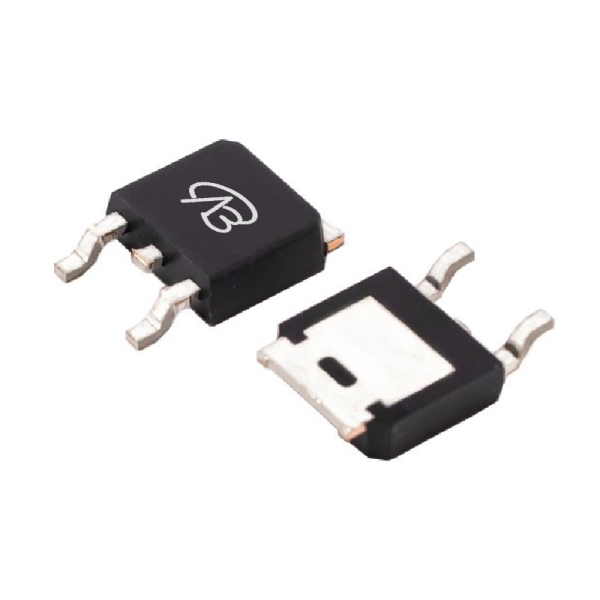
Comparative Analysis: DMP4051LK3Q-13 (P-channel) vs. VBE2420
Analysis of the Original Model (DMP4051LK3Q-13) Core:
This is a 40V P-channel MOSFET in a TO-252 (DPAK) package. Its design core is to minimize on-resistance (RDS(ON)) while maintaining excellent switching performance, making it ideal for efficient power management. Key advantages include: an on-resistance of 51mΩ at 10V, a continuous drain current of 10.5A, and suitability for applications requiring good thermal performance in a compact footprint.
Compatibility and Differences of the Domestic Alternative (VBE2420):
VBsemi’s VBE2420 is also in a TO-252 package and is a pin-to-pin compatible alternative. The main differences are in electrical parameters: VBE2420 offers a significantly lower on-resistance of 17mΩ at 10V and a much higher continuous current rating of -40A, while maintaining the same -40V voltage rating. This represents a substantial performance upgrade in conduction loss and current handling.
Key Application Areas:
Original Model DMP4051LK3Q-13: Well-suited for medium-current power management and switching in 12V/24V systems where a balance of performance and cost is needed. Typical applications include:
Power switches in industrial controls.
Load switching in automotive auxiliary systems.
High-side switches in DC-DC converters.
Alternative Model VBE2420: An excellent upgrade choice for applications demanding lower conduction losses and higher current capacity (up to 40A). Ideal for:
High-efficiency power stages in motor drives or power supplies.
Applications where reducing thermal dissipation is critical.
Comparative Analysis: DMC3025LSDQ-13 (Dual N+P-channel) vs. VBA5325
Analysis of the Original Model (DMC3025LSDQ-13) Core:
This AEC-Q101 qualified dual MOSFET in an SO-8 package integrates one N-channel and one P-channel. It is designed for the rigorous demands of automotive applications, with PPAP support. Key features include: 30V voltage rating, N-channel RDS(on) of 20mΩ at 10V (Id=7.4A), P-channel RDS(on) of 45mΩ at 10V (Id=5.2A), and current ratings of 6.5A (N) and 4.2A (P). It offers a compact solution for bidirectional switching and control.
Compatibility and Differences of the Domestic Alternative (VBA5325):
VBsemi’s VBA5325 is a direct pin-to-pin compatible dual N+P MOSFET in an SOP-8 package. It shows enhanced performance: a higher voltage rating of ±30V, lower on-resistance (18mΩ for N-channel, 40mΩ for P-channel at 10V), and higher continuous current ratings of ±8A for both channels. This provides better efficiency and current handling in a similar form factor.
Key Application Areas:
Original Model DMC3025LSDQ-13: Perfect for space-constrained automotive and industrial applications requiring reliable dual-channel switching. Typical uses include:
DC motor control (e.g., window lifts, fans).
DC-AC inverters in automotive systems.
Power management units requiring complementary switches.
Alternative Model VBA5325: A high-performance alternative suitable for applications needing higher current, lower resistance, and extended voltage margin. Ideal for:
Upgraded motor drives and inverter designs.
High-efficiency, compact power modules in automotive and industrial settings.
Conclusion
In summary, this comparison reveals two distinct selection pathways:
For P-channel applications in standard power packages, the original DMP4051LK3Q-13 provides reliable 40V/10.5A performance with 51mΩ RDS(on). Its domestic alternative VBE2420 is a performance-enhanced upgrade, offering dramatically lower RDS(on) (17mΩ) and higher current capacity (40A), making it superior for designs prioritizing maximum efficiency and power handling.
For dual N+P-channel automotive-grade applications, the AEC-Q101 certified DMC3025LSDQ-13 offers a proven, compact solution. Its domestic alternative VBA5325 provides significant parametric improvements—higher voltage (±30V), lower RDS(on) (18/40mΩ), and higher current (±8A)—making it a compelling choice for next-generation designs requiring higher performance without sacrificing footprint.
The core takeaway: Selection is about precise requirement matching. In the context of supply chain diversification, domestic alternatives like VBE2420 and VBA5325 not only provide reliable compatibility but also offer performance advantages, giving engineers greater flexibility and resilience in design trade-offs and cost optimization. Understanding each device's design philosophy and parameter implications is key to unlocking its full potential in your circuit.

Download PDF document
 Download now


