 中文
中文 English
MOSFET Selection for Power Management and Automotive Interfaces: DMP4047SSD-13, BSS84Q-13-F vs. China Alternatives VBA4625, VB264K
Number of views:9999
 Back to previous page
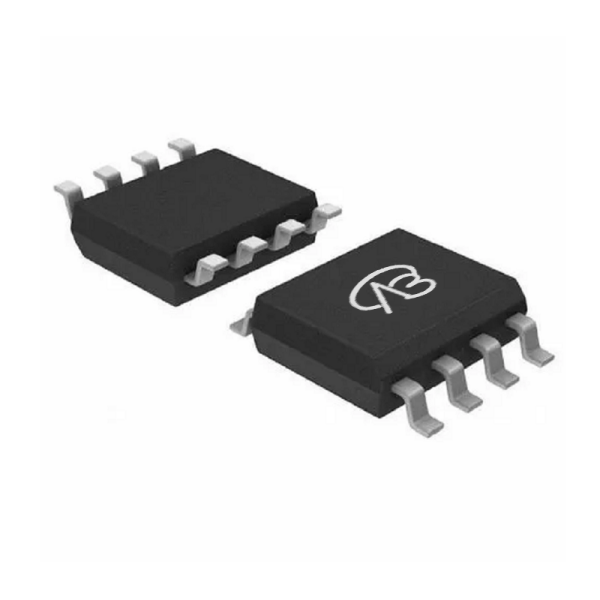
Comparative Analysis: DMP4047SSD-13 (Dual P-Channel) vs. VBA4625
Analysis of the Original Model (DMP4047SSD-13) Core:
This DIODES dual P-channel MOSFET in an SO-8 package is engineered for efficient power management with a focus on low conduction loss and robust switching. Its key advantages include a drain-source voltage (Vdss) of -40V, a continuous drain current (Id) of -6.5A, and a low on-resistance (RDS(on)) of 45mΩ at 10V. It is designed to minimize RDS(on) while maintaining excellent switching performance.
Compatibility and Differences of the Domestic Alternative (VBA4625):
VBsemi’s VBA4625 is a dual P-channel MOSFET in an SOP8 package, offering a pin-to-pin compatible alternative. It provides enhanced voltage capability (-60V) and lower on-resistance: 30mΩ at 4.5V and 20mΩ at 10V. However, its continuous current rating is -8.5A, which is higher than the original, making it a performance-upgraded option in similar applications.
Key Application Areas:
Original Model DMP4047SSD-13: Ideal for space-constrained, efficient power management systems requiring dual P-channel switches, such as:
Power distribution and load switching in 24V/12V systems.
High-side switching in DC-DC converters or motor drive circuits.
Battery protection and power path management in portable devices.
Alternative Model VBA4625: Suited for applications demanding higher voltage tolerance (-60V) and lower conduction loss, such as:
Industrial power supplies or automotive auxiliary systems requiring enhanced efficiency.
Upgraded designs where lower RDS(on) and higher current capability are beneficial.
Comparative Analysis: BSS84Q-13-F (P-Channel) vs. VB264K
Analysis of the Original Model (BSS84Q-13-F) Core:
This AEC-Q101 qualified P-channel MOSFET from DIODES in an SOT-23 package is tailored for automotive and general-purpose switching. It features a drain-source voltage (Vdss) of -50V, a continuous drain current (Id) of -130mA, and an on-resistance (RDS(on)) of 3.2Ω at 5V. Its design ensures reliability in harsh environments, supported by PPAP documentation.
Compatibility and Differences of the Domestic Alternative (VB264K):
VBsemi’s VB264K is a P-channel MOSFET in an SOT23-3 package, offering direct compatibility. It provides a higher voltage rating (-60V) and a lower continuous current rating of -0.5A. Its on-resistance is higher: 4000mΩ at 4.5V and 3000mΩ at 10V, indicating a trade-off for increased voltage robustness in low-current applications.
Key Application Areas:
Original Model BSS84Q-13-F: Designed for automotive and interface switching where reliability is critical, such as:
General-purpose signal or load switching in automotive ECUs.
Interface protection and level shifting in communication modules.
Low-power switching in consumer electronics requiring AEC-Q101 compliance.
Alternative Model VB264K: Suitable for applications requiring higher voltage margin (-60V) with low-current switching needs, such as:
Protection circuits or signal isolation in industrial or automotive low-power systems.
Cost-sensitive designs where enhanced voltage tolerance is prioritized over ultra-low RDS(on).
Conclusion:
This comparison highlights two distinct selection pathways:
For dual P-channel applications in power management, the original DMP4047SSD-13 offers a balanced solution with 45mΩ RDS(on) and 6.5A current capability, ideal for efficient switching in SO-8 footprints. The domestic alternative VBA4625 provides a performance-enhanced option with lower RDS(on) (20mΩ@10V) and higher voltage rating (-60V), suitable for upgraded designs demanding better efficiency and robustness.
For automotive-grade P-channel switching, the AEC-Q101 certified BSS84Q-13-F excels in reliability for low-current interfaces. Its domestic alternative VB264K offers higher voltage tolerance (-60V) with a lower current rating, fitting applications where voltage margin is key and current demands are minimal.
The core insight: Selection depends on precise requirement matching. Domestic alternatives like VBA4625 and VB264K not only provide supply chain resilience but also offer parameter-specific advantages, giving engineers flexible options for design optimization and cost efficiency. Understanding each device’s design intent and parametric trade-offs is essential to leveraging its full potential in the circuit.

Download PDF document
 Download now


