 中文
中文 English
MOSFET Selection for Compact Power Applications: DMP4025LSD-13, 2N7002VAC-7 vs. China Alternatives VBA4625, VBTA3615M
Number of views:9999
 Back to previous page
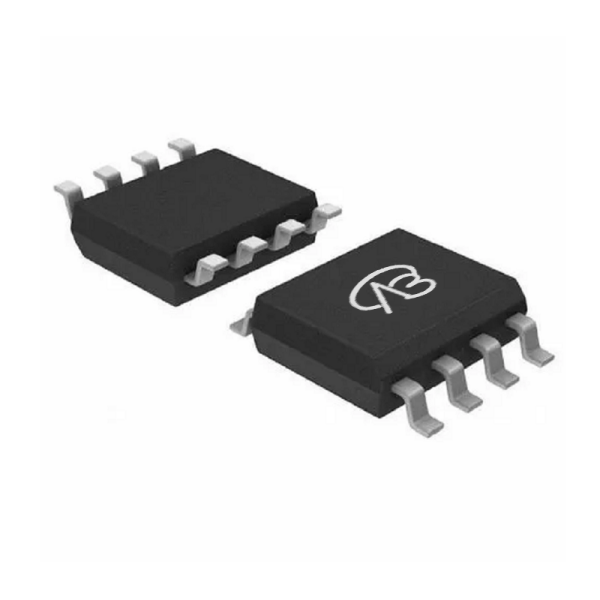
Comparative Analysis: DMP4025LSD-13 (Dual P-channel) vs. VBA4625
Analysis of the Original Model (DMP4025LSD-13) Core:
This is a Dual P-channel MOSFET from DIODES in an SO-8 package. Its design core is to provide dual P-channel switching in a standard footprint for space-efficient designs. The key advantages are: a drain-source voltage of -40V, a continuous drain current of -5.8A per channel, and a low on-resistance of 25mΩ at a -10V gate drive. It integrates two P-channel devices, simplifying board layout for applications requiring high-side switching or complementary pairs.
Compatibility and Differences of the Domestic Alternative (VBA4625):
VBsemi's VBA4625 is also a Dual P-channel MOSFET in an SOP8 package, offering direct pin-to-pin compatibility. The main differences lie in the electrical parameters: VBA4625 has a higher voltage rating (-60V) and a higher continuous current rating (-8.5A). Its on-resistance is 20mΩ at -10V, which is lower than the original model, promising better conduction loss. However, its gate threshold voltage is -1.7V, which is different from the original and requires consideration in drive circuit design.
Key Application Areas:
Original Model DMP4025LSD-13: Its characteristics are suitable for applications requiring dual P-channel switches in a compact package within 40V systems, such as:
- Power management in portable devices for load switching or power path control.
- H-bridge or half-bridge configurations for motor control or other bidirectional switching.
- Space-constrained DC-DC converters or power distribution units.
Alternative Model VBA4625: More suitable for applications requiring higher voltage margin (up to -60V), higher current capability (-8.5A), and lower on-resistance. It is an excellent upgrade for designs needing improved efficiency and power handling in similar form factors.
Comparative Analysis: 2N7002VAC-7 (N-channel) vs. VBTA3615M
Analysis of the Original Model (2N7002VAC-7) Core:
This is a small-signal N-channel MOSFET from DIODES in an ultra-miniature SOT-563 package. Its design pursuit is to provide basic switching functionality in the smallest possible space for low-power applications. Its core advantages are: a 60V drain-source voltage rating, a continuous drain current of 210mA, and an on-resistance of 7.5Ω at 5V gate drive and 0.05A drain current. Its very low profile and footprint make it ideal for high-density PCB designs.
Compatibility and Differences of the Domestic Alternative (VBTA3615M):
VBsemi's VBTA3615M is a Dual N-channel MOSFET in an SC75-6 package. It is not a direct pin-to-pin replacement for the single 2N7002VAC-7 but offers a dual-channel solution in a similarly compact footprint. The key parameters: VBTA3615M also has a 60V voltage rating, a slightly higher continuous current of 0.3A per channel, and an on-resistance of 1200mΩ (1.2Ω) at 10V gate drive. Its on-resistance is significantly lower than the original model's 7.5Ω under comparable conditions, indicating much better conduction performance. It integrates two devices, increasing functionality density.
Key Application Areas:
Original Model 2N7002VAC-7: Its ultra-small size and sufficient ratings for low-current switching make it a classic choice for:
- Signal level shifting and interfacing in digital circuits.
- Driving small relays, LEDs, or other low-power peripherals in consumer electronics.
- Load switching for low-current modules in space-constrained IoT devices.
Alternative Model VBTA3615M: Is more suitable for applications requiring dual N-channel switches with better conduction performance (lower RDS(on)) and slightly higher current capability in a compact package. It is ideal for upgrading designs where board space is critical, and dual switches or improved efficiency are needed.
Summary
In summary, this comparative analysis reveals two distinct selection paths:
For applications requiring dual P-channel switches in a standard SO-8 footprint, the original model DMP4025LSD-13 offers a balanced solution with -40V/-5.8A capability. Its domestic alternative VBA4625 provides a performance-enhanced option with higher voltage (-60V), higher current (-8.5A), and lower on-resistance (20mΩ), making it a powerful upgrade for efficiency-critical designs.
For applications centered on ultra-compact, low-power switching, the original model 2N7002VAC-7 in SOT-563 is a proven solution for basic signal and light load control. Its domestic alternative VBTA3615M, while in a different (SC75-6) package, offers a functionality-enhanced dual N-channel solution with significantly improved conduction characteristics, suitable for designers seeking to consolidate two discrete switches or improve performance in a similarly small board area.
The core conclusion is: Selection hinges on precise requirement matching. In the context of supply chain diversification, domestic alternatives like VBA4625 and VBTA3615M not only provide viable backups but also offer opportunities for performance or integration upgrades, giving engineers greater flexibility in design trade-offs and cost optimization. Understanding each device's design intent and parameter implications is key to unlocking its full potential in your circuit.

Download PDF document
 Download now


