 中文
中文 English
MOSFET Selection for Compact Automotive and Power Management: DMP3130LQ-7, DMN53D0LT-7 vs. China Alternatives VB2355, VBTA161K
Number of views:9999
 Back to previous page
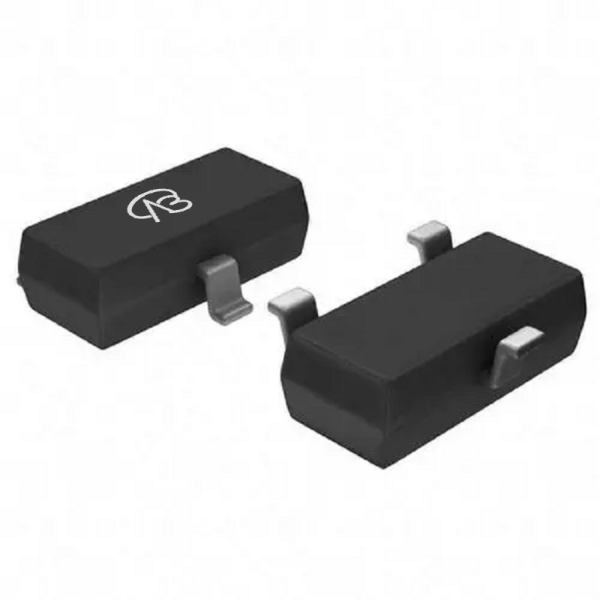
Comparative Analysis: DMP3130LQ-7 (P-channel) vs. VB2355
Analysis of the Original Model (DMP3130LQ-7) Core:
This is a 30V P-channel MOSFET from DIODES in a compact SOT-23 package. It is specifically designed to meet the rigorous demands of automotive applications, compliant with AEC-Q101 standards and supported by PPAP documentation. Its key advantages include a continuous drain current of 3.5A and an on-resistance (RDS(on)) of 77mΩ at 10V gate drive. With a power dissipation rating of 700mW, it offers a robust solution for space-constrained automotive and power management circuits.
Compatibility and Differences of the Domestic Alternative (VB2355):
VBsemi's VB2355 is a pin-to-pin compatible alternative in SOT-23-3 package. The main differences are in electrical parameters: VB2355 features a comparable voltage rating (-30V) but offers significantly lower on-resistance—46mΩ at 10V and 54mΩ at 4.5V—and a higher continuous current rating of -5.6A. This results in better conduction loss and higher current handling capability.
Key Application Areas:
Original Model DMP3130LQ-7: Ideal for automotive-grade applications requiring AEC-Q101 compliance and PPAP support, such as DC-DC converters, power management functions, and analog switching in vehicle systems.
Alternative Model VB2355: Suited for applications demanding lower conduction loss and higher current capacity within a similar voltage range, including general-purpose power management, load switching, and DC-DC conversion where automotive certification is not mandatory.
Comparative Analysis: DMN53D0LT-7 (N-channel) vs. VBTA161K
Analysis of the Original Model (DMN53D0LT-7) Core:
This is a 50V N-channel MOSFET from DIODES in an ultra-small SOT-523 package. Its design focuses on minimizing on-resistance while maintaining good switching performance for efficient power management. It offers a continuous drain current of 350mA with an RDS(on) of 1.08Ω at 10V gate drive, making it suitable for low-power, space-sensitive applications.
Compatibility and Differences of the Domestic Alternative (VBTA161K):
VBsemi's VBTA161K comes in an SC75-3 package and serves as a functional alternative. Key parameter differences include a higher voltage rating (60V), a lower continuous current (0.33A), and an on-resistance of 1.2Ω at 10V and 2Ω at 4.5V. While its current rating is slightly lower, it offers a higher voltage margin and is designed with trench technology for efficient switching.
Key Application Areas:
Original Model DMN53D0LT-7: Excellent for low-power, high-density designs where minimizing RDS(on) and package size are critical, such as in portable devices, sensor interfaces, and low-current power management modules.
Alternative Model VBTA161K: A suitable choice for applications requiring a higher voltage rating (up to 60V) and where the current demand is within 0.33A, such as signal switching, protection circuits, or low-power converters in industrial or consumer electronics.
Conclusion:
This comparison highlights two distinct selection pathways:
For P-channel applications in automotive or power management, the original DMP3130LQ-7 stands out with its AEC-Q101 compliance and proven reliability for automotive use, making it the preferred choice for certified applications. Its domestic alternative VB2355 offers superior on-resistance and higher current capability, providing an efficient upgrade for non-automotive or cost-sensitive designs.
For N-channel applications in ultra-compact, low-power circuits, the original DMN53D0LT-7 excels with its very low on-resistance in a tiny SOT-523 footprint, ideal for space-constrained efficiency-critical designs. The domestic alternative VBTA161K extends the voltage capability to 60V and serves as a viable option for designs requiring higher voltage tolerance and trench technology benefits.
The core insight is that selection depends on precise requirement matching. In the context of supply chain diversification, domestic alternatives like VB2355 and VBTA161K not only provide reliable backup options but also offer enhanced performance in specific parameters, giving engineers greater flexibility and resilience in design trade-offs and cost optimization. Understanding each device's design philosophy and parameter implications is key to maximizing its value in your circuit.

Download PDF document
 Download now


