 中文
中文 English
MOSFET Selection for Compact Power Applications: DMP2035UTS-13, DMT6008LFG-13 vs. China Alternatives VBC6P2216, VBQF1606
Number of views:9999
 Back to previous page
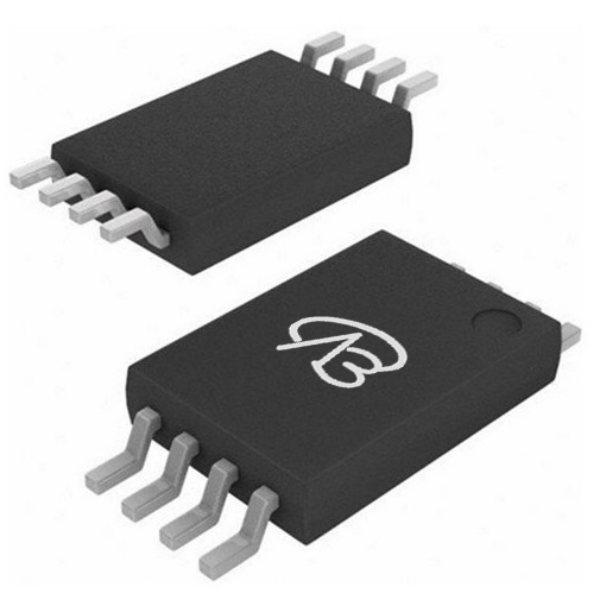
Comparative Analysis: DMP2035UTS-13 (Dual P-channel) vs. VBC6P2216
Analysis of the Original Model (DMP2035UTS-13) Core:
This is a 20V dual P-channel MOSFET from DIODES in a TSSOP-8 package. Its design core focuses on providing reliable, space-efficient dual switching with good overall performance. Key advantages include: a low on-resistance of 30mΩ at 2.5V gate drive, a continuous drain current of 6.04A per channel, fast switching speed, and low input capacitance. It also features ESD protection up to 3kV, is AEC-Q101 qualified for high reliability, and is a green/RoHS-compliant device.
Compatibility and Differences of the Domestic Alternative (VBC6P2216):
VBsemi's VBC6P2216 is a direct pin-to-pin compatible alternative in a TSSOP-8 package, also featuring a dual P-channel configuration. The main differences lie in its enhanced electrical parameters: VBC6P2216 offers a significantly lower on-resistance of 18mΩ at 4.5V (13mΩ at 10V) and supports a higher continuous current of -7.5A per channel, while maintaining the same -20V voltage rating.
Key Application Areas:
Original Model DMP2035UTS-13: Ideal for applications requiring dual high-side switching or complementary signals in space-constrained 12V-20V systems where reliability and standardized performance are priorities. Typical uses include:
Power management in automotive subsystems (leveraging AEC-Q101 qualification).
Load switching and power distribution in compact consumer electronics.
Signal routing and interface protection circuits.
Alternative Model VBC6P2216: Better suited for applications demanding lower conduction losses and higher current capability within the same voltage range and footprint. It's an excellent upgrade for designs needing improved efficiency in dual P-channel circuits, such as in more demanding power path management or motor control modules.
Comparative Analysis: DMT6008LFG-13 (N-channel) vs. VBQF1606
This N-channel comparison shifts the focus towards achieving high current handling with low loss in a thermally efficient package.
Analysis of the Original Model (DMT6008LFG-13) Core:
This is a 60V N-channel MOSFET from DIODES in a PowerDI3333-8 package. Its design pursues an optimal balance of high current, low resistance, and good thermal performance. Core advantages are:
High Current Capability: A continuous drain current rating of 60A.
Low Conduction Loss: Features an on-resistance as low as 7.5mΩ at a 10V gate drive (11.5mΩ at 4.5V).
Robust Package: The PowerDI3333-8 package offers excellent power dissipation in a relatively compact size, making it suitable for high-power density applications.
Compatibility and Differences of the Domestic Alternative (VBQF1606):
VBsemi's VBQF1606, in a DFN8(3x3) package, represents a "performance-optimized" alternative. While the voltage rating remains 60V, it offers a compelling parameter trade-off: a substantially lower on-resistance of 5mΩ at 10V, leading to even lower conduction losses. Its continuous current rating is 30A, which is robust for many high-efficiency applications requiring superior RDS(on).
Key Application Areas:
Original Model DMT6008LFG-13: Its combination of very high current (60A) and low on-resistance makes it a strong candidate for demanding medium-to-high power applications. Examples include:
Synchronous rectification in 48V intermediate bus converters or high-current DC-DC stages.
Motor drives for industrial tools, drones, or electric vehicles.
High-current load switches and circuit breakers in power systems.
Alternative Model VBQF1606: Excels in applications where minimizing conduction loss is critical, and the required continuous current is within 30A. Its ultra-low 5mΩ RDS(on) makes it ideal for:
High-efficiency synchronous buck converters for computing or telecom point-of-load (PoL) modules.
Motor drives prioritizing efficiency and thermal performance over peak current headroom.
Any upgrade path where reducing power loss in the switch is a primary design goal.
Conclusion
In summary, this analysis reveals two distinct selection strategies:
For dual P-channel applications prioritizing reliability and standard performance in a compact footprint, the AEC-Q101 qualified DMP2035UTS-13 is a solid choice, especially for automotive or industrial uses. Its domestic alternative VBC6P2216 offers a compelling performance upgrade with significantly lower on-resistance and higher current capability, making it ideal for efficiency-focused redesigns or new projects within the same voltage range.
For high-current N-channel applications, the DMT6008LFG-13 stands out with its exceptional 60A current rating and low RDS(on), suited for the most demanding power stages. The alternative VBQF1606 shifts the priority towards maximizing efficiency, offering an ultra-low 5mΩ RDS(on) for applications where minimizing conduction loss is paramount and a 30A current rating is sufficient.
The core takeaway is that selection is about precise requirement matching. In an era of supply chain diversification, domestic alternatives like VBC6P2216 and VBQF1606 not only provide reliable backup options but also offer targeted performance enhancements, giving engineers greater flexibility and resilience in design trade-offs and cost optimization. Understanding the design philosophy and parameter implications of each device is key to unlocking its full potential in your circuit.

Download PDF document
 Download now


