 中文
中文 English
MOSFET Selection for Automotive and Efficient Power Management: DMP10H4D2S-7, DMTH6004SK3Q-13 vs. China Alternatives VB2103K, VBGE1603
Number of views:9999
 Back to previous page
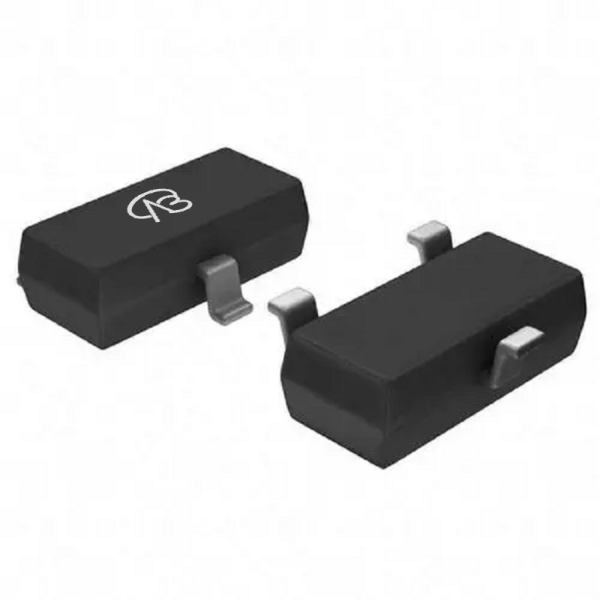
Comparative Analysis: DMP10H4D2S-7 (P-channel) vs. VB2103K
Analysis of the Original Model (DMP10H4D2S-7) Core:
This is a 100V P-channel MOSFET from DIODES in a compact SOT-23 package. Its design core focuses on minimizing conduction loss while maintaining good switching performance in space-constrained, high-voltage applications. Key advantages include a high voltage rating of -100V and a relatively low on-resistance of 2.8Ω at a 10V gate drive, supporting a continuous drain current of 270mA. It is engineered for efficient power management circuits.
Compatibility and Differences of the Domestic Alternative (VB2103K):
VBsemi's VB2103K is a pin-to-pin compatible alternative in the same SOT23-3 package. The main differences are in electrical parameters: while both are -100V P-channel devices, the VB2103K has a higher on-resistance (3.0Ω @10V vs. 2.8Ω) and a lower continuous current rating (-0.3A vs. -0.27A). This indicates the original model holds a slight edge in conduction efficiency and current capacity.
Key Application Areas:
Original Model DMP10H4D2S-7: Ideal for compact, high-voltage P-channel switching where low RDS(on) is prioritized. Typical applications include power management in industrial controls, auxiliary power switches, and high-side load switches in sub-300mA circuits.
Alternative Model VB2103K: Serves as a viable alternative for similar high-voltage P-channel applications where the slightly higher resistance is acceptable, offering a cost-effective and sourcing-resilient option for basic switching functions.
Comparative Analysis: DMTH6004SK3Q-13 (N-channel) vs. VBGE1603
This comparison shifts to high-power, automotive-grade N-channel MOSFETs, where the design pursuit is high current, ultra-low resistance, and automotive reliability.
Analysis of the Original Model (DMTH6004SK3Q-13) Core:
This 60V N-channel MOSFET from DIODES comes in a TO-252 (DPAK) package and is AEC-Q101 qualified with PPAP support. Its core advantages are:
High Power Handling: Capable of a continuous drain current of 100A.
Ultra-Low Conduction Loss: Features an exceptionally low on-resistance of 3.8mΩ at 10V gate drive.
Automotive Robustness: Designed to meet the stringent requirements of automotive environments.
Key Application Areas: Engine management systems, body control electronics, high-current DC-DC converters, and motor control in automotive applications.
Compatibility and Differences of the Domestic Alternative (VBGE1603):
VBsemi's VBGE1603, also in a TO-252 package, presents itself as a "performance-enhanced" alternative. It matches the 60V voltage rating but offers superior key parameters:
Higher Current Capability: 120A continuous drain current vs. 100A.
Lower On-Resistance: 3.4mΩ @10V vs. 3.8mΩ.
This combination suggests the VBGE1603 can provide lower conduction losses, higher efficiency, and greater power handling margin in similar applications.
Key Application Areas for VBGE1603: Perfect for upgrade scenarios demanding higher efficiency and current capacity. It is exceptionally suitable for high-performance DC-DC converters, motor drives, and power distribution systems, especially where surpassing the original specification is beneficial, even beyond standard automotive needs.
Conclusion
This analysis reveals two distinct selection narratives:
1. For high-voltage, low-current P-channel applications in compact footprints, the original DMP10H4D2S-7 offers slightly better efficiency (lower RDS(on)). Its domestic alternative VB2103K provides a functionally compatible and accessible option with a minor trade-off in resistance.
2. For high-current, automotive-grade N-channel applications, the original DMTH6004SK3Q-13 is a robust, AEC-Q101 qualified solution. Its domestic alternative VBGE1603 emerges as a compelling "performance-enhanced" choice, offering higher current rating and lower on-resistance for designers seeking maximum efficiency and power density, potentially at a competitive cost.
The core takeaway is that selection hinges on precise requirement matching. In the context of supply chain diversification, domestic alternatives like VB2103K and VBGE1603 not only provide reliable backup options but can also offer parametric advantages, granting engineers greater flexibility in design optimization and cost management.

Download PDF document
 Download now


