 中文
中文 English
MOSFET Selection for Automotive and Power Applications: DMNH6022SSDQ-13, DMN6040SSSQ-13 vs. China Alternatives VBA3615, VBA1630
Number of views:9999
 Back to previous page
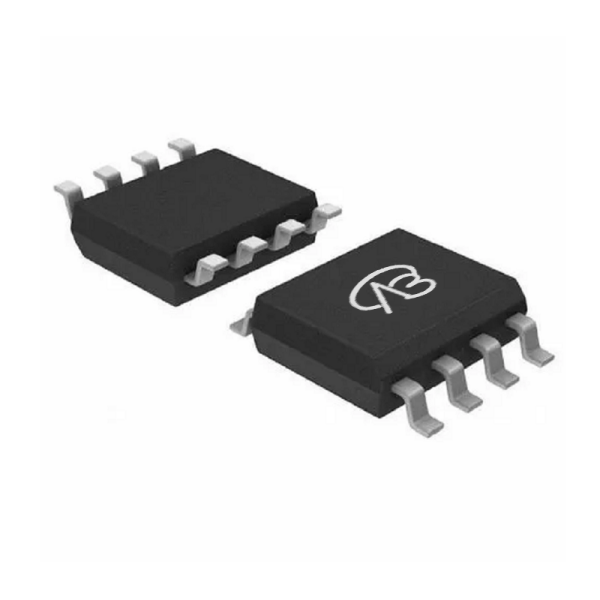
Comparative Analysis: DMNH6022SSDQ-13 (Dual N-Channel) vs. VBA3615
Analysis of the Original Model (DMNH6022SSDQ-13) Core:
This is an AEC-Q101 qualified dual N-channel MOSFET from DIODES in an SO-8 package, designed for automotive rigor. Its core design targets high-current switching in harsh environments. Key advantages are: a 60V drain-source voltage rating, a high continuous drain current of 22.6A per channel, and an on-resistance (RDS(on)) of 30mΩ at 6V gate drive. Its qualification and PPAP support make it ideal for safety-critical automotive systems.
Compatibility and Differences of the Domestic Alternative (VBA3615):
VBsemi's VBA3615 is also a dual N-channel MOSFET in an SOP8 package, offering direct pin-to-pin compatibility. The key differences are in electrical parameters: VBA3615 matches the 60V voltage rating but offers significantly lower on-resistance—12mΩ at 10V and 15mΩ at 4.5V. However, its continuous current rating (10A) is lower than the original's 22.6A.
Key Application Areas:
Original Model DMNH6022SSDQ-13: Its high current capability and automotive qualification make it perfect for demanding 12V/24V automotive systems.
Engine Management Systems: For injector or ignition coil driving.
Body Control Modules: Powering window lifts, seat adjusters, or lighting.
High-Current DC-DC Converters: In infotainment or ADAS power supplies.
Alternative Model VBA3615: More suitable for applications where lower conduction loss is prioritized over ultra-high per-channel current, or where the 10A rating is sufficient. Its superior RDS(on) benefits efficiency in compact power modules, industrial controls, or certain automotive auxiliary functions.
Comparative Analysis: DMN6040SSSQ-13 (Single N-Channel) vs. VBA1630
This single N-channel MOSFET is designed for cost-effective, reliable switching in automotive and industrial applications where moderate current is needed.
Analysis of the Original Model (DMN6040SSSQ-13) Core:
This AEC-Q101 qualified single N-channel MOSFET in SO-8 package balances voltage, current, and cost. Its core advantages are: a 60V Vdss, a 5.5A continuous current, and an on-resistance of 55mΩ at 4.5V gate drive. Its 2W power dissipation rating is suitable for compact designs with proper thermal management.
Compatibility and Differences of the Domestic Alternative (VBA1630):
VBsemi's VBA1630 is a single N-channel MOSFET in SOP8, offering a pin-to-pin compatible alternative. It presents a compelling "performance-enhanced" option: it matches the 60V rating but offers a higher continuous current of 7.6A and a substantially lower on-resistance—25mΩ at 10V and 35mΩ at 4.5V compared to the original's 55mΩ.
Key Application Areas:
Original Model DMN6040SSSQ-13: Ideal for cost-sensitive automotive and industrial applications requiring AEC-Q101 reliability.
Automotive Body Electronics: Solenoid or relay driving in door/window controls.
Low-Power DC-DC Converters: As a switch in non-isolated point-of-load converters.
Industrial Logic-Level Switching: For PLCs or sensor interfaces.
Alternative Model VBA1630: Better suited for upgrade scenarios demanding higher efficiency and current margin within the same package. Its lower RDS(on) reduces conduction losses, making it excellent for higher-efficiency power management, motor drives for small fans/pumps, or replacing the original for improved thermal performance.
Conclusion:
In summary, this analysis reveals two distinct selection paths based on application priorities:
For dual N-channel applications requiring high per-channel current and full automotive qualification, the original DMNH6022SSDQ-13 remains the premier choice for mission-critical automotive systems like engine management. Its domestic alternative VBA3615 offers a compelling trade-off with significantly lower on-resistance and is ideal for applications where efficiency gains are critical and its 10A current rating is adequate, or as a high-performance alternative in industrial contexts.
For single N-channel applications prioritizing cost-effectiveness and reliability in automotive/industrial settings, the original DMN6040SSSQ-13 is a proven solution. Its domestic alternative VBA1630 emerges as a strong "drop-in upgrade," providing higher current capability (7.6A vs. 5.5A) and much lower on-resistance, enabling better efficiency and thermal performance in new designs or as a direct replacement.
The core takeaway is that selection is not about absolute superiority but precise requirement matching. In an era of supply chain diversification, domestic alternatives like VBA3615 and VBA1630 not only provide reliable backup options but also offer performance advantages in key parameters, giving engineers greater flexibility in design optimization and cost control. Understanding the design intent and parameter implications of each device is key to unlocking its full potential in your circuit.

Download PDF document
 Download now


