 中文
中文 English
MOSFET Selection for Low-Power and Medium-Power Switching: DMN63D1LW-13, DMN2040U-7 vs. China Alternatives VBK162K, VB1240
Number of views:9999
 Back to previous page
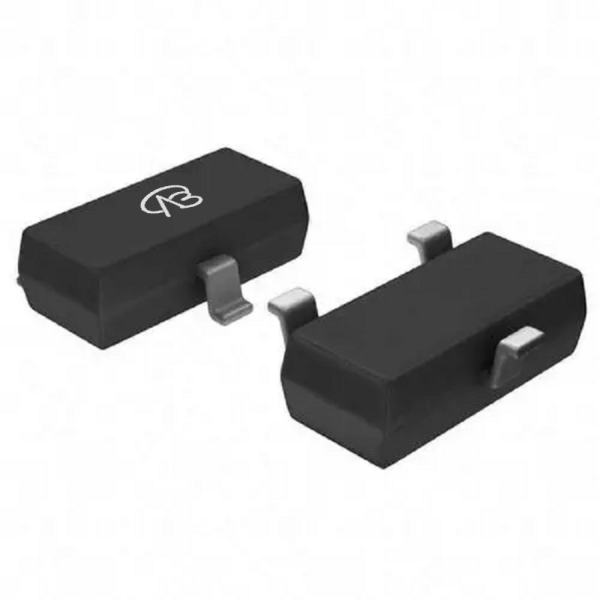
Comparative Analysis: DMN63D1LW-13 (N-channel) vs. VBK162K
Analysis of the Original Model (DMN63D1LW-13) Core:
This is a 60V N-channel MOSFET from DIODES in a compact SOT-323 package. Its design focuses on minimizing conduction loss while maintaining good switching performance for efficient power management in space-constrained applications. Key advantages include a drain-source voltage (Vdss) of 60V, a continuous drain current (Id) of 380mA, and a relatively low on-resistance of 2Ω at 10V gate drive.
Compatibility and Differences of the Domestic Alternative (VBK162K):
VBsemi's VBK162K is offered in an SC70-3 package and serves as a functional alternative for low-power switching. The main differences are in electrical parameters: VBK162K shares the same 60V voltage rating but has a lower continuous current rating of 0.3A (300mA). Its on-resistance is higher, specified at 2000mΩ (2Ω) at 10V, similar to the original's benchmark, but detailed switching performance should be verified per datasheet.
Key Application Areas:
Original Model DMN63D1LW-13: Ideal for low-current, higher-voltage switching needs where board space is limited. Typical applications include:
Signal switching and level translation in communication interfaces.
Load switching for low-power modules in portable or IoT devices.
Protection circuits or auxiliary switches in 48V or lower voltage systems.
Alternative Model VBK162K: Suitable as a pin-to-pin compatible alternative in applications where the current requirement is within 300mA and a 60V rating is needed, such as in certain battery management or low-power auxiliary circuits.
Comparative Analysis: DMN2040U-7 (N-channel) vs. VB1240
This comparison shifts to medium-current applications where low on-resistance is paramount for efficiency.
Analysis of the Original Model (DMN2040U-7) Core:
This 20V N-channel MOSFET from DIODES uses a SOT-23 package. Its design pursues the minimization of conduction loss with a very low on-resistance (RDS(on)) of 33mΩ at a 2.5V gate drive, supporting a continuous drain current of 6A. This makes it excellent for power management tasks requiring high efficiency in a small form factor.
Compatibility and Differences of the Domestic Alternative (VB1240):
VBsemi's VB1240 is a direct SOT23-3 package alternative. It matches the original's 20V voltage rating and 6A continuous current capability. The key parameter difference lies in the on-resistance: VB1240 has an RDS(on) of 42mΩ at 2.5V, which is slightly higher than the original's 33mΩ, but offers a lower 28mΩ at 4.5V gate drive, indicating potential performance benefits with higher gate voltage.
Key Application Areas:
Original Model DMN2040U-7: Its extremely low on-resistance at low gate voltage makes it a top choice for high-efficiency, medium-current applications in portable electronics. Typical uses include:
Load switches and power distribution in battery-powered devices (e.g., smartphones, tablets).
Low-side switch in synchronous DC-DC converters for point-of-load regulation.
Motor drive control for small fans or vibrators.
Alternative Model VB1240: A strong pin-to-pin compatible alternative, especially suitable for applications where the gate drive voltage is 4.5V or higher, allowing it to leverage its lower 28mΩ RDS(on) for potentially reduced conduction losses compared to the original at that condition.
Conclusion
This analysis outlines two distinct selection paths based on voltage and current needs:
For higher-voltage (60V), low-current (~300-400mA) switching applications where space is critical, the original DMN63D1LW-13 offers a balanced solution. Its domestic alternative VBK162K provides a compatible footprint and voltage rating for designs where the current requirement is at or below 300mA.
For lower-voltage (20V), medium-current (6A) applications where minimizing conduction loss is key, the original DMN2040U-7 excels with its very low RDS(on) at 2.5V drive. The domestic alternative VB1240 presents a compelling compatible option, especially in systems utilizing a 4.5V gate drive where its on-resistance specification becomes advantageous.
The core takeaway is that selection hinges on precise requirement matching. Domestic alternatives like VBK162K and VB1240 not only offer supply chain diversification but also provide competitive, and in some conditions enhanced, parameter sets. This gives engineers greater flexibility and resilience in design trade-offs and cost optimization. Understanding the specific design priorities and operating conditions is essential to fully leverage the value of these components in your circuit.

Download PDF document
 Download now


