 中文
中文 English
MOSFET Selection for Compact Power Applications: DMN62D0UW-7, DMT10H009LCG-7 vs. China Alternatives VBK162K, VBGQF1101N
Number of views:9999
 Back to previous page
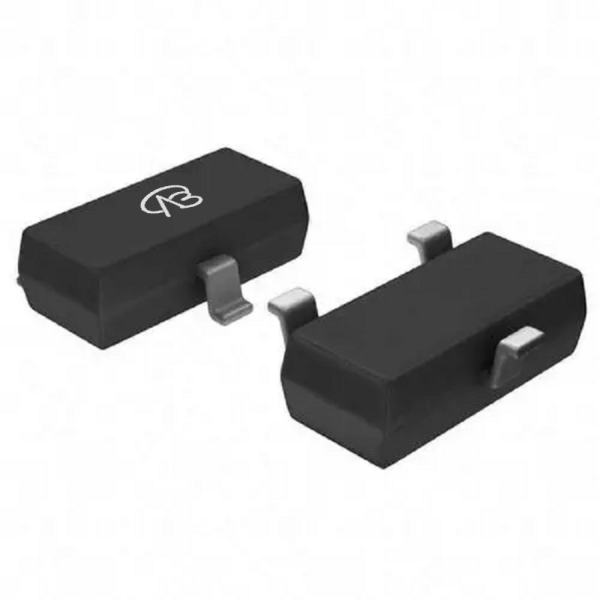
Comparative Analysis: DMN62D0UW-7 (N-channel) vs. VBK162K
Analysis of the Original Model (DMN62D0UW-7) Core:
This is a 60V N-channel MOSFET from DIODES, using an ultra-compact SOT-323 package. Its design core is to minimize on-resistance while maintaining excellent switching performance, making it ideal for efficient power management applications. The key advantages are: a low on-resistance of 3Ω at a 4.5V drive voltage, and it can provide a continuous drain current of 340mA with a power dissipation of 470mW.
Compatibility and Differences of the Domestic Alternative (VBK162K):
VBsemi's VBK162K uses a small SC70-3 package and is a functional alternative. The main differences lie in the electrical parameters: VBK162K shares the same voltage rating (60V) but offers a significantly lower on-resistance of 4000mΩ@4.5V (4Ω) and 2000mΩ@10V (2Ω), though its continuous current rating (0.3A) is slightly lower than the original.
Key Application Areas:
Original Model DMN62D0UW-7: Its characteristics are very suitable for space-constrained, low to medium-current 60V systems requiring good switching performance. Typical applications include:
Signal switching and level shifting in portable devices.
Power management functions in low-power modules.
Protection circuits and load switches.
Alternative Model VBK162K: More suitable for applications where a slightly lower current is acceptable but a lower on-resistance at higher gate drive (10V) is beneficial, offering an efficiency advantage in specific low-power circuits.
Comparative Analysis: DMT10H009LCG-7 (N-channel) vs. VBGQF1101N
Unlike the low-power model focusing on compact space, the design pursuit of this N-channel MOSFET is high-current handling with minimal loss.
Analysis of the Original Model (DMT10H009LCG-7) Core:
This is a 100V N-channel MOSFET from DIODES in a VDFN3333-8 package. Its design core is to minimize on-resistance (RDS(ON)) while maintaining excellent switching performance. The key advantages are: a very low on-resistance of 8.8mΩ at 10V drive, and it can handle a high continuous drain current of 47A. This makes it ideal for demanding power management applications.
Compatibility and Differences of the Domestic Alternative (VBGQF1101N):
VBsemi's VBGQF1101N uses a DFN8(3x3) package and is a direct pin-to-pin compatible alternative. It represents a 'performance-enhanced' choice: It matches the voltage rating (100V) but offers a higher continuous current (50A) and a lower on-resistance of 10.5mΩ (@10V) and 13.5mΩ (@4.5V). This provides lower conduction loss and higher current margin.
Key Application Areas:
Original Model DMT10H009LCG-7: Its low on-resistance and high current capability make it an excellent choice for high-power applications. For example:
Laptop battery power management and load switches.
Backlight power management.
High-current DC-DC converters in servers and communication equipment.
Alternative Model VBGQF1101N: Is more suitable for upgraded scenarios requiring even higher current capability (50A) and slightly improved conduction loss performance, offering a robust alternative for the most demanding power paths and converters.
In summary, this comparative analysis reveals two clear selection paths:
For low-power, space-constrained N-channel applications, the original model DMN62D0UW-7, with its 340mA current and 3Ω on-resistance in a tiny SOT-323, is a strong choice for signal-level switching and low-power management. Its domestic alternative VBK162K offers a compatible form factor with different resistance characteristics, suitable for designs optimized for 10V gate drive.
For high-power N-channel applications, the original model DMT10H009LCG-7, with its 47A current and 8.8mΩ on-resistance, is a powerful solution for laptop power systems and DC-DC conversion. The domestic alternative VBGQF1101N provides a direct-compatible, performance-enhanced option with higher current (50A) and competitive on-resistance, ideal for design upgrades seeking maximum efficiency and robustness.
The core conclusion is: There is no absolute superiority or inferiority in selection; the key lies in precise matching of requirements. In the context of supply chain diversification, domestic alternative models not only provide feasible backup options but also offer parameter variations and enhancements, giving engineers more flexible and resilient choice space in design trade-offs and cost control. Understanding the design philosophy and parameter implications of each device is essential to maximize its value in the circuit.

Download PDF document
 Download now


