 中文
中文 English
MOSFET Selection for Compact Power and Automotive Applications: DMN61D9UW-7, DMN10H220LQ-13 vs. China Alternatives VBK162K, VB1102M
Number of views:9999
 Back to previous page
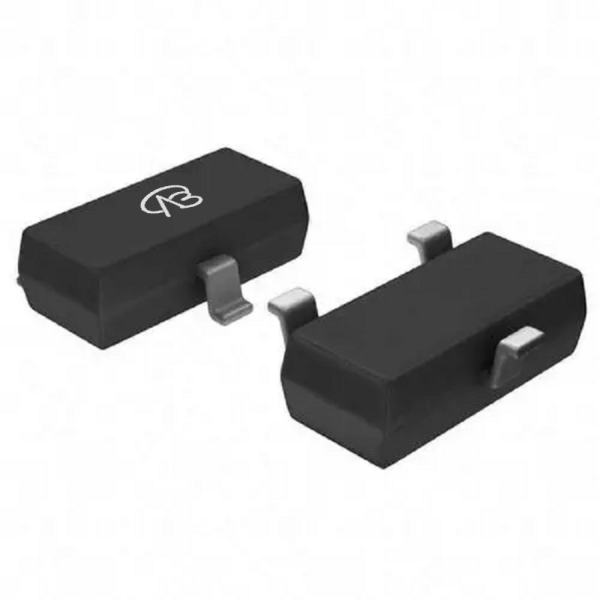
Comparative Analysis: DMN61D9UW-7 (N-channel) vs. VBK162K
Analysis of the Original Model (DMN61D9UW-7) Core:
This is a 60V N-channel MOSFET from DIODES in a compact SOT-323 package. Its design core is to minimize on-resistance (3.5Ω @ 1.8V) while maintaining good switching performance, targeting efficient power management in space-constrained, low-current applications. With a continuous drain current of 340mA and a power dissipation of 320mW, it balances performance and size effectively.
Compatibility and Differences of the Domestic Alternative (VBK162K):
VBsemi's VBK162K is offered in an SC70-3 package, a common small-footprint alternative. The key differences are in electrical parameters: while both are 60V rated, VBK162K specifies its on-resistance at higher gate drives (4000mΩ @ 4.5V, 2000mΩ @ 10V) and has a slightly lower continuous current rating of 0.3A (300mA).
Key Application Areas:
Original Model DMN61D9UW-7: Ideal for low-power, efficiency-sensitive circuits where operation at low gate drive voltage (1.8V) is crucial. Typical uses include signal switching, level translation, and power management in portable electronics and IoT devices.
Alternative Model VBK162K: Suitable as a pin-compatible alternative in applications where the system uses a higher gate drive voltage (4.5V or 10V) and the current requirement is below 300mA, offering a cost-effective solution with a similar voltage rating.
Comparative Analysis: DMN10H220LQ-13 (N-channel) vs. VB1102M
This comparison shifts focus to automotive-grade reliability and higher power handling.
Analysis of the Original Model (DMN10H220LQ-13) Core:
This is a 100V, AEC-Q101 qualified N-channel MOSFET from DIODES in a SOT-23-3 package. Designed for automotive harsh environments with PPAP support, its core advantage is a robust 100V rating combined with a low on-resistance of 220mΩ @ 10V and a continuous current capability of 1.6A, making it reliable for automotive load switching.
Compatibility and Differences of the Domestic Alternative (VB1102M):
VBsemi's VB1102M is a direct pin-to-pin compatible alternative in SOT23-3. It matches the 100V rating and offers enhanced performance in key areas: a lower on-resistance (260mΩ @ 4.5V, 240mΩ @ 10V) and a higher continuous drain current rating of 2A.
Key Application Areas:
Original Model DMN10H220LQ-13: The go-to choice for automotive applications requiring AEC-Q101 compliance, such as load switches, solenoid drivers, and other control modules within 12V/24V vehicle systems.
Alternative Model VB1102M: An excellent performance-enhanced alternative, suitable not only for automotive applications but also for industrial and consumer scenarios where higher current capability (2A) and lower conduction loss are desired, providing a valuable upgrade or dual-source option.
Conclusion:
This analysis reveals two distinct selection paths based on application priority:
1. For ultra-compact, low-power logic-level switching, the original DMN61D9UW-7 offers optimized performance at 1.8V drive. Its alternative VBK162K serves well in systems using higher gate voltages.
2. For automotive-grade or general-purpose medium-power switching, the AEC-Q101 certified DMN10H220LQ-13 provides assured reliability. Its domestic alternative VB1102M emerges as a compelling "performance-enhanced" choice, offering lower RDS(on) and higher current in the same package.
The core takeaway is precise requirement matching. Domestic alternatives like VBK162K and VB1102M provide viable, often enhanced, backup options, increasing design flexibility and supply chain resilience. Understanding each device's design intent and parameters is key to unlocking its full value in your circuit.

Download PDF document
 Download now


