 中文
中文 English
MOSFET Selection for Compact Power Applications: DMN61D8LQ-7, DMN2004VK-7B vs. China Alternatives VB162K, VBTA32S3M
Number of views:9999
 Back to previous page
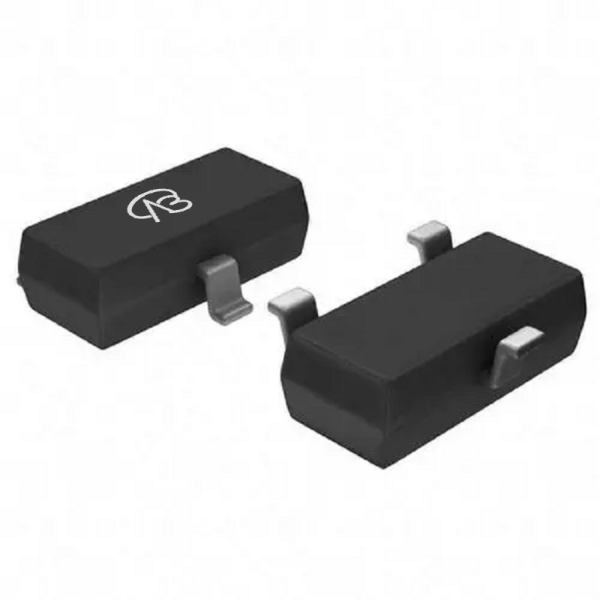
Comparative Analysis: DMN61D8LQ-7 (Single N-channel) vs. VB162K
Analysis of the Original Model (DMN61D8LQ-7) Core:
This is a 60V single N-channel MOSFET from DIODES, using a compact SOT-23 package. Its design core is to provide a simple, integrated solution for switching inductive loads in automotive and space-constrained applications. The key advantages are: a logic-level gate drive (compatible with 5V), an on-resistance of 1.8Ω at 5V Vgs, and a continuous drain current of 470mA. Notably, it integrates a body diode that can act as a flyback diode, eliminating the need for an external component when switching relays, solenoids, or small DC motors.
Compatibility and Differences of the Domestic Alternative (VB162K):
VBsemi's VB162K also uses the standard SOT-23 package and is a pin-to-pin compatible alternative. The main differences lie in the electrical parameters: VB162K shares the same 60V voltage rating but offers a significantly lower on-resistance of 2.8Ω at 10V Vgs (compared to 1.8Ω at 5V for the original, noting different test conditions). Its continuous current rating is 0.3A. It maintains the logic-level compatibility with a Vgs(th) of 1.7V.
Key Application Areas:
Original Model DMN61D8LQ-7: Its integrated flyback capability and logic-level drive make it ideal for compact designs switching inductive loads. Typical applications include:
Automotive modules: Driver for relays, solenoids, and small motors.
Consumer electronics: Load switching in portable devices.
Industrial control: Interface for low-power actuators and indicators.
Alternative Model VB162K: Suitable as a direct replacement in the same SOT-23 footprint for applications requiring 60V withstand voltage and logic-level drive, particularly where the specific on-resistance at the operating Vgs meets the circuit's loss budget.
Comparative Analysis: DMN2004VK-7B (Dual N-channel) vs. VBTA32S3M
This dual N-channel MOSFET is designed for high-density circuits where board space is at a premium, pursuing a balance of 'low resistance, fast switching, and miniaturization'.
The core advantages of the original model are reflected in three aspects:
Compact Dual Channel: Integrates two independent 20V N-channel MOSFETs in an ultra-small SOT-563 (SC-75) package.
Good Performance for Size: Features low on-resistance (400mΩ at 4.5V per channel), low threshold voltage, and fast switching speed.
Robust Design: Includes ESD protection on the gates and is a green, RoHS-compliant component.
The domestic alternative VBTA32S3M belongs to a 'performance-matched' choice: It offers a very comparable specification in a similar SC75-6 package. It provides dual N-channels with a 20V rating, an on-resistance of 300mΩ at 4.5V Vgs (slightly better than the original), and a higher continuous current rating of 1A per channel. It also features logic-level threshold voltage.
Key Application Areas:
Original Model DMN2004VK-7B: Its ultra-small dual-channel integration is perfect for space-critical applications requiring multiple switches or complementary signals. For example:
Portable and wearable devices: Power management, signal routing, and load switching.
Data communication: Interface and line driver circuits.
Battery management systems (BMS): Cell balancing and protection switches.
Alternative Model VBTA32S3M: Is an excellent pin-to-pin compatible alternative, suitable for the same space-constrained dual-switch applications, offering slightly lower on-resistance and higher current capability, which can provide margin for efficiency or load handling.
In summary, this comparative analysis reveals two clear selection paths:
For single N-channel applications requiring integrated flyback functionality and logic-level drive in a SOT-23 package, the original model DMN61D8LQ-7 provides a proven, compact solution for automotive and industrial inductive load switching. Its domestic alternative VB162K offers a compatible footprint and voltage rating, serving as a viable alternative where specific on-resistance parameters align with the application needs.
For ultra-compact dual N-channel applications, the original model DMN2004VK-7B, with its excellent integration in a SOT-563 package, stands out for high-density PCBs. The domestic alternative VBTA32S3M provides a strong, performance-matched replacement in a similar SC75-6 package, offering comparable or slightly improved electrical characteristics for design flexibility.
The core conclusion is: There is no absolute superiority or inferiority in selection; the key lies in precise matching of requirements. In the context of supply chain diversification, domestic alternative models not only provide feasible backup options but also achieve close matching or surpassing in specific parameters, offering engineers more flexible and resilient choice space in design trade-offs and cost control. Understanding the design philosophy and parameter implications of each device is essential to maximize its value in the circuit.

Download PDF document
 Download now


