 中文
中文 English
MOSFET Selection for Automotive and High-Efficiency Power: DMN6068SEQ-13, DMT3009LFVW-7 vs. China Alternatives VBJ1638, VBQF1310
Number of views:9999
 Back to previous page
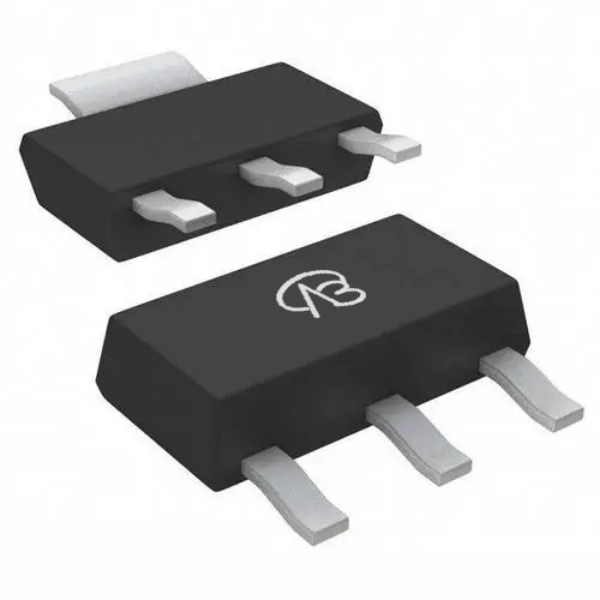
Comparative Analysis: DMN6068SEQ-13 (N-channel) vs. VBJ1638
Analysis of the Original Model (DMN6068SEQ-13) Core:
This is a 60V N-channel MOSFET from DIODES, housed in a robust SOT-223 package. Its design core is to meet the stringent requirements of automotive applications. It is AEC-Q101 qualified and supported by PPAP documentation. Key parameters include a continuous drain current (Id) of 5.6A and an on-resistance (RDS(on)) of 68mΩ at 10V gate drive. Its primary advantage lies in its certified reliability for harsh environments rather than ultra-low RDS(on).
Compatibility and Differences of the Domestic Alternative (VBJ1638):
VBsemi's VBJ1638 is offered in the same SOT-223 package, providing a form-factor compatible alternative. The key differences are in electrical performance: VBJ1638 features a significantly lower on-resistance of 28mΩ @10V and a higher continuous current rating of 7A, while maintaining the same 60V drain-source voltage rating. This represents a substantial improvement in conduction performance.
Key Application Areas:
Original Model DMN6068SEQ-13: Its primary value is in automotive-grade reliability. It is perfectly suited for 12V/24V automotive systems requiring AEC-Q101 certification, such as:
Body control modules (e.g., window lift, seat control).
Solenoid or valve drivers.
Auxiliary motor control.
DC-DC converters within infotainment or ADAS systems (where qualification is mandatory).
Alternative Model VBJ1638: Offers a high-performance, cost-competitive alternative for applications where formal automotive qualification is not strictly required but robust performance is desired. Its lower RDS(on) and higher current capability make it excellent for:
Industrial motor drives and transformer switching.
High-efficiency DC-DC converters in telecom or computing.
General-purpose power switching where thermal performance and efficiency are priorities.
Comparative Analysis: DMT3009LFVW-7 (N-channel) vs. VBQF1310
This comparison shifts focus to high-current, low-voltage power conversion, where minimizing conduction loss is paramount.
Analysis of the Original Model (DMT3009LFVW-7) Core:
This 30V N-channel MOSFET from DIODES uses the thermally enhanced PowerDI-3333-8 package. Its design pursuit is an excellent balance between very low conduction loss and good switching performance. Its core advantage is a very low on-resistance of 6.6mΩ at 10V gate drive, coupled with a high continuous drain current of 50A. This makes it ideal for high-current paths in synchronous rectification and power management.
Compatibility and Differences of the Domestic Alternative (VBQF1310):
VBsemi's VBQF1310 comes in a compact DFN8(3x3) package. While the package differs, it serves as a functional alternative for space-constrained, high-current designs. The key parameter comparison shows VBQF1310 has a higher on-resistance of 13mΩ @10V and a lower continuous current rating of 30A, compared to the original DMT3009LFVW-7. Its advantage lies in a smaller footprint.
Key Application Areas:
Original Model DMT3009LFVW-7: Its ultra-low RDS(on) and high current capability make it a top-tier choice for high-efficiency, medium-to-high power density applications, such as:
Synchronous rectification in high-current DC-DC converters (e.g., for servers, GPUs, telecom rectifiers).
Low-side switches in multi-phase VRMs (Voltage Regulator Modules).
Motor drives for robotics or high-power tools.
Alternative Model VBQF1310: Is more suitable for space-constrained applications where the full 50A capability of the original is not required, but a balance of good current handling (30A), low RDS(on), and minimal PCB area is needed. Examples include:
Compact point-of-load (POL) converters.
Power switches in portable medical equipment or high-end consumer electronics.
Motor drives in drones or compact appliances.
Conclusion
This analysis reveals two distinct selection paradigms based on application priority:
1. For Automotive and Reliability-Critical Designs: The original DMN6068SEQ-13 holds an irreplaceable position due to its AEC-Q101 qualification and PPAP support, making it the mandatory choice for certified automotive applications. Its domestic alternative VBJ1638 offers a compelling performance-upgraded option (lower RDS(on), higher Id) for industrial or consumer applications where formal automotive certification is not required but high electrical performance is valued.
2. For High-Current, Low-Voltage Power Conversion: The original DMT3009LFVW-7, with its exceptional 6.6mΩ RDS(on) and 50A current rating in a thermally capable package, is the premier choice for maximizing efficiency in high-power applications. The domestic alternative VBQF1310 provides a space-optimized solution for designs where PCB area is at a premium and the operational current is within its 30A capability.
The core takeaway is that selection is driven by the primary constraint: Is it regulatory compliance (automotive grade), ultimate electrical performance (lowest loss), or board space? Domestic alternatives like VBJ1638 and VBQF1310 not only provide viable backup options in a diversified supply chain but also offer specific advantages—either in enhanced electrical parameters or in package size—giving engineers greater flexibility in design optimization and cost management. Understanding the fundamental design goal of each MOSFET is key to unlocking its full potential in your circuit.

Download PDF document
 Download now


