 中文
中文 English
MOSFET Selection for Automotive and Compact Dual-Channel Applications: DMN53D0LDWQ-13, DMP4011SPSQ-13 vs. China Alternatives VBK362K, VBQA2412
Number of views:9999
 Back to previous page
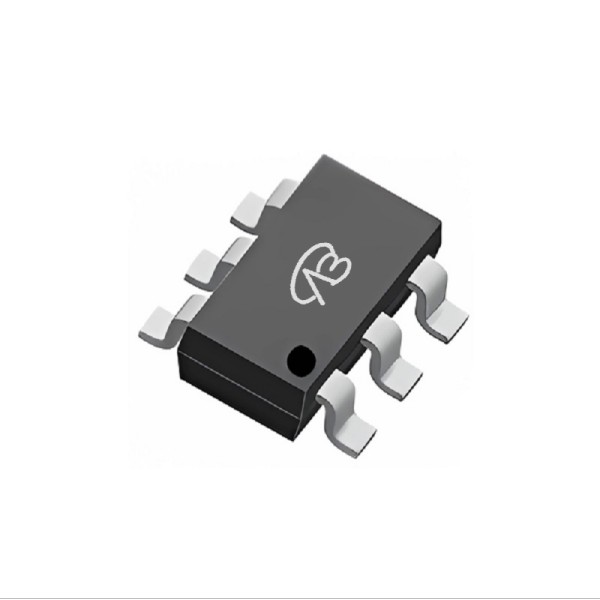
Comparative Analysis: DMN53D0LDWQ-13 (Dual N-Channel) vs. VBK362K
Analysis of the Original Model (DMN53D0LDWQ-13) Core:
This is a dual N-channel MOSFET from DIODES in a compact SOT-363 package. Its design core is to provide dual switching functionality in minimal board space for low-power signal or power management. Key features include a 50V drain-source voltage, 460mA continuous current per channel, and an on-resistance of 2.5Ω at 4.5V gate drive. It is suited for space-constrained applications requiring multiple isolated switches.
Compatibility and Differences of the Domestic Alternative (VBK362K):
VBsemi’s VBK362K is also a dual N-channel MOSFET in an SC70-6 package, offering a pin-to-pin compatible footprint. The main differences are in electrical parameters: VBK362K has a higher voltage rating (60V) and a lower on-resistance (2.5Ω @10V, 3.2Ω @4.5V). However, its continuous current rating is lower at 0.3A per channel compared to the original’s 460mA.
Key Application Areas:
Original Model DMN53D0LDWQ-13: Ideal for compact circuits requiring dual low-current switches, such as:
Load switching and signal routing in portable consumer electronics.
Interface protection and multiplexing in sensor modules.
Low-power DC-DC converter secondary-side control.
Alternative Model VBK362K: Better suited for applications needing higher voltage margin (up to 60V) and slightly lower on-resistance, but where current demand per channel is within 0.3A, such as in certain low-power analog switching or protection circuits.
Comparative Analysis: DMP4011SPSQ-13 (Automotive P-Channel) vs. VBQA2412
This comparison shifts to high-power, high-reliability automotive applications. The original model’s design pursuit is "high current, low loss, and automotive-grade robustness."
Analysis of the Original Model (DMP4011SPSQ-13) Core:
This is a 40V P-channel MOSFET from DIODES in a PowerDI5060-8 package. Its core advantages are:
High Current Capability: A continuous drain current rating of -76A, suitable for demanding automotive loads.
Very Low Conduction Loss: An on-resistance as low as 6mΩ at 10V gate drive, minimizing power dissipation.
Automotive Qualification: It is AEC-Q101 qualified with PPAP support, making it designed for stringent automotive applications like DC-DC converters, power management, and analog switches.
Compatibility and Differences of the Domestic Alternative (VBQA2412):
VBsemi’s VBQA2412 is a P-channel MOSFET in a DFN8(5x6) package. It serves as a performance-comparable alternative with key parameters: a -40V voltage rating, a high continuous current of -40A, and an exceptionally low on-resistance (10mΩ @10V, 12mΩ @4.5V). While its current rating is lower than the original's -76A, its ultra-low RDS(on) offers excellent efficiency for many high-current applications.
Key Application Areas:
Original Model DMP4011SPSQ-13: The clear choice for automotive and other high-reliability applications requiring very high current switching, such as:
High-current load switches and power distribution in automotive body control modules.
Main switches in 12V/24V automotive DC-DC converters (buck/boost).
Motor drives and solenoid drivers in automotive systems.
Alternative Model VBQA2412: An excellent alternative for applications requiring high efficiency and substantial current (up to -40A) in a compact package. It is well-suited for:
High-efficiency power path management in industrial equipment.
Synchronous rectification or high-side switching in server/telecom power modules.
Upgrading designs where lower conduction loss is prioritized, even if the peak current requirement is below 76A.
Conclusion:
This analysis reveals two distinct selection paths:
1. For ultra-compact, dual N-channel applications, the original DMN53D0LDWQ-13 offers balanced performance in a tiny SOT-363 footprint. Its domestic alternative VBK362K provides higher voltage tolerance and slightly better RDS(on) at 10V, making it a viable option for designs where current per channel is under 0.3A and voltage margin is needed.
2. For high-current, automotive-grade P-channel applications, the original DMP4011SPSQ-13 stands out with its robust 76A capability, very low 6mΩ RDS(on), and AEC-Q101 qualification. The domestic alternative VBQA2412 presents a strong "performance-efficient" option with its very low 10mΩ RDS(on) and -40A current, ideal for many high-efficiency, high-current non-automotive or less current-demanding automotive applications.
The core conclusion is that selection hinges on precise requirement matching. In the context of supply chain diversification, domestic alternatives like VBK362K and VBQA2412 not only provide reliable backup options but also offer competitive or enhanced specific parameters, giving engineers greater flexibility and resilience in design trade-offs and cost control. Understanding each device's design philosophy and parameter implications is key to maximizing its value in your circuit.

Download PDF document
 Download now


