 中文
中文 English
MOSFET Selection for Compact Power Applications: DMN3042L-7, DMP6023LFGQ-7 vs. China Alternatives VBB1328, VBQF2625
Number of views:9999
 Back to previous page
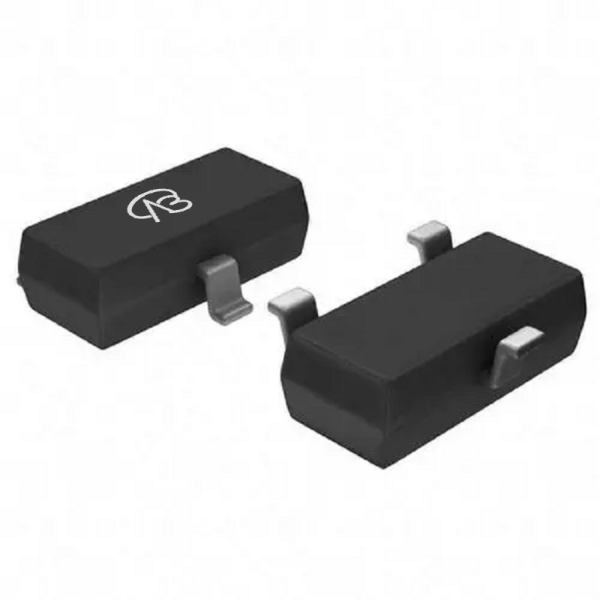
Comparative Analysis: DMN3042L-7 (N-channel) vs. VBB1328
Analysis of the Original Model (DMN3042L-7) Core:
This is a 30V N-channel MOSFET from DIODES in a compact SOT-23 package. Its design core is to minimize on-resistance while maintaining excellent switching performance for efficient power management. Key advantages include a continuous drain current of 5.8A and an on-resistance of 48mΩ at 2.5V gate drive.
Compatibility and Differences of the Domestic Alternative (VBB1328):
VBsemi's VBB1328 is a pin-to-pin compatible alternative in SOT23-3 package. It offers significant performance enhancement: a much lower on-resistance of 22mΩ at 4.5V (16mΩ at 10V) and a higher continuous current rating of 6.5A, while maintaining the same 30V voltage rating.
Key Application Areas:
Original Model DMN3042L-7: Ideal for space-constrained, efficiency-critical applications like load switching, power management in portable devices, and as a switch in low-power DC-DC converters within 30V systems.
Alternative Model VBB1328: Suited for upgrade scenarios demanding lower conduction loss and higher current capability in the same footprint, such as more efficient power switches or converters in similar compact designs.
Comparative Analysis: DMP6023LFGQ-7 (P-channel) vs. VBQF2625
Analysis of the Original Model (DMP6023LFGQ-7) Core:
This is a -60V P-channel MOSFET from DIODES in a PowerDI3333-8 package. It is designed to meet stringent automotive requirements, being AEC-Q101 qualified with PPAP support. Its core advantages are a robust -60V voltage rating, a continuous current of -7.7A, and low on-resistance of 13mΩ at 4.5V (11mΩ at 10V).
Compatibility and Differences of the Domestic Alternative (VBQF2625):
VBsemi's VBQF2625 is a compatible alternative in a DFN8(3x3) package. It offers a dramatically higher continuous current rating of -36A and competitive on-resistance of 28.8mΩ at 4.5V (21mΩ at 10V), while maintaining the same -60V voltage rating.
Key Application Areas:
Original Model DMP6023LFGQ-7: Tailored for automotive-grade applications such as backlight power management, DC-DC converters, and other power control functions requiring AEC-Q101 reliability.
Alternative Model VBQF2625: An excellent choice for applications requiring much higher current handling (up to -36A) in a similar package, suitable for high-power P-channel switching in industrial power systems, robust power path management, or as a performance-enhanced alternative in demanding non-automotive scenarios.
Conclusion
This analysis reveals two distinct selection paths:
For compact N-channel switching, the original DMN3042L-7 offers a balanced solution in a tiny SOT-23 package. Its domestic alternative VBB1328 provides a significant performance upgrade with lower RDS(on) and higher current, ideal for efficiency-driven replacements.
For robust P-channel applications, the automotive-grade DMP6023LFGQ-7 is the benchmark for reliability in harsh environments. The domestic alternative VBQF2625, while not necessarily AEC-Q101 qualified, offers a substantial increase in current capability, making it a powerful option for high-power designs.
The core conclusion is that selection depends on precise requirement matching. Domestic alternatives like VBB1328 and VBQF2625 provide not only viable backups but also opportunities for performance enhancement and cost optimization, increasing design flexibility and supply chain resilience.

Download PDF document
 Download now


