 中文
中文 English
MOSFET Selection for Compact Power Applications: DMN3018SSS-13, DMP3036SFV-13 vs. China Alternatives VBA1328, VBQF2317
Number of views:9999
 Back to previous page
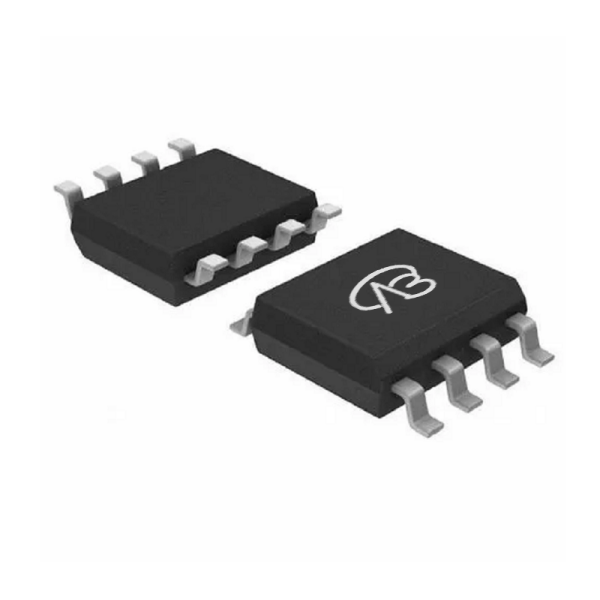
Comparative Analysis: DMN3018SSS-13 (N-channel) vs. VBA1328
Analysis of the Original Model (DMN3018SSS-13) Core:
This is a 30V N-channel MOSFET from DIODES in an SO-8 package. Its design core is to minimize conduction loss while maintaining excellent switching performance for efficient power management. Key advantages include a continuous drain current of 7.3A and an on-resistance as low as 35mΩ at a 4.5V gate drive.
Compatibility and Differences of the Domestic Alternative (VBA1328):
VBsemi's VBA1328 is a pin-to-pin compatible alternative in SOP8 package. It offers improved electrical parameters: the same 30V voltage rating, but features a lower on-resistance of 29mΩ @4.5V (16mΩ @10V) and a similar continuous current rating of 6.8A.
Key Application Areas:
Original Model DMN3018SSS-13: Ideal for efficient power management applications requiring a balance of good current handling (up to 7.3A) and low RDS(on) in a standard SO-8 footprint, such as load switching, DC-DC conversion, and motor control in 12V/24V systems.
Alternative Model VBA1328: A suitable performance-focused alternative for applications where lower conduction loss is prioritized, offering enhanced efficiency in similar 30V, medium-current scenarios.
Comparative Analysis: DMP3036SFV-13 (P-channel) vs. VBQF2317
Analysis of the Original Model (DMP3036SFV-13) Core:
This is a -30V P-channel MOSFET from DIODES in a compact PowerDI3333-8 package. It is designed to minimize on-resistance for high-efficiency power management. Its core strengths are a high continuous drain current of -30A and a very low on-resistance of 20mΩ at a -10V gate drive.
Compatibility and Differences of the Domestic Alternative (VBQF2317):
VBsemi's VBQF2317 is a compatible alternative in a DFN8(3x3) package. It matches the -30V voltage rating and offers competitive performance: a high continuous current of -24A and a low on-resistance of 21.25mΩ @-4.5V (17mΩ @-10V).
Key Application Areas:
Original Model DMP3036SFV-13: Excellent for high-current P-channel applications demanding minimal conduction loss and compact size, such as high-side load switches, battery protection circuits, and power path management in 12V/24V systems.
Alternative Model VBQF2317: A strong domestic alternative for applications requiring a robust P-channel switch with high current capability and low RDS(on) in a small form factor, suitable for efficient power switching and management.
Conclusion
In summary, this comparative analysis reveals two clear selection paths:
For N-channel applications in standard packages focusing on efficiency, the original model DMN3018SSS-13, with its 7.3A current and 35mΩ RDS(on), is a reliable choice for medium-power management. Its domestic alternative VBA1328 offers a direct replacement with potentially lower conduction loss (29mΩ @4.5V), providing an efficiency upgrade path.
For P-channel applications in compact packages requiring high current, the original model DMP3036SFV-13, with its impressive -30A current and 20mΩ RDS(on), is a top-tier solution for high-current switching. Its domestic alternative VBQF2317 provides a compelling compatible option with high current (-24A) and low RDS(on) (17mΩ @-10V), ensuring robust performance and supply chain flexibility.
The core conclusion is: Selection hinges on precise requirement matching. In the context of supply chain diversification, domestic alternatives like VBA1328 and VBQF2317 not only provide reliable backup options but also offer competitive or enhanced parameters, giving engineers greater flexibility in design trade-offs and cost control. Understanding each device's design philosophy and parameter implications is key to maximizing its value in the circuit.

Download PDF document
 Download now


