 中文
中文 English
MOSFET Selection for Low-Power Switching Applications: DMN2710UW-13, DMN67D7L-13 vs. China Alternatives VBK1230N, VB162K
Number of views:9999
 Back to previous page
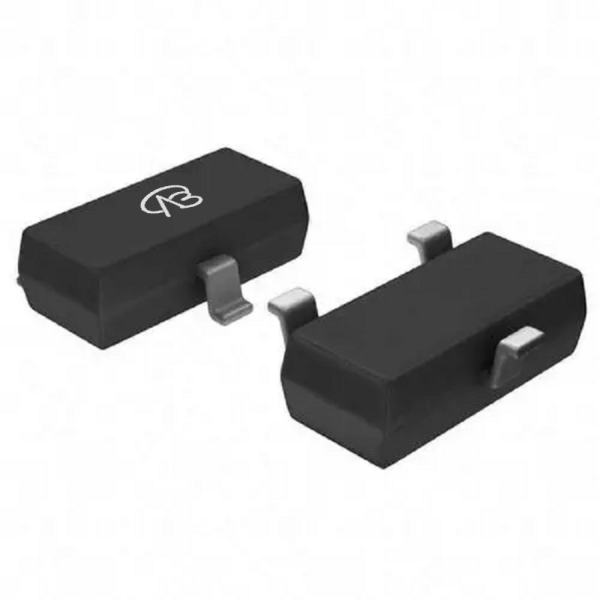
Comparative Analysis: DMN2710UW-13 (N-channel) vs. VBK1230N
Analysis of the Original Model (DMN2710UW-13) Core:
This is a 20V N-channel MOSFET from DIODES in a compact SOT-323 package. Its design core is to provide a reliable switching solution for space-constrained, low-to-medium current applications. Key parameters include a continuous drain current (Id) of 900mA and an on-resistance (RDS(on)) of 450mΩ at a 4.5V gate drive.
Compatibility and Differences of the Domestic Alternative (VBK1230N):
VBsemi's VBK1230N comes in an SC70-3 package, which is even smaller than SOT-323, offering a footprint advantage. It is electrically a strong alternative with a similar 20V voltage rating. Crucially, it demonstrates superior performance: a higher continuous current rating of 1.5A and a significantly lower on-resistance of 210mΩ at 4.5V gate drive.
Key Application Areas:
Original Model DMN2710UW-13: Suitable for general-purpose low-side switching, signal level shifting, and load switching in portable electronics where 900mA current is sufficient.
Alternative Model VBK1230N: An excellent upgrade choice for applications requiring higher current capability (up to 1.5A) and lower conduction loss in an ultra-small footprint. Ideal for battery-powered devices, power management in wearables, and compact module designs.
Comparative Analysis: DMN67D7L-13 (N-channel) vs. VB162K
This comparison focuses on MOSFETs designed for higher voltage, low-current switching where minimizing RDS(on) is key for efficiency.
Analysis of the Original Model (DMN67D7L-13) Core:
This DIODES MOSFET in a SOT-23 package is designed for 60V applications. It aims to minimize on-resistance (1.5Ω @10V) while maintaining good switching performance, as noted in its description. With a continuous current of 210mA, it targets efficient power management in higher voltage, low-current paths.
Compatibility and Differences of the Domestic Alternative (VB162K):
VBsemi's VB162K is a direct pin-to-pin compatible alternative in a SOT23-3 package. It matches the 60V drain-source voltage rating. The primary differences are in the conduction parameters: it has a slightly higher rated continuous current of 300mA but a higher on-resistance (2.8Ω @10V) compared to the original.
Key Application Areas:
Original Model DMN67D7L-13: Well-suited for 48V/60V system applications requiring efficient switching at low currents, such as telecom auxiliary power, industrial control logic, or battery management system (BMS) protection circuits.
Alternative Model VB162K: Serves as a reliable compatible alternative for 60V circuits where the current requirement is within 300mA and pin compatibility is a priority. Suitable for similar applications as the original where the slightly higher RDS(on) is acceptable for the design.
Conclusion:
This analysis reveals two distinct selection paths for low-power switching:
For 20V system applications where size and efficiency are critical, the domestic alternative VBK1230N offers a compelling upgrade over the original DMN2710UW-13, providing higher current (1.5A vs. 900mA) and significantly lower on-resistance in a smaller SC70-3 package.
For 60V system applications prioritizing voltage rating and pin compatibility, the original DMN67D7L-13 maintains an advantage in lower on-resistance (1.5Ω), which is crucial for minimizing losses in its target low-current applications. The domestic alternative VB162K provides a viable pin-compatible replacement with a higher current rating, suitable for designs where this parameter is more critical than ultra-low RDS(on).
The core takeaway is that selection depends on precise requirement matching. Domestic alternatives like VBK1230N and VB162K provide valuable options, offering performance trade-offs, package advantages, and supply chain resilience, giving engineers greater flexibility in their design and cost optimization efforts.

Download PDF document
 Download now


