 中文
中文 English
MOSFET Selection for Compact Dual-Channel and High-Voltage Applications: DMN2400UV-7, DMN61D8L-7 vs. China Alternatives VBTA32S3M, VB162K
Number of views:9999
 Back to previous page
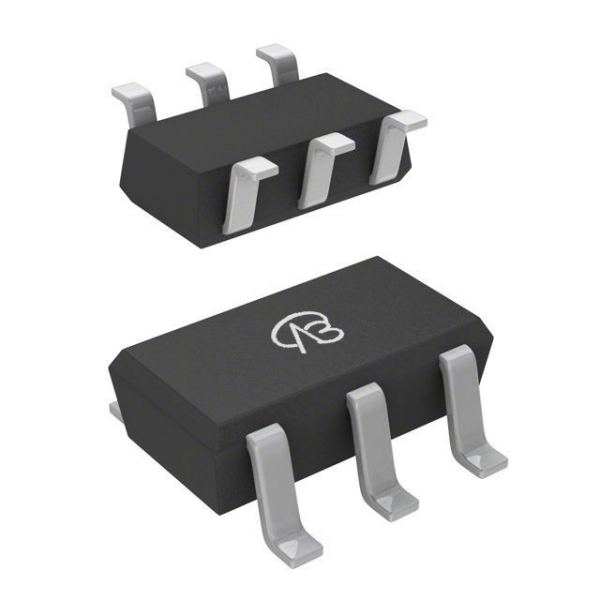
Comparative Analysis: DMN2400UV-7 (Dual N-channel) vs. VBTA32S3M
Analysis of the Original Model (DMN2400UV-7) Core:
This is a 20V dual N-channel MOSFET from DIODES in a compact SOT-563 package. Its design core is to provide two independent switching channels in a minimal footprint for space-constrained multi-signal or power path control. Key advantages include: a drain current of 1.33A per channel and an on-resistance (RDS(on)) of 300mΩ at a 5V gate drive. This makes it suitable for low-voltage, low-current switching applications where board space is premium.
Compatibility and Differences of the Domestic Alternative (VBTA32S3M):
VBsemi's VBTA32S3M is also a dual N-channel MOSFET in an SC75-6 package, offering direct pin-to-pin compatibility. Its key parameters are closely aligned: a 20V drain-source voltage and an on-resistance of 300mΩ per channel at 4.5V gate drive. The continuous drain current is rated at 1A per channel. The performance is highly comparable, making it a strong functional alternative.
Key Application Areas:
Original Model DMN2400UV-7: Ideal for compact designs requiring dual low-side switches or signal multiplexing in 5V or 3.3V systems. Typical applications include:
Power management in portable electronics (smartphones, wearables).
Load switching for peripheral modules (sensors, LEDs).
Signal routing and interface control circuits.
Alternative Model VBTA32S3M: Suits the same space-constrained, dual-channel application scenarios, providing a reliable domestic source for dual N-channel switching needs with very similar electrical characteristics.
Comparative Analysis: DMN61D8L-7 (N-channel) vs. VB162K
This comparison shifts focus to high-voltage, low-current applications where voltage rating is critical.
Analysis of the Original Model (DMN61D8L-7) Core:
This is a 60V single N-channel MOSFET from DIODES in a standard SOT-23 package. Its design pursues a balance of high voltage withstand capability and basic switching function for low-power circuits. Its core advantage is the 60V drain-source voltage rating, suitable for off-line low-power supplies or signal isolation. It features a continuous drain current of 470mA and an on-resistance of 2.4Ω at 3V gate drive and 0.15A.
Compatibility and Differences of the Domestic Alternative (VB162K):
VBsemi's VB162K is a direct SOT-23 packaged alternative with a matching 60V voltage rating. Its key parameters show a slightly higher on-resistance (3100mΩ @ 4.5V, 2800mΩ @ 10V) and a slightly lower continuous current rating of 0.3A. This makes it suitable for similar high-voltage, very low-current switching applications where the original's full current capability is not fully utilized.
Key Application Areas:
Original Model DMN61D8L-7: Fits applications requiring a high-voltage switch with moderate current handling. Typical uses include:
Low-power auxiliary power switching in 48V telecom or industrial systems.
Signal level shifting or isolation in higher voltage circuits.
Protection circuits or load switches in battery packs (e.g., 36V-48V systems).
Alternative Model VB162K: Best suited as a functional replacement in high-voltage circuits where the current demand is very low (under 300mA), offering a cost-effective and accessible domestic option.
Conclusion:
This analysis reveals two distinct selection paths based on application needs:
For compact, dual N-channel switching in low-voltage systems, the original DMN2400UV-7 offers proven performance in a tiny SOT-563 footprint. Its domestic alternative VBTA32S3M provides excellent parametric compatibility and pin-to-pin replacement, ensuring design continuity and supply chain flexibility.
For high-voltage, low-current switching needs, the original DMN61D8L-7 provides a reliable 60V solution in a ubiquitous SOT-23 package. The domestic alternative VB162K serves as a viable replacement in applications where the current requirement is minimal, maintaining the critical high-voltage rating.
The core takeaway is that selection hinges on precise requirement matching. Domestic alternatives like VBTA32S3M and VB162K not only provide supply chain resilience but also offer functionally comparable or acceptable solutions, giving engineers greater flexibility in design trade-offs and cost optimization. Understanding the specific parameter implications of each device is key to leveraging its full value in the circuit.

Download PDF document
 Download now


