 中文
中文 English
MOSFET Selection for Compact Power Applications: DMN2310UW-7, DMN2020LSN-7 vs. China Alternatives VBK1230N, VB1330
Number of views:9999
 Back to previous page
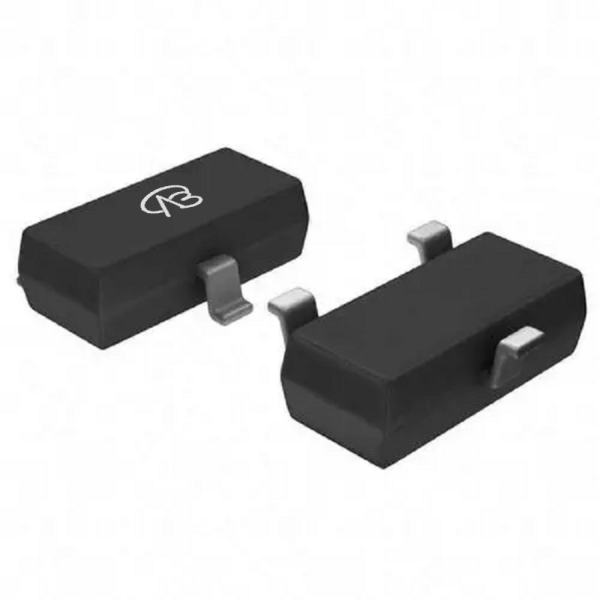
Comparative Analysis: DMN2310UW-7 (N-channel) vs. VBK1230N
Analysis of the Original Model (DMN2310UW-7) Core:
This is a 20V N-channel MOSFET from DIODES, in a compact SOT-323 package. Its design core is to minimize on-resistance (RDS(ON)) while maintaining excellent switching performance, making it ideal for high-efficiency power management. Key features include a continuous drain current (Id) of 1.3A and a power dissipation (Pd) of 450mW.
Compatibility and Differences of the Domestic Alternative (VBK1230N):
VBsemi's VBK1230N comes in an SC70-3 package and serves as a functional alternative. Key parameter comparisons: Both are 20V rated. The original offers 1.3A Id, while the alternative VBK1230N provides a slightly higher 1.5A current. The on-resistance for VBK1230N is 260mΩ @2.5V and 210mΩ @4.5V.
Key Application Areas:
Original Model DMN2310UW-7: Perfect for space-constrained, low-to-medium current switching applications requiring good efficiency, such as power management in portable devices, load switching for peripherals, or signal level shifting.
Alternative Model VBK1230N: Suitable for similar compact applications where a slight current capability increase is beneficial, offering a reliable domestic option for cost-sensitive designs.
Comparative Analysis: DMN2020LSN-7 (N-channel) vs. VB1330
This N-channel MOSFET focuses on achieving an outstanding balance of very low on-resistance, fast switching, and high current capability in a small footprint.
Analysis of the Original Model (DMN2020LSN-7) Core:
From DIODES in an SC-59-3 package, this 20V MOSFET excels with a very low on-resistance of 18mΩ @2.5V, enabling a high continuous drain current of 6.9A. Its design emphasizes low input capacitance, fast switching speed, and high reliability, being AEC-Q101 qualified. Features include ESD protection up to 2KV and RoHS compliance.
Compatibility and Differences of the Domestic Alternative (VB1330):
VBsemi's VB1330, in an SOT23-3 package, presents a strong "performance-enhanced" alternative. It boasts a higher voltage rating of 30V. While its continuous current (6.5A) is slightly lower than the original's 6.9A, it achieves a significantly lower on-resistance: 33mΩ @4.5V and 30mΩ @10V compared to the original's 18mΩ @2.5V.
Key Application Areas:
Original Model DMN2020LSN-7: An excellent choice for applications demanding high efficiency and robust performance in a small package. Ideal for:
- Synchronous rectification in DC-DC converters (12V/24V systems).
- Motor drive circuits for small brushed DC motors.
- High-current load switches in power management modules.
Alternative Model VB1330: Suited for upgraded scenarios requiring a higher voltage margin (30V) and extremely low conduction losses, making it a compelling choice for next-generation, high-efficiency power stages or motor drives where lower RDS(on) is critical.
Conclusion
In summary, this analysis reveals two distinct selection paths:
For ultra-compact, low-current switching, the original DMN2310UW-7 offers optimized performance, while VBK1230N provides a viable domestic alternative with a slight current advantage.
For high-current, high-efficiency applications in minimal space, the original DMN2020LSN-7 delivers an exceptional blend of low RDS(on) and high current. Its domestic alternative, VB1330, offers a compelling "performance-enhanced" option with a higher voltage rating and even lower on-resistance, suitable for demanding upgrade paths.
The core conclusion is: Selection hinges on precise requirement matching. In the context of supply chain diversification, domestic alternatives like VBK1230N and VB1330 not only provide feasible backups but also offer specific parametric advantages, granting engineers greater flexibility and resilience in design trade-offs and cost control. Understanding each device's design philosophy and parameter implications is key to unlocking its full value in your circuit.

Download PDF document
 Download now


