 中文
中文 English
MOSFET Selection for Compact Power Applications: DMN2040LTS-13, DMTH4007LPSQ-13 vs. China Alternatives VBC6N2022, VBQA1405
Number of views:9999
 Back to previous page
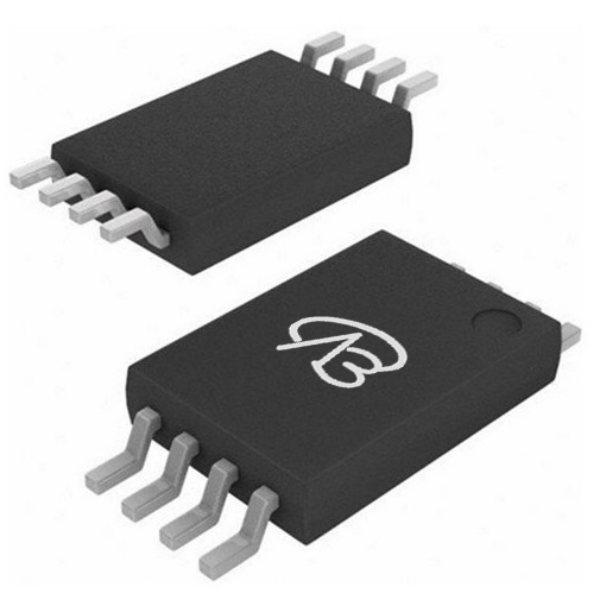
Comparative Analysis: DMN2040LTS-13 (Dual N-channel) vs. VBC6N2022
Analysis of the Original Model (DMN2040LTS-13) Core:
This is a 20V Dual N-channel MOSFET from DIODES in a TSSOP-8L package. Its design core focuses on providing balanced performance for space-constrained, low-to-medium power applications. Key advantages include: a low on-resistance of 19mΩ at 4.5V Vgs, a continuous drain current of 6.7A, and features like low gate threshold voltage, low input capacitance, and fast switching speed. It is AEC-Q101 qualified, making it suitable for automotive and high-reliability applications.
Compatibility and Differences of the Domestic Alternative (VBC6N2022):
VBsemi's VBC6N2022 is a pin-to-pin compatible alternative in a TSSOP8 package. The key differences are in electrical parameters: while both are 20V Common Drain Dual N-channel devices, the VBC6N2022 has a slightly higher on-resistance (22mΩ@4.5V vs. 19mΩ) but offers a very similar continuous current rating (6.6A vs. 6.7A).
Key Application Areas:
Original Model DMN2040LTS-13: Ideal for compact designs requiring dual N-channel switches with good efficiency and high reliability. Typical applications include:
Load switching and power management in portable/consumer electronics.
Signal routing and low-side switching in automotive subsystems (conforming to AEC-Q101).
Space-constrained DC-DC converter circuits.
Alternative Model VBC6N2022: A viable domestic alternative for similar dual N-channel applications where the slight difference in RDS(on) is acceptable, offering supply chain diversification without significant performance compromise.
Comparative Analysis: DMTH4007LPSQ-13 (N-channel) vs. VBQA1405
This comparison shifts to high-current, high-power applications where thermal performance and conduction losses are paramount.
Analysis of the Original Model (DMTH4007LPSQ-13) Core:
This is a robust 40V single N-channel MOSFET from DIODES in a PowerDI5060-8 package. Designed for automotive-grade performance, its core advantages are:
High Current Capability: A very high continuous drain current rating of 85A.
Low Conduction Loss: Low on-resistance of 9.8mΩ at 4.5V Vgs.
High Reliability: Fully AEC-Q101 qualified with PPAP support, making it suitable for demanding environments like motor control and power conversion.
Compatibility and Differences of the Domestic Alternative (VBQA1405):
VBsemi's VBQA1405, in a DFN8(5x6) package, is a performance-competitive alternative. While the package differs, it targets similar high-power applications. Its key parameters show a compelling profile: the same 40V voltage rating, a slightly lower but still very high continuous current of 70A, and a significantly lower on-resistance (6mΩ@4.5V, 4.7mΩ@10V).
Key Application Areas:
Original Model DMTH4007LPSQ-13: The premier choice for automotive and other high-reliability, high-power applications. Its 85A current rating and AEC-Q101 certification make it ideal for:
Brushed/Brushless DC motor drives in automotive systems (e.g., pumps, fans).
High-current DC-DC converters and load switches.
Power distribution units.
Alternative Model VBQA1405: An excellent "performance-enhanced" domestic alternative for applications where ultra-low RDS(on) (4.7mΩ) is critical for efficiency and thermal management, even if the absolute current rating (70A) is slightly lower. It is well-suited for:
High-efficiency, high-current synchronous rectification in server/telecom power supplies.
High-power motor drives and solenoid drivers in industrial equipment.
Upgrading designs to achieve lower conduction losses.
Conclusion
This analysis reveals two distinct selection paths:
For compact, dual N-channel applications prioritizing reliability and balanced performance, the AEC-Q101 qualified DMN2040LTS-13 is a strong choice. Its domestic alternative VBC6N2022 offers a compatible, viable option for supply chain diversification with minor parameter trade-offs.
For high-power, high-current applications demanding robustness and efficiency, the automotive-grade DMTH4007LPSQ-13 stands out with its 85A rating. The domestic alternative VBQA1405 counters with significantly lower on-resistance, presenting a compelling option for designs where minimizing conduction loss is the top priority.
The core takeaway is precise requirement matching. Domestic alternatives like VBC6N2022 and VBQA1405 provide not just backup options but also performance advantages in specific areas, offering engineers greater flexibility in design trade-offs and cost control within a diversified supply chain.

Download PDF document
 Download now


