 中文
中文 English
MOSFET Selection for Compact Power Applications: DMN2019UTS-13, DMN61D8LVTQ-7 vs. China Alternatives VBC6N2014, VB362K
Number of views:9999
 Back to previous page
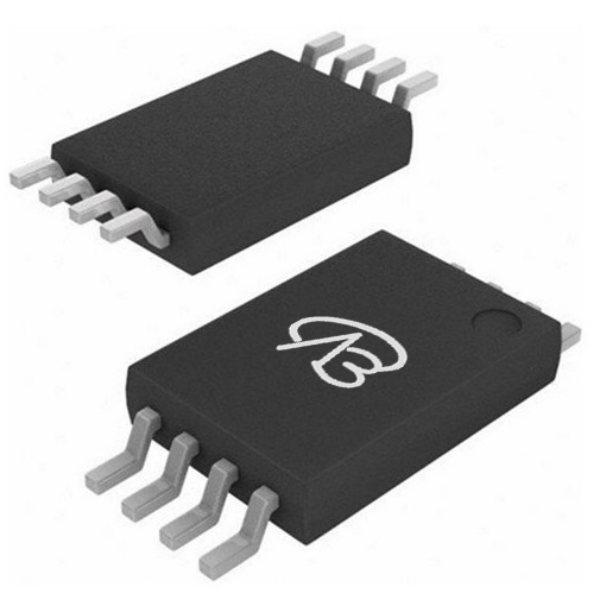
Comparative Analysis: DMN2019UTS-13 (N-channel) vs. VBC6N2014
Analysis of the Original Model (DMN2019UTS-13) Core:
This 20V N-channel MOSFET from DIODES, in a TSSOP-8 package, is designed for efficient power management. Its core advantage is minimizing conduction loss with a low on-resistance of 31mΩ at a 1.8V gate drive, suitable for logic-level control. It offers a continuous drain current of 5.4A and maintains good switching performance for high efficiency.
Compatibility and Differences of the Domestic Alternative (VBC6N2014):
VBsemi's VBC6N2014 is a common-drain dual N-channel MOSFET in a TSSOP-8 package, offering a pin-compatible alternative for specific configurations. It shows significant performance enhancement in conduction: lower on-resistance (14mΩ @4.5V) and a higher continuous current rating of 7.6A compared to the original.
Key Application Areas:
Original Model DMN2019UTS-13: Ideal for space-constrained, efficiency-first applications in 5V/12V systems requiring logic-level drive, such as load switches, power management in portable devices, and point-of-load converters.
Alternative Model VBC6N2014: Suited for upgrade scenarios demanding lower conduction loss and higher current capability (up to 7.6A) within a 20V range, potentially offering better efficiency in DC-DC conversion or motor drive circuits.
Comparative Analysis: DMN61D8LVTQ-7 (N-channel) vs. VB362K
This comparison focuses on a high-voltage, low-current switch for automotive and industrial logic-level interfaces.
Analysis of the Original Model (DMN61D8LVTQ-7) Core:
This 60V N-channel MOSFET from DIODES comes in a compact TSOT-26 package. It's designed as a single-component solution for switching inductive loads like relays and solenoids in automotive applications, integrating essential protection and accepting logic-level inputs (3V drive). With an RDS(on) of 2.4Ω @3V and a 630mA current rating, it balances voltage withstand, switching capability, and size.
Compatibility and Differences of the Domestic Alternative (VB362K):
VBsemi's VB362K is a dual N-channel MOSFET in an SOT23-6 package. While not a direct pin-to-pin replacement for the TSOT-26, it serves as a functional alternative for driving small inductive loads. Key differences: it offers a similar 60V rating but has a higher gate threshold voltage (1.7V vs. logic-level), a significantly higher on-resistance (1800mΩ @10V), and a lower continuous current rating of 0.35A.
Key Application Areas:
Original Model DMN61D8LVTQ-7: The optimal choice for directly switching small automotive inductive loads (door locks, antenna relays) from microcontrollers due to its logic-level compatibility, integrated functionality, and compact package.
Alternative Model VB362K: A viable domestic option for general-purpose, lower-frequency switching of very small inductive or resistive loads in 60V systems where logic-level drive is not critical and the SOT23-6 package fits, offering supply chain diversification.
Conclusion
The selection path is clear:
For logic-level, efficiency-critical switching in lower voltage (20V) applications, the original DMN2019UTS-13 provides a balanced performance. Its domestic alternative VBC6N2014 offers a potential upgrade path with significantly lower RDS(on) and higher current in a compatible package for suitable circuits.
For compact, logic-level control of small inductive loads in automotive/60V systems, the integrated DMN61D8LVTQ-7 is highly optimized. The domestic VB362K provides a functional alternative for less demanding switching tasks, prioritizing supply chain resilience over peak electrical performance.
There is no universally superior choice. The key is precise requirement matching. Domestic alternatives like VBC6N2014 and VB362K provide valuable backup options and performance trade-offs, giving engineers greater flexibility in design and cost control within a diversified supply chain. Understanding each device's design philosophy is essential to leverage its full value in your circuit.

Download PDF document
 Download now


