 中文
中文 English
MOSFET Selection for Compact Power Applications: DMN2011UTS-13, DMN2065UWQ-7 vs. China Alternatives VBC7N3010, VBK1270
Number of views:9999
 Back to previous page
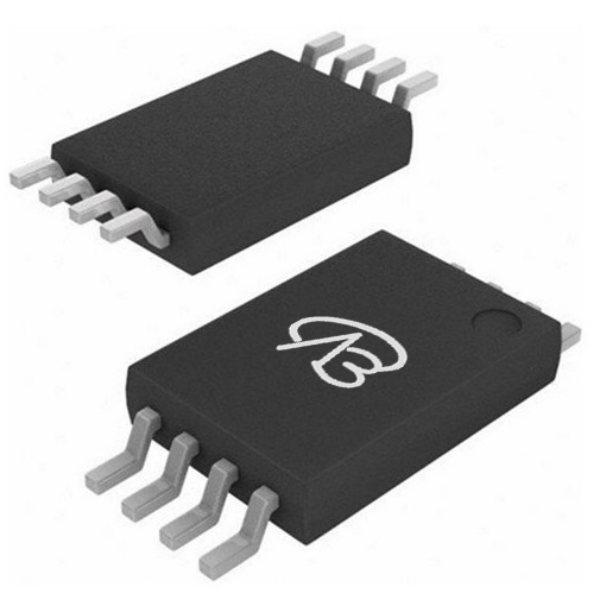
Comparative Analysis: DMN2011UTS-13 (N-channel) vs. VBC7N3010
Analysis of the Original Model (DMN2011UTS-13) Core:
This is a 20V N-channel MOSFET from DIODES, using a TSSOP-8 package. Its design core is to minimize on-resistance (RDS(ON)) while maintaining excellent switching performance, making it ideal for high-efficiency power management applications. The key advantages are: a low on-resistance of 11mΩ at a 4.5V drive voltage, and it can provide a continuous drain current as high as 21A.
Compatibility and Differences of the Domestic Alternative (VBC7N3010):
VBsemi's VBC7N3010 also uses a TSSOP-8 package and is a direct pin-to-pin compatible alternative. The main differences lie in the electrical parameters: VBC7N3010 has a higher voltage rating (30V), but a lower continuous current (8.5A) and a slightly higher on-resistance (14.4mΩ@4.5V) compared to the original model.
Key Application Areas:
Original Model DMN2011UTS-13: Its characteristics are very suitable for 20V systems requiring high-current switching capability and low conduction loss. Typical applications include:
Load switches and power distribution in compact devices.
Synchronous rectification in DC-DC converters.
Motor drive and control circuits.
Alternative Model VBC7N3010: More suitable for N-channel application scenarios requiring higher voltage margin (up to 30V) but with moderate current demand (within 8.5A), offering a reliable alternative with good switching performance.
Comparative Analysis: DMN2065UWQ-7 (N-channel) vs. VBK1270
Analysis of the Original Model (DMN2065UWQ-7) Core:
This is a 20V N-channel MOSFET from DIODES in an ultra-small SOT-323 package. Its design pursuit is minimizing on-resistance (RDS(on)) in a minimal footprint while maintaining good switching performance, making it perfect for efficient power management applications like general-purpose interface switching. Key parameters include a continuous drain current of 2.8A and an on-resistance of 140mΩ at 1.5V.
Compatibility and Differences of the Domestic Alternative (VBK1270):
VBsemi's VBK1270 uses a SC70-3 package, which is similarly compact. It serves as a functional alternative for space-constrained designs. The VBK1270 offers a comparable voltage rating (20V) but provides a higher continuous current (4A) and significantly lower on-resistance (e.g., 40mΩ@4.5V), indicating potentially better conduction performance.
Key Application Areas:
Original Model DMN2065UWQ-7: Its ultra-small size and low on-resistance make it an ideal choice for space-critical, low-to-medium current switching. For example:
General-purpose interface and signal switching in portable electronics.
Power management in sub-modules of IoT devices.
Load switches for low-power peripherals.
Alternative Model VBK1270: Is more suitable for upgraded scenarios requiring higher current capability (up to 4A) and lower conduction loss in a similarly compact footprint, such as in more demanding portable applications or efficient power gating.
In summary, this comparative analysis reveals two clear selection paths:
For N-channel applications requiring a balance of current capability and low on-resistance in a standard package, the original model DMN2011UTS-13, with its low 11mΩ on-resistance and high current capability up to 21A, demonstrates strong advantages in power management and motor drive circuits. Its domestic alternative VBC7N3010, while package-compatible and with a higher voltage rating (30V), is tailored for scenarios where voltage margin is prioritized over maximum current.
For N-channel applications in ultra-compact spaces, the original model DMN2065UWQ-7, with its SOT-323 package, is a champion for minimal board area. Its domestic alternative VBK1270 provides a "performance-enhanced" option with higher current and lower on-resistance in a similarly small SC70-3 package, ideal for pushing the limits of power density in tiny designs.
The core conclusion is: There is no absolute superiority or inferiority in selection; the key lies in precise matching of requirements. In the context of supply chain diversification, domestic alternative models not only provide feasible backup options but also offer different performance trade-offs, giving engineers more flexible and resilient choice space in design optimization and cost control. Understanding the design philosophy and parameter implications of each device is essential to maximize its value in the circuit.

Download PDF document
 Download now


