 中文
中文 English
MOSFET Selection for Compact Dual-Channel and Automotive-Grade Applications: DMN2004DWK-7, DMN601WKQ-13 vs. China Alternatives VBK3215N, VBK162K
Number of views:9999
 Back to previous page
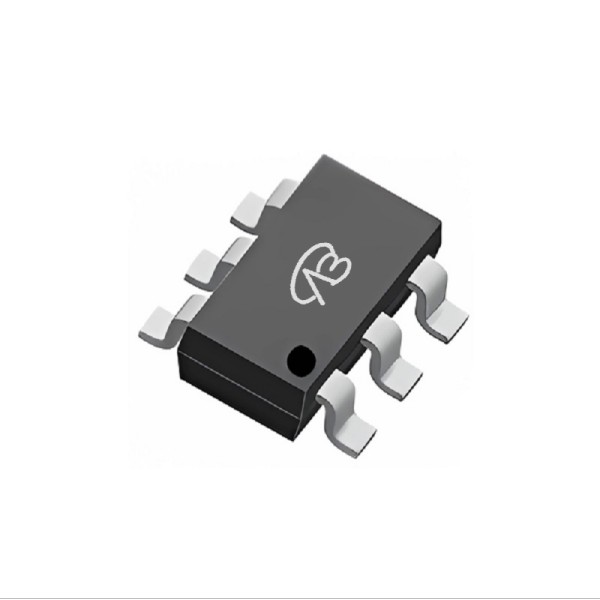
Comparative Analysis: DMN2004DWK-7 (Dual N-channel) vs. VBK3215N
Analysis of the Original Model (DMN2004DWK-7) Core:
This is a 20V dual N-channel MOSFET from DIODES in an ultra-small SC-70-6 (SOT-363) package. Its design core is to provide two independent switching channels in minimal board space for low-voltage, low-current signal switching and power management. Key parameters include a continuous drain current of 540mA per channel and an on-resistance (RDS(on)) of 400mΩ at 4.5V gate drive.
Compatibility and Differences of the Domestic Alternative (VBK3215N):
VBsemi's VBK3215N is a direct pin-to-pin compatible alternative in the same SC-70-6 package. The key differences are significantly enhanced electrical performance: VBK3215N offers a much lower on-resistance of 86mΩ at 4.5V and supports a higher continuous drain current of 2.6A. This represents a major improvement in conduction loss and current-handling capability.
Key Application Areas:
Original Model DMN2004DWK-7: Ideal for space-constrained applications requiring dual-channel switching with modest current needs (~540mA). Typical uses include:
Load switching for portable/IoT device peripherals (e.g., sensors, LEDs).
Signal routing and multiplexing in low-voltage digital circuits.
Power management in compact consumer electronics.
Alternative Model VBK3215N: Better suited for upgraded dual-channel applications demanding lower voltage drop, higher efficiency, and higher current capability (up to 2.6A). It's excellent for:
More efficient load switches in compact modules.
Dual-channel switching in low-voltage DC-DC converter circuits.
Applications where reducing conduction loss is critical.
Comparative Analysis: DMN601WKQ-13 (Automotive N-channel) vs. VBK162K
This comparison shifts focus to reliability and ruggedness for automotive environments.
Analysis of the Original Model (DMN601WKQ-13) Core:
This is a 60V, single N-channel MOSFET from DIODES in an SOT-323 package. It is AEC-Q101 qualified with PPAP support, designed specifically for harsh automotive applications. Its core is balancing voltage rating (60V), current (300mA), and switching performance (RDS(on) of 2Ω at 10V) in a small, reliable package for control and management functions.
Compatibility and Differences of the Domestic Alternative (VBK162K):
VBsemi's VBK162K is a pin-to-pin compatible alternative in an SC70-3 package. It matches the 60V voltage rating and 300mA continuous current. A key difference is its specified on-resistance: 4000mΩ at 4.5V and 2000mΩ at 10V gate drive. It also offers a robust ±20V gate-source voltage rating.
Key Application Areas:
Original Model DMN601WKQ-13: Tailored for automotive-grade applications requiring proven reliability. Typical uses include:
Low-side switches for motor control (e.g., small actuators, fans).
Power management and load switching in body control modules.
LED backlight driving and other control functions.
Alternative Model VBK162K: Provides a reliable domestic alternative for similar 60V automotive or industrial applications where AEC-Q101 compliance and PPAP support are crucial, such as:
Replacement in automotive lighting control, sensor power switching.
Industrial control systems requiring robust, medium-voltage switching.
Conclusion:
This analysis reveals two distinct selection paths:
For dual N-channel applications in ultra-compact designs, the original DMN2004DWK-7 provides a proven dual-switch solution. Its domestic alternative VBK3215N offers significant performance enhancement with dramatically lower on-resistance and higher current capability, making it an excellent upgrade for efficiency and power density.
For automotive-grade, single N-channel applications, the AEC-Q101 certified DMN601WKQ-13 meets stringent reliability requirements. Its domestic alternative VBK162K provides a compatible, qualified option, ensuring supply chain resilience for automotive and industrial designs without compromising voltage rating.
The core takeaway: Selection hinges on precise requirement matching. In an era of supply chain diversification, domestic alternatives like VBK3215N and VBK162K not only provide reliable backups but also offer performance enhancements or direct compliance, giving engineers greater flexibility and resilience in design trade-offs and cost control. Understanding each device's design intent and parameter implications is key to unlocking its full potential in your circuit.

Download PDF document
 Download now


