 中文
中文 English
MOSFET Selection for Compact Power Management: DMG6968UTS-13, DMP4065S-7 vs. China Alternatives VBC6N2022, VB2470
Number of views:9999
 Back to previous page
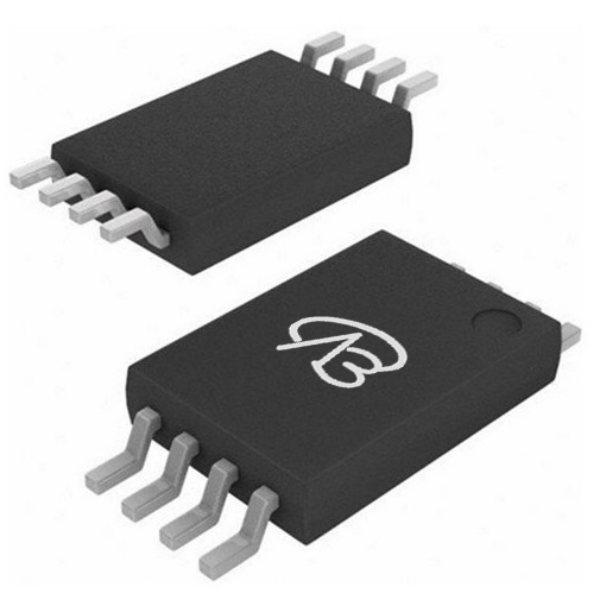
Comparative Analysis: DMG6968UTS-13 (Dual N-channel) vs. VBC6N2022
Analysis of the Original Model (DMG6968UTS-13) Core:
This is a dual N-channel MOSFET from DIODES in a compact TSSOP-8 package. Its design focuses on achieving a balance of low conduction loss, fast switching, and high reliability in a small footprint. Key advantages include: a low on-resistance (RDS(on)), low input capacitance for fast switching, and robust features such as ESD protection up to 2kV and compliance with the AEC-Q101 standard for automotive-grade reliability. With a Vdss of 20V and a continuous drain current (Id) of 5.2A per channel, it is well-suited for low-voltage, signal-level, or moderate-current switching tasks.
Compatibility and Differences of the Domestic Alternative (VBC6N2022):
VBsemi's VBC6N2022 is a direct pin-to-pin compatible alternative in a TSSOP-8 package, featuring a common-drain, dual N-channel configuration. It matches the original's voltage rating (20V) and offers comparable low on-resistance (e.g., 22mΩ @ 4.5V). A key difference is its slightly higher continuous current rating of 6.6A, providing a margin for handling higher loads. It maintains the benefits of low input capacitance and fast switching, making it a suitable replacement in many applications.
Key Application Areas:
Original Model DMG6968UTS-13: Ideal for compact circuits requiring dual low-side switches or signal multiplexing with enhanced reliability. Typical applications include:
Load switching and power distribution in portable devices.
Signal line selection and multiplexing in communication interfaces.
Motor drive control for small brushed DC motors.
General-purpose switching in consumer electronics and automotive subsystems (leveraging AEC-Q101 compliance).
Alternative Model VBC6N2022: Suitable for the same application spaces as the original, particularly where a slight current capability upgrade or a reliable domestic supply chain is desired. It is a strong candidate for dual N-channel switch replacements in power management and signal path control.
Comparative Analysis: DMP4065S-7 (P-channel) vs. VB2470
This P-channel MOSFET is designed for efficient power management where minimizing conduction loss is paramount.
Analysis of the Original Model (DMP4065S-7) Core:
This DIODES P-channel MOSFET in an SOT-23 package is engineered to deliver low on-resistance while maintaining good switching performance. Its core advantage is a specified RDS(on) of 100mΩ @ 4.5V, which helps reduce power loss in the on-state. With a Vdss of -40V and a continuous drain current (Id) of -3.4A, it is tailored for space-constrained, medium-efficiency applications such as load switches or high-side switches in power paths.
Compatibility and Differences of the Domestic Alternative (VB2470):
VBsemi's VB2470 is a direct pin-to-pin compatible P-channel alternative in an SOT-23-3 package. It matches the original's key parameters very closely: the same voltage rating (-40V), identical on-resistance (100mΩ @ 4.5V), and a similar continuous current rating (-3.6A). It also offers a lower RDS(on) of 71mΩ @ 10V, indicating potentially better performance at higher gate drive voltages. This makes it a highly equivalent drop-in replacement.
Key Application Areas:
Original Model DMP4065S-7: Excellent for applications requiring a compact P-channel switch with good efficiency. Typical uses include:
High-side load switches in battery-powered devices (e.g., smartphones, tablets).
Power rail isolation and management in DC-DC converters.
Reverse polarity protection circuits.
General-purpose switching in various power management units (PMUs).
Alternative Model VB2470: Perfectly suited for all the application scenarios of the original model. Its parameter matching and potential performance at higher Vgs make it a reliable and efficient domestic alternative for P-channel switching needs.
Conclusion
This analysis outlines two clear substitution paths:
For dual N-channel applications in compact packages requiring reliability and performance, the original DMG6968UTS-13 offers a proven solution with AEC-Q101 compliance. Its domestic alternative, VBC6N2022, provides excellent electrical compatibility, pin-to-pin replacement, and a slight current margin, making it a strong candidate for supply chain diversification.
For P-channel applications where minimizing conduction loss in a tiny SOT-23 footprint is critical, the original DMP4065S-7 is a solid choice. Its domestic counterpart, VB2470, demonstrates near-identical key parameters and direct package compatibility, presenting a viable and performance-matched alternative.
The core takeaway is that selection hinges on precise requirement matching. In the context of supply chain diversification, domestic alternatives like VBC6N2022 and VB2470 not only provide reliable backup options but also offer parameter equivalence or slight advantages, giving engineers greater flexibility and resilience in design trade-offs and cost control. Understanding each device's specifications is key to leveraging its full value in the circuit.

Download PDF document
 Download now


