 中文
中文 English
MOSFET Selection for Compact Signal and Power Switching: DMG3414U-7, BSS138K-13 vs. China Alternatives VB1240, VB162K
Number of views:9999
 Back to previous page
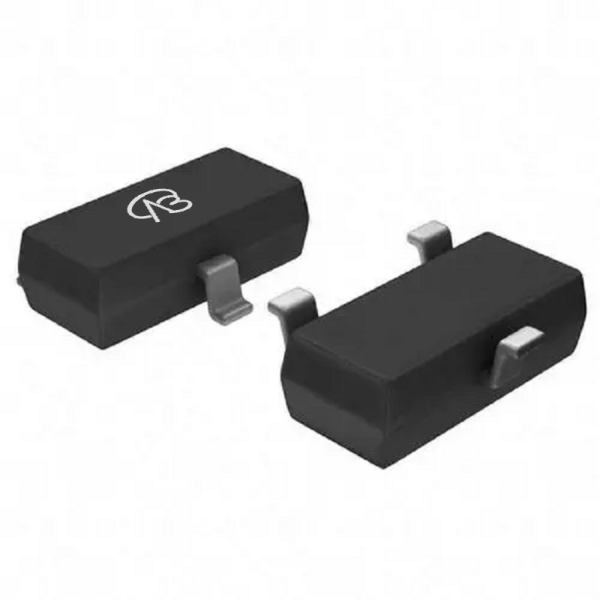
Comparative Analysis: DMG3414U-7 (N-channel) vs. VB1240
Analysis of the Original Model (DMG3414U-7) Core:
This is a 20V N-channel MOSFET from DIODES in a standard SOT-23 package. Its design core is to provide a balanced combination of moderate current handling and low on-resistance with low gate drive voltage. Key advantages include: a continuous drain current of 4.2A and a low on-resistance of 37mΩ at a gate-source voltage of just 1.8V. This makes it highly suitable for power switching and management in low-voltage systems.
Compatibility and Differences of the Domestic Alternative (VB1240):
VBsemi's VB1240 is a pin-to-pin compatible alternative in the SOT23-3 package. The key differences are in the electrical parameters: VB1240 offers a similar voltage rating (20V) but a higher continuous current rating of 6A. Its on-resistance is 28mΩ at 4.5V Vgs. While its RDS(on) at very low Vgs (e.g., 2.5V) is slightly higher (42mΩ) compared to the original's performance at 1.8V, it provides superior performance at standard drive voltages.
Key Application Areas:
Original Model DMG3414U-7: Ideal for space-constrained, low-voltage applications requiring switching at low gate drive levels. Typical uses include:
Load switching in portable electronics and IoT devices powered by single-cell Li-ion batteries.
Power management and distribution in low-voltage digital circuits (e.g., 1.8V, 3.3V systems).
General-purpose switching in consumer electronics.
Alternative Model VB1240: More suitable for applications requiring higher current capability (up to 6A) and where standard 3.3V or 5V gate drive is available, offering lower conduction loss in such scenarios.
Comparative Analysis: BSS138K-13 (N-channel) vs. VB162K
Analysis of the Original Model (BSS138K-13) Core:
This 50V N-channel MOSFET from DIODES, also in a SOT-23 package, is designed to minimize on-resistance while maintaining excellent switching performance for efficient power management. Its core advantages are a good balance for its class: a drain-source voltage of 50V, an on-resistance of 1.3Ω at 10V Vgs, and a continuous current of 310mA. It is optimized for fast switching in signal-level or low-power applications.
Compatibility and Differences of the Domestic Alternative (VB162K):
VBsemi's VB162K is a direct pin-to-pin compatible alternative. It offers a performance-enhanced specification: a higher voltage rating of 60V and a similar continuous current of 0.3A (300mA). However, its key parameter, on-resistance, is significantly higher (2.8Ω at 10V Vgs) compared to the original's 1.3Ω.
Key Application Areas:
Original Model BSS138K-13: Perfect for efficient signal switching and low-power management where a good balance of voltage rating, low RDS(on), and switching speed is needed. Common applications include:
Level shifting and interface switching in communication circuits.
Low-side switching in low-power DC-DC converters.
General-purpose signal switching and amplification in various electronic controls.
Alternative Model VB162K: More suitable for applications where a higher voltage margin (60V) is the primary requirement, and the higher on-resistance is acceptable for the intended low-current (≤0.3A) switching function.
Conclusion
In summary, this analysis reveals two distinct selection paths based on application priority:
For low-voltage, moderate-current switching (DMG3414U-7 use case), the original model excels with its very low on-resistance at 1.8V drive. The domestic alternative VB1240 provides a viable compatible option with a higher current rating, making it a strong candidate for designs using standard logic-level voltages where increased current headroom is beneficial.
For higher-voltage, signal-level/low-power switching (BSS138K-13 use case), the original model offers a superior combination of 50V rating and relatively low on-resistance for fast, efficient switching. The domestic alternative VB162K trades off higher on-resistance for a greater voltage rating (60V), positioning it for applications where voltage withstand capability is more critical than minimal conduction loss.
The core takeaway is that selection depends on precise requirement matching. Domestic alternatives like VB1240 and VB162K provide not only supply chain resilience but also specific parameter advantages (higher current or voltage), offering engineers greater flexibility in design trade-offs and cost optimization. Understanding each device's parameter implications is key to leveraging its full value in the circuit.

Download PDF document
 Download now


