 中文
中文 English
MOSFET Selection for Compact Power Applications: DMG3401LSNQ-13, BSS138WQ-7-F vs. China Alternatives VB2355, VBK162K
Number of views:9999
 Back to previous page
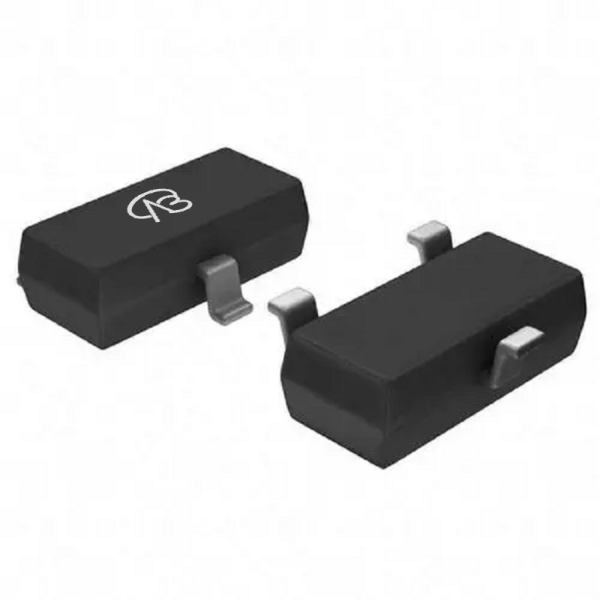
Comparative Analysis: DMG3401LSNQ-13 (P-channel) vs. VB2355
Analysis of the Original Model (DMG3401LSNQ-13) Core:
This is a 30V P-channel MOSFET from DIODES, using a compact SC-59-3 package. Its design core is to provide reliable power switching in a small footprint. The key advantages are: a continuous drain current of 3.7A and an on-resistance of 50mΩ at a 10V drive voltage. This makes it suitable for various low-to-medium power load switching applications.
Compatibility and Differences of the Domestic Alternative (VB2355):
VBsemi's VB2355 also uses a small SOT23-3 package and is a functional pin-to-pin compatible alternative. The main differences lie in the electrical parameters: VB2355 has a similar voltage rating (-30V) and a slightly higher continuous current rating (-5.6A). Its on-resistance is 46mΩ@10V, offering marginally better conduction performance than the original model.
Key Application Areas:
Original Model DMG3401LSNQ-13: Its characteristics are very suitable for space-constrained 30V systems requiring moderate current switching capability. Typical applications include:
Load switches and power management in portable consumer electronics.
Signal level shifting and power rail control in various circuit modules.
Alternative Model VB2355: Offers a comparable or slightly enhanced performance profile, making it a suitable drop-in replacement for general P-channel switching applications where a -30V rating and current up to -5.6A are required.
Comparative Analysis: BSS138WQ-7-F (N-channel) vs. VBK162K
Analysis of the Original Model (BSS138WQ-7-F) Core:
This is a 50V N-channel MOSFET from DIODES, in an SOT-323 package. It is specifically designed to meet the stringent requirements of automotive applications, being AEC-Q101 qualified with PPAP support. Its core advantages are high reliability and robustness for harsh environments, with a voltage rating of 50V, a continuous current of 280mA, and an on-resistance of 3.5Ω at 10V.
Compatibility and Differences of the Domestic Alternative (VBK162K):
VBsemi's VBK162K uses an SC70-3 package and serves as a potential alternative for similar circuit functions. The key differences are: VBK162K has a higher voltage rating (60V) and a slightly higher continuous current rating (0.3A). However, its on-resistance is significantly higher (2000mΩ@10V), indicating it is tailored for very low-current signal switching or protection applications rather than power switching.
Key Application Areas:
Original Model BSS138WQ-7-F: Its automotive-grade qualification makes it an ideal choice for harsh-environment applications requiring high reliability. Typical applications include:
Motor control and power management functions in automotive systems.
Signal switching and interface protection in other ruggedized electronics.
Alternative Model VBK162K: Is more suitable for general-purpose, low-current N-channel applications where a higher voltage margin (60V) is needed, but where higher on-resistance can be tolerated, such as in specific signal-level circuits or as a protection device.
In summary, this comparative analysis reveals two clear selection paths:
For P-channel applications in compact spaces requiring -30V rating and several amps of current, the original model DMG3401LSNQ-13 offers a balanced performance in a proven package. Its domestic alternative VB2355 provides a compatible solution with slightly better current and on-resistance specs, making it a viable alternative for many standard switching applications.
For N-channel applications demanding high reliability in automotive or rugged environments, the original, AEC-Q101 qualified BSS138WQ-7-F remains the benchmark. Its domestic alternative VBK162K, while offering a higher voltage rating, is designed for a different primary use case—very low-current switching—due to its high on-resistance. It is not a direct performance-for-performance substitute but offers an alternative for specific low-power signal applications.
The core conclusion is: There is no absolute superiority or inferiority in selection; the key lies in precise matching of requirements. In the context of supply chain diversification, domestic alternative models provide feasible backup or complementary options. Understanding the specific design philosophy, key parameters, and intended application of each device is essential to maximize its value in the circuit.

Download PDF document
 Download now


