 中文
中文 English
MOSFET Selection for Automotive and High-Efficiency Power Applications: DMC6040SSDQ-13, DMG4511SK4-13 vs. China Alternatives VBA5638, VBE5307
Number of views:9999
 Back to previous page
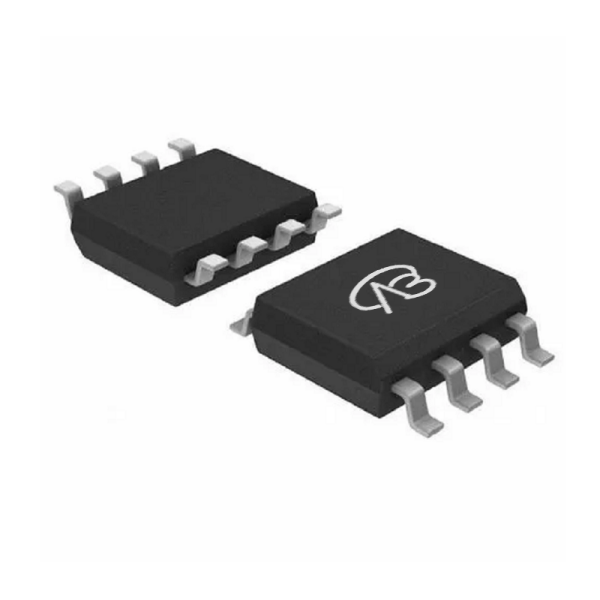
Comparative Analysis: DMC6040SSDQ-13 (Dual N+P Channel) vs. VBA5638
Analysis of the Original Model (DMC6040SSDQ-13) Core:
This is an AEC-Q101 qualified, PPAP-capable dual MOSFET (one N-Channel and one P-Channel) in an SO-8 package, designed for stringent automotive applications. Its core design focuses on robust performance and reliability in 60V systems. Key advantages are: a low P-channel on-resistance of 10mΩ (@10V) and an N-channel on-resistance of 40mΩ (@10V), with continuous drain currents of 3.9A (P-ch) and 6.5A (N-ch). This makes it highly suitable for automotive power management where space and reliability are paramount.
Compatibility and Differences of the Domestic Alternative (VBA5638):
VBsemi's VBA5638 is also housed in an SOP8 package, offering direct pin-to-pin compatibility. The key differences are in the electrical parameters: VBA5638 features a lower gate threshold voltage (±1.8V/-1.7V) and offers significantly higher continuous current ratings of 5.3A (N-ch) and -4.9A (P-ch). Its on-resistance is also competitive at 26mΩ (N-ch) and 55mΩ (P-ch) @10V. However, its drain-source voltage ratings are asymmetric (±60V for N-ch, ±20V for P-ch) compared to the original's symmetrical 60V.
Key Application Areas:
Original Model DMC6040SSDQ-13: Its AEC-Q101 qualification makes it the ideal choice for automotive applications requiring high reliability. Typical uses include:
Automotive DC-DC converters and power management modules.
Body control modules and lighting systems (e.g., backlight drivers).
Any 12V/24V automotive system requiring a compact, qualified dual MOSFET solution.
Alternative Model VBA5638: More suitable for industrial or consumer applications where higher current drive, lower gate drive voltage, and cost-effectiveness are prioritized over symmetrical high-voltage ratings, such as in non-automotive power management circuits.
Comparative Analysis: DMG4511SK4-13 (Dual N+P Channel) vs. VBE5307
This comparison shifts to a dual MOSFET pair in a TO-252-4L package, where the design pursuit is maximizing current capability and minimizing conduction loss in a power-friendly footprint.
Analysis of the Original Model (DMG4511SK4-13) Core:
This model features a common-drain configuration (N+P Channel) in a TO-252-4L package. Its core advantage lies in achieving a excellent balance between low on-resistance and high current handling for its voltage class (35V). The N-channel offers a very low 35mΩ (@10V) with 13A continuous current, while the P-channel provides 45mΩ (@10V) with 12A. This combination is tailored for high-efficiency, medium-power switching applications.
Compatibility and Differences of the Domestic Alternative (VBE5307):
The domestic alternative VBE5307, in the same TO252-4L package and common-drain configuration, presents a substantial "performance-enhanced" option. It achieves remarkable improvements in key parameters: dramatically higher continuous drain currents (65A for N-ch, -35A for P-ch) and significantly lower on-resistance (7mΩ for N-ch, 25mΩ for P-ch @10V). This translates to much lower conduction losses and higher power handling capability in similar applications.
Key Application Areas:
Original Model DMG4511SK4-13: Its balanced low RDS(on) and good current ratings make it an excellent choice for efficient power management in 24V-36V systems. For example:
Synchronous rectification stages in intermediate power DC-DC converters.
Motor drive circuits for brushed DC or stepper motors.
Power switches in telecom or industrial power supplies.
Alternative Model VBE5307: Is ideally suited for upgraded scenarios demanding much higher current capacity and minimal conduction loss. It's perfect for:
High-current DC-DC converters and VRM applications.
High-power motor drives and solenoid drivers.
Any application where thermal performance and efficiency are critical and the higher current spec is utilized.
Conclusion:
This analysis reveals two distinct selection pathways based on application priorities:
For automotive-grade, reliability-focused applications requiring AEC-Q101 compliance and symmetrical high-voltage ratings (60V), the original DMC6040SSDQ-13 remains the preferred choice for automotive DC-DC and power management. Its domestic alternative VBA5638 offers a compelling, pin-compatible solution for industrial/consumer uses, trading symmetrical high voltage for higher current drive and lower gate threshold.
For high-efficiency, medium-to-high power applications where current capability and low conduction loss are paramount, the original DMG4511SK4-13 provides a solid, balanced performance. However, the domestic alternative VBE5307 delivers a significant performance boost with its ultra-low on-resistance and vastly higher current ratings, making it a superior choice for design upgrades seeking higher power density and efficiency.
The core takeaway is that selection hinges on precise requirement matching. In the context of supply chain diversification, domestic alternatives like VBA5638 and VBE5307 not only provide viable backups but also offer parameter advantages—from higher current (VBE5307) to lower gate drive (VBA5638)—giving engineers greater flexibility in design optimization and cost control. Understanding each device's design intent and parameter implications is key to unlocking its full potential in your circuit.

Download PDF document
 Download now


