 中文
中文 English
MOSFET Selection for Power Management and Automotive Applications: DMC4047LSD-13, DMN4035LQ-7 vs. China Alternatives VBA5415, VB1435
Number of views:9999
 Back to previous page
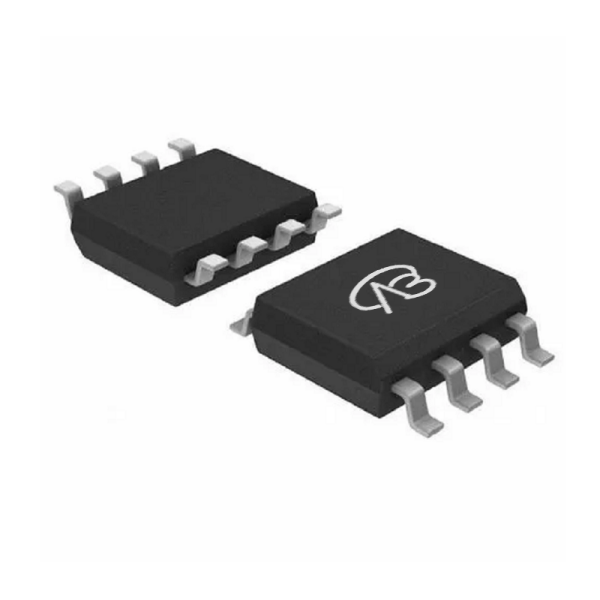
Comparative Analysis: DMC4047LSD-13 (Dual N+P Channel) vs. VBA5415
Analysis of the Original Model (DMC4047LSD-13) Core:
This is a dual MOSFET from DIODES in an SO-8 package, integrating one N-channel and one P-channel. Its design core is to minimize on-resistance (RDS(ON)) while maintaining excellent switching performance, making it ideal for high-efficiency power management. Key advantages include: a drain-source voltage (Vdss) of 40V, a continuous drain current (Id) of 5.1A, and an on-resistance of 55mΩ @ 4.5V, 4.5A.
Compatibility and Differences of the Domestic Alternative (VBA5415):
VBsemi's VBA5415 is also in an SOP8 package and is a pin-to-pin compatible alternative. It offers enhanced electrical parameters: dual N+P channels with ±40V drain-source voltage, higher continuous current (±20V gate, 9A for N-channel, -8A for P-channel), and significantly lower on-resistance (18/22 mΩ @ 4.5V, 15/17 mΩ @ 10V).
Key Application Areas:
Original Model DMC4047LSD-13: Suitable for compact power management applications requiring moderate current and voltage, such as DC-DC converters, load switches, and power path control in portable devices.
Alternative Model VBA5415: Better suited for applications demanding higher current capability, lower conduction loss, and dual-channel flexibility, such as advanced power supplies, motor drives, or higher-power switching circuits.
Comparative Analysis: DMN4035LQ-7 (N-Channel) vs. VB1435
This N-channel MOSFET is designed for automotive-grade reliability and efficiency.
Analysis of the Original Model (DMN4035LQ-7) Core:
From DIODES in an SOT-23 package, it meets stringent automotive requirements with AEC-Q101 qualification and PPAP support. Key features include: 40V Vdss, 4.6A Id, and 42mΩ on-resistance @ 10V. It is optimized for applications like battery charging, power distribution, and control modules in vehicles.
Compatibility and Differences of the Domestic Alternative (VB1435):
VBsemi's VB1435 is a direct alternative in SOT23-3 package. It offers comparable voltage (40V) and threshold (±20V gate), with similar current rating (4.8A) and on-resistance (40mΩ @ 4.5V, 35mΩ @ 10V), providing a reliable domestic option for automotive and industrial uses.
Key Application Areas:
Original Model DMN4035LQ-7: Ideal for automotive applications requiring high reliability, such as battery management, LED lighting, and ECU power switching.
Alternative Model VB1435: Suitable as a drop-in replacement for automotive or industrial systems where supply chain diversification is needed, without compromising on key performance parameters.
Summary:
This comparison highlights two selection paths:
- For dual-channel power management, the original DMC4047LSD-13 offers balanced performance in an SO-8 package, while the domestic alternative VBA5415 provides superior on-resistance and current capability for higher-efficiency designs.
- For automotive-grade N-channel applications, the original DMN4035LQ-7 ensures reliability with AEC-Q101 compliance, and the domestic VB1435 serves as a viable alternative with similar specifications.
The core conclusion: Selection depends on precise requirement matching. Domestic alternatives like VBA5415 and VB1435 not only offer backup options but also enable performance enhancements or cost savings, giving engineers greater flexibility in design and supply chain strategy. Understanding each device's parameters and design philosophy is key to maximizing circuit value.

Download PDF document
 Download now


