 中文
中文 English
MOSFET Selection for Signal Switching & High-Current Conversion: BSS159N H6327, BSZ0501NSIATMA1 vs. China Alternatives VB162K, VBQF1302
Number of views:9999
 Back to previous page
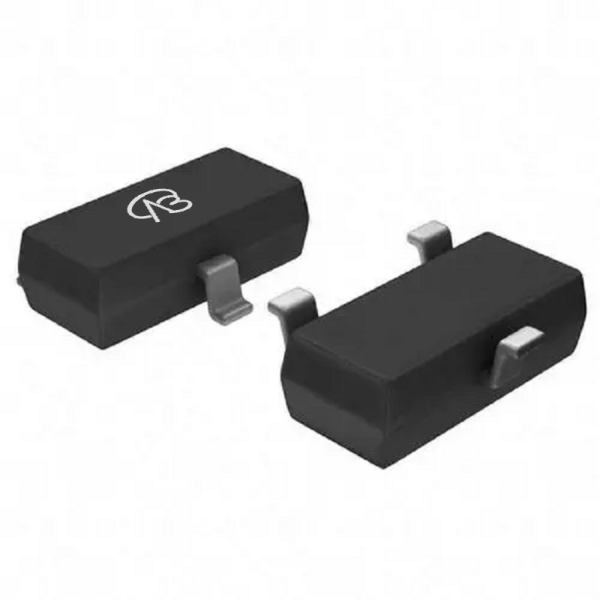
Comparative Analysis: BSS159N H6327 (N-Channel Depletion-Mode) vs. VB162K
Analysis of the Original Model (BSS159N H6327) Core:
This is a 60V N-channel depletion-mode MOSFET from Infineon in a compact SOT-23-3 package. Its design core is to provide a normally-on switching function for signal-level and protection circuits. Key advantages include: a high drain-source voltage (Vdss) of 60V, AEC-Q101 qualification for automotive reliability, and features like dv/dt rating and a VGS(th) marker on tape. Its continuous drain current (Id) is 230mA with an on-resistance of 8Ω at 10V, 0.16A, making it suitable for low-current analog switching and bias circuits.
Compatibility and Differences of the Domestic Alternative (VB162K):
VBsemi's VB162K is a direct pin-to-pin compatible alternative in the same SOT23-3 package. The main differences are in electrical parameters and mode: VB162K is a standard enhancement-mode N-channel MOSFET (not depletion-mode). It shares a similar 60V voltage rating but offers a lower on-resistance (2.8Ω @10V) and a slightly higher continuous current rating of 0.3A.
Key Application Areas:
Original Model BSS159N H6327: Ideal for circuits requiring a normally-on (depletion-mode) behavior. Typical applications include:
Constant current sources or bias circuits in amplifiers.
Overvoltage protection clamps or input protection stages.
Analog signal switching or multiplexing in automotive/industrial systems (leveraging its AEC-Q101 qualification).
Alternative Model VB162K: Suitable as a replacement only in standard enhancement-mode switching applications where normally-off operation is required. It fits general-purpose low-side switching, load switching for small sensors, or signal path control in 60V systems, benefiting from its lower RDS(on).
Comparative Analysis: BSZ0501NSIATMA1 (N-Channel Power MOSFET) vs. VBQF1302
This comparison shifts to high-performance power conversion, where the design pursuit is ultra-low loss and high current density.
Analysis of the Original Model (BSZ0501NSIATMA1) Core:
This is a 30V N-channel MOSFET from Infineon in a thermally efficient TSDSON-8FL package. Its design is optimized for high-frequency synchronous buck converters. Core advantages are:
Exceptional Current Handling: A very high continuous drain current of 123A.
Ultra-Low Conduction Loss: An extremely low on-resistance of 2.5mΩ at 10V gate drive.
Integrated Features: Monolithically integrated Schottky-like diode for improved body diode performance and 100% avalanche tested for robustness.
Optimized for POL: Specifically qualified for point-of-load (POL) applications per JEDEC standards.
Compatibility and Differences of the Domestic Alternative (VBQF1302):
VBsemi's VBQF1302, in a DFN8(3x3) package, is a performance-competitive alternative. It matches the 30V voltage rating and offers compelling parameters: an even lower on-resistance of 2mΩ @10V (and 3mΩ @4.5V) and a high continuous current rating of 70A.
Key Application Areas:
Original Model BSZ0501NSIATMA1: The premier choice for maximizing efficiency in high-current, high-frequency DC-DC conversion. Typical applications include:
Synchronous rectification in high-performance buck converters (especially for CPU/GPU core voltage regulation).
Point-of-load (POL) converters in servers, telecom, and networking equipment.
Motor drives or solenoid drivers requiring very low conduction loss.
Alternative Model VBQF1302: An excellent alternative for applications demanding very low RDS(on) and high current in a compact package. It is well-suited for:
High-efficiency synchronous buck converters in intermediate power stages.
Power switches in battery management systems (BMS) or hot-swap circuits.
Upgrading designs where thermal performance and conduction loss are critical.
Summary:
This analysis reveals two distinct selection paths based on application fundamental:
1. For depletion-mode, normally-on signal switching at 60V, the original BSS159N H6327 with its specific characteristics and automotive grade is unique. Its alternative VB162K is a valid replacement only if the circuit is redesigned for a standard enhancement-mode MOSFET, where it then offers good general-purpose performance.
2. For high-current, low-voltage power conversion at 30V, both the original BSZ0501NSIATMA1 and the domestic VBQF1302 are outstanding. The original offers an extreme 123A current rating and integrated diode optimization. The alternative provides superior on-resistance (2mΩ) and a robust 70A capability, making it a powerful and often more accessible choice for efficiency-critical designs.
Core Conclusion: Selection is dictated by the fundamental circuit requirement—depletion vs. enhancement mode for signal parts, and current density vs. loss optimization for power parts. Domestic alternatives like VB162K and VBQF1302 provide viable, high-performance options, enhancing supply chain resilience and offering engineers greater flexibility in cost-performance trade-offs. Understanding the operational mode and key parameters of each device is essential to unlock its full potential in your circuit.

Download PDF document
 Download now


