 中文
中文 English
MOSFET Selection for Signal Switching & Power Management: BSS138Q-7-F, DMP2215L-7 vs. China Alternatives VB162K, VB2290
Number of views:9999
 Back to previous page
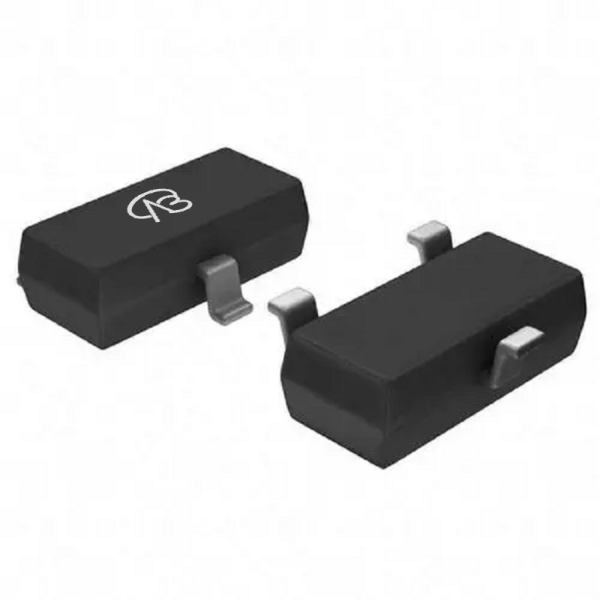
Comparative Analysis: BSS138Q-7-F (N-channel) vs. VB162K
Analysis of the Original Model (BSS138Q-7-F) Core:
This is a 50V N-channel MOSFET from DIODES in a compact SOT-23 package. Its design aims to minimize on-resistance (1.4Ω @10V) while maintaining excellent switching performance, making it ideal for efficient power management applications. With a continuous drain current of 200mA, it suits low-power signal switching and control.
Compatibility and Differences of the Domestic Alternative (VB162K):
VBsemi’s VB162K is a pin-to-pin compatible alternative in SOT23-3. Key differences: higher voltage rating (60V) and lower on-resistance (2.8Ω @10V vs. 1.4Ω), but lower continuous current (0.3A vs. 0.2A). It uses Trench technology for balanced performance.
Key Application Areas:
- BSS138Q-7-F: Ideal for low-power signal switching, level shifting, and load control in 5V-12V systems, such as GPIO interfacing, sensor switching, and portable device power management.
- VB162K: Suitable for applications requiring higher voltage tolerance (up to 60V) with moderate current needs, like industrial control interfaces or automotive low-power circuits.
Comparative Analysis: DMP2215L-7 (P-channel) vs. VB2290
Analysis of the Original Model (DMP2215L-7) Core:
This P-channel MOSFET from DIODES features -20V voltage rating, -2.7A continuous current, and low on-resistance (80mΩ @4.5V). Its SOT-23 package offers efficient power switching with 1.08W power dissipation, targeting space-constrained designs.
Compatibility and Differences of the Domestic Alternative (VB2290):
VB2290 is a direct pin-to-pin alternative with enhanced performance: same -20V rating but higher current (-4A) and lower on-resistance (65mΩ @4.5V). It provides better efficiency and thermal handling for demanding applications.
Key Application Areas:
- DMP2215L-7: Excellent for power path management, load switching, and battery control in 3.3V/5V systems, such as mobile device power distribution or low-voltage DC-DC conversion.
- VB2290: Suited for upgraded scenarios requiring higher current capacity and lower losses, like motor drives or power modules in compact designs.
Summary:
This comparison highlights two selection paths:
- For N-channel low-power switching, BSS138Q-7-F offers optimal balance of 1.4Ω on-resistance and 200mA current in SOT-23, ideal for signal-level applications. Its alternative VB162K provides higher voltage tolerance (60V) with slightly reduced current, fitting scenarios needing voltage margin.
- For P-channel power switching, DMP2215L-7 delivers strong performance with 80mΩ on-resistance and -2.7A current, perfect for compact power management. VB2290 enhances this with -4A current and 65mΩ on-resistance, enabling higher-efficiency upgrades.
Core Conclusion: Selection depends on precise requirement matching. Domestic alternatives like VB162K and VB2290 offer viable backups and parameter improvements, giving engineers flexibility in design trade-offs and cost control. Understanding each device’s design intent ensures maximum circuit value.

Download PDF document
 Download now


