 中文
中文 English
MOSFET Selection for Signal Switching & High-Power Applications: BSS138DWK-7, DMTH45M5SFVW-13 vs. China Alternatives VBK362K, VBQF1405
Number of views:9999
 Back to previous page
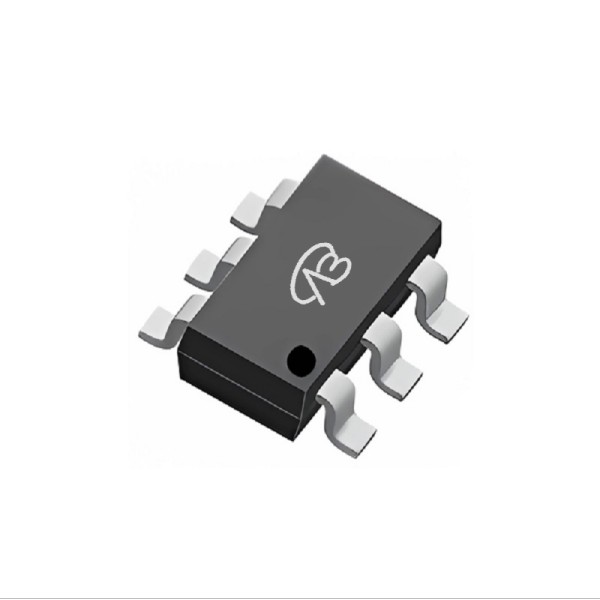
Comparative Analysis: BSS138DWK-7 (Small-Signal N-Channel) vs. VBK362K
Analysis of the Original Model (BSS138DWK-7) Core:
This is a 50V small-signal N-channel MOSFET from DIODES in a compact SOT-363 package. Its design core is to provide reliable voltage switching and signal isolation in space-constrained, low-current circuits. Key advantages include a high drain-source voltage (Vdss) of 50V, a continuous drain current (Id) of 310mA, and a moderate on-resistance of 5.2Ω at 2.5V gate drive. Its low power dissipation (490mW) makes it suitable for battery-powered and portable applications.
Compatibility and Differences of the Domestic Alternative (VBK362K):
VBsemi's VBK362K is a dual N-channel MOSFET in an SC70-6 package, offering a different approach. While not a direct pin-to-pin replacement for the single BSS138DWK-7, it serves as a functional alternative in many signal-level applications. The main differences are its dual-die structure and electrical parameters: VBK362K has a higher voltage rating (60V) and lower on-resistance (2.5Ω @10V per channel), but a lower continuous current rating of 0.3A per channel. Its dual N-channel configuration is ideal for applications requiring matched switching pairs or signal multiplexing.
Key Application Areas:
Original Model BSS138DWK-7: Ideal for low-current signal switching, level shifting, and load switching in 5V-12V systems. Typical applications include:
GPIO protection and signal isolation in microcontrollers.
Load switches for sensors, LEDs, or other low-power peripherals.
Level translation circuits in mixed-voltage systems.
Alternative Model VBK362K: More suitable for applications requiring dual switching elements, higher voltage tolerance (up to 60V), and lower on-resistance, but where current demand per channel is below 300mA. Examples include:
Precision analog switching and multiplexing.
Signal routing in communication interfaces.
Space-constrained circuits where a dual MOSFET saves board area.
Comparative Analysis: DMTH45M5SFVW-13 (High-Power N-Channel) vs. VBQF1405
This comparison shifts focus to high-power density applications, where the design pursuit is maximizing current handling and minimizing conduction loss.
Analysis of the Original Model (DMTH45M5SFVW-13) Core:
This 40V N-channel MOSFET from DIODES uses the PowerDI3333-8 package. Its core advantages are exceptional current capability and low resistance:
High Current Performance: It supports a continuous drain current of 71A, making it suitable for demanding power stages.
Low Conduction Loss: With an on-resistance as low as 5.5mΩ at 10V gate drive, it minimizes power loss in the on-state.
Robust Power Handling: A high power dissipation rating of 51W indicates strong thermal performance in a compact footprint.
Compatibility and Differences of the Domestic Alternative (VBQF1405):
VBsemi's VBQF1405, in a DFN8(3x3) package, presents a highly competitive alternative. While the voltage rating is identical at 40V, key parameters show a compelling trade-off:
Current & Resistance: VBQF1405 offers a slightly lower continuous current (40A vs. 71A) but achieves a superior, lower on-resistance of 4.5mΩ at 10V. This results in potentially lower conduction losses in its operational current range.
Package & Drive: The DFN package is highly compact. Its gate threshold is compatible, ensuring easy driver circuit adaptation.
Key Application Areas:
Original Model DMTH45M5SFVW-13: Its ultra-high current rating makes it the preferred choice for the most demanding high-power applications. For example:
High-current DC-DC converters (e.g., for servers, telecom rectifiers).
Motor drives for industrial tools or robotics.
Main power switches in high-power battery management systems (BMS).
Alternative Model VBQF1405: This model is an excellent "efficiency-optimized" choice for applications where the current requirement is within 40A but lower conduction loss is paramount. Ideal for:
High-efficiency synchronous rectification in intermediate-power DC-DC converters (e.g., POL converters).
Motor drives and solenoid drivers in automotive or industrial systems.
Upgrading designs that use older MOSFETs to improve thermal performance and efficiency.
Summary and Selection Paths:
This analysis reveals two distinct selection paradigms:
1. For Low-Power Signal Switching: The original BSS138DWK-7, with its balanced 50V/310mA rating and simple single-channel design, remains a robust default for general-purpose signal switching. Its domestic alternative, VBK362K, offers a different value proposition: a dual-channel design and higher voltage rating (60V) for more specialized applications requiring channel matching or higher voltage headroom, albeit at a lower current per channel.
2. For High-Power Switching: The original DMTH45M5SFVW-13 stands out in applications demanding extreme current (up to 71A). The domestic alternative VBQF1405, however, shines as a performance-optimized choice for a broad range of high-efficiency, medium-to-high-power applications (up to 40A), offering the significant advantage of lower on-resistance (4.5mΩ) for reduced conduction losses and potentially cooler operation.
Core Conclusion: Selection is not about finding a universally superior part, but about precise requirement matching. In the context of supply chain diversification, domestic alternatives like VBK362K and VBQF1405 provide not only viable backups but also compelling performance benefits in specific parameters—be it dual-channel integration or lower on-resistance. Understanding the design philosophy and parameter implications of each device is key to unlocking its full value in your circuit, offering greater flexibility and resilience in design trade-offs and cost control.

Download PDF document
 Download now


