 中文
中文 English
MOSFET Selection for Compact Power Applications: BSS123-7-F, DMTH69M8LFVWQ-7 vs. China Alternatives VB1106K, VBQF1606
Number of views:9999
 Back to previous page
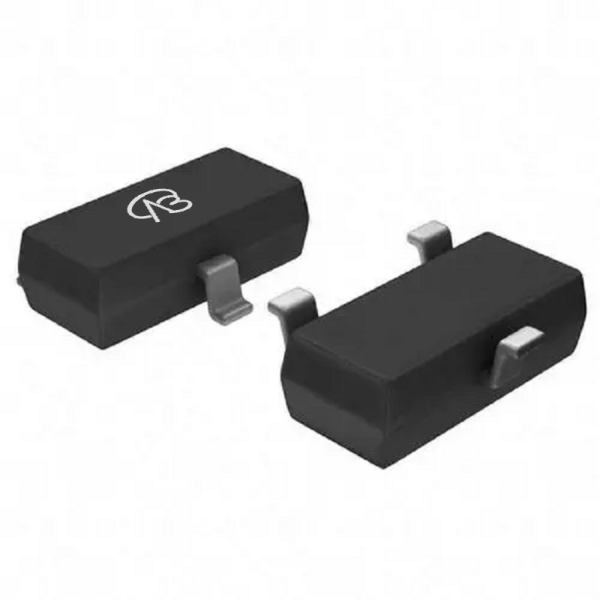
Comparative Analysis: BSS123-7-F (N-channel) vs. VB1106K
Analysis of the Original Model (BSS123-7-F) Core:
This is a 100V N-channel MOSFET from DIODES, using a compact SOT-23 package. Its design core is to provide robust and reliable switching for low-voltage, low-current applications using proprietary trench technology. The key advantages are: a high drain-source voltage rating of 100V, making it suitable for off-line or higher voltage sections, and it is designed for minimal on-resistance with fast switching performance, ideal for driving small loads.
Compatibility and Differences of the Domestic Alternative (VB1106K):
VBsemi's VB1106K is a pin-to-pin compatible alternative in the SOT23-3 package. The main differences lie in the electrical parameters: VB1106K shares the same 100V voltage rating but offers a significantly lower on-resistance (2.8Ω @10V vs. 6Ω @10V for BSS123-7-F). However, its continuous drain current rating (0.26A) is higher than the original's 170mA.
Key Application Areas:
Original Model BSS123-7-F: Its characteristics are very suitable for low-current switching and driving applications requiring a high voltage rating. Typical applications include:
Small servo motor control
Power MOSFET gate drivers
General-purpose low-current switching applications
Alternative Model VB1106K: More suitable for similar low-current, high-voltage scenarios where a lower on-resistance is beneficial for reducing conduction losses, potentially offering improved efficiency in applications like sensor interfaces or signal switching.
Comparative Analysis: DMTH69M8LFVWQ-7 (N-channel) vs. VBQF1606
This N-channel MOSFET is designed with a focus on high-current capability and automotive-grade reliability.
Analysis of the Original Model (DMTH69M8LFVWQ-7) Core:
This is a 60V N-channel MOSFET from DIODES in a PowerDI3333-8 package. Its core advantages are:
Automotive Qualification: It is AEC-Q101 qualified and supported by PPAP, making it suitable for demanding automotive environments.
High Current Handling: It can support a continuous drain current as high as 45.4A.
Low Conduction Loss: Features a low on-resistance of 9.5mΩ @10V.
Compatibility and Differences of the Domestic Alternative (VBQF1606):
The domestic alternative VBQF1606 uses a DFN8(3x3) package and presents a "performance-enhanced" profile. It matches the 60V voltage rating but offers a substantially lower on-resistance of 5mΩ @10V. Its continuous current rating is 30A.
Key Application Areas:
Original Model DMTH69M8LFVWQ-7: Its automotive-grade robustness and high current capability make it an ideal choice for demanding applications. For example:
Automotive power systems (e.g., motor drives, solenoid/valve control)
High-reliability industrial power switches
DC-DC converters in harsh environments
Alternative Model VBQF1606: Is more suitable for applications where ultra-low on-resistance is critical for minimizing losses, such as in high-efficiency DC-DC converters or power distribution switches, especially where the full 45A+ current of the original is not required but lower RDS(on) is prioritized.
Summary
In summary, this comparative analysis reveals two clear selection paths:
For low-current, high-voltage switching applications, the original model BSS123-7-F, with its 100V rating and proven reliability in SOT-23, is a standard choice for gate driving and signal-level switching. Its domestic alternative VB1106K offers a direct package replacement with the advantage of significantly lower on-resistance, making it a compelling option for efficiency-sensitive designs within its current range.
For high-current, automotive or robust industrial applications, the original model DMTH69M8LFVWQ-7 stands out with its AEC-Q101 qualification, high current rating (45.4A), and low 9.5mΩ RDS(on). The domestic alternative VBQF1606 provides a notable advantage in conduction loss with its 5mΩ RDS(on), suitable for upgrade scenarios where thermal performance and efficiency are paramount, even with a slightly lower continuous current rating.
The core conclusion is: Selection depends on precise requirement matching. Domestic alternatives like VB1106K and VBQF1606 provide viable, performance-competitive options, offering engineers greater flexibility in design trade-offs and cost control within a diversified supply chain. Understanding each device's design philosophy and parameter implications is key to maximizing its value in the circuit.

Download PDF document
 Download now


