 中文
中文 English
MOSFET Selection for Power and Compact Dual Applications: AOW482, AON3814 vs. China Alternatives VBN1806, VBBC3210
Number of views:9999
 Back to previous page
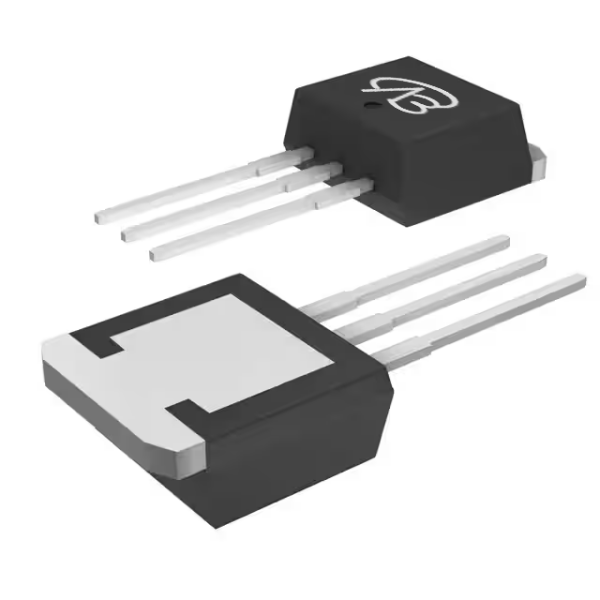
Comparative Analysis: AOW482 (N-channel, TO-262) vs. VBN1806
Analysis of the Original Model (AOW482) Core:
This is an 80V N-channel MOSFET from AOS in a TO-262 package, designed for robust power switching. Its core advantages are high current handling and low conduction loss. It features a continuous drain current (Id) of 11A (up to 105A under pulse conditions) and a low on-resistance (RDS(on)) of 7.2mΩ at 10V gate drive. This combination makes it suitable for applications requiring high power density and efficiency in a single-device package.
Compatibility and Differences of the Domestic Alternative (VBN1806):
VBsemi's VBN1806 is a direct pin-to-pin compatible alternative in the same TO-262 package. It matches the 80V voltage rating and offers enhanced key parameters: a significantly higher continuous drain current of 85A and a lower on-resistance of 6mΩ at 10V. This represents a performance upgrade in both current capability and conduction loss.
Key Application Areas:
Original Model AOW482: Ideal for medium-to-high power applications in 48V-60V systems where a balance of voltage rating, current capability, and cost is needed. Typical uses include:
DC-DC converters and power supplies in industrial/telecom equipment.
Motor drives for power tools or small electric vehicles.
High-side or low-side switching in robust power stages.
Alternative Model VBN1806: Suited for the same applications as AOW482 but where design margins, lower conduction loss, or higher continuous current are prioritized. It is an excellent drop-in upgrade for improving efficiency and thermal performance in existing designs.
Comparative Analysis: AON3814 (Dual N-channel, DFN-8) vs. VBBC3210
Analysis of the Original Model (AON3814) Core:
This is a dual N-channel MOSFET from AOS in a compact DFN-8 (2.5x3mm) package. Its design core is space-saving integration without sacrificing performance. Each channel is rated for 20V and 6A continuous current, with an on-resistance of 17mΩ at 4.5V gate drive. It is built for high-density PCB designs requiring multiple switching elements.
Compatibility and Differences of the Domestic Alternative (VBBC3210):
VBsemi's VBBC3210 is a compatible dual N-channel alternative in a slightly larger DFN-8 (3x3mm) package, offering a significant performance boost. It matches the 20V voltage rating but doubles the continuous drain current per channel to 20A (total package capability). The on-resistance is specified at 17mΩ at 10V, indicating strong performance at a higher gate drive.
Key Application Areas:
Original Model AON3814: Perfect for space-constrained applications requiring dual switches in a minimal footprint. Typical scenarios include:
Load switches and power distribution in portable devices, laptops, and IoT modules.
Synchronous rectification in low-voltage, compact DC-DC converters.
Battery management system (BMS) protection circuits.
Alternative Model VBBC3210: Targets similar compact dual-switch applications but where higher current per channel is critical. Its enhanced current rating makes it suitable for more demanding power paths, higher-current point-of-load converters, or as a performance upgrade in existing designs.
Conclusion
This analysis reveals two distinct selection paths based on application focus:
For high-power, single-device applications using the TO-262 package, the original AOW482 provides a solid balance of 80V rating, 11A continuous current, and 7.2mΩ on-resistance. Its domestic alternative, VBN1806, emerges as a performance-enhanced drop-in replacement, offering superior current handling (85A) and lower conduction loss (6mΩ), making it ideal for designs seeking higher efficiency and power density margins.
For space-constrained, dual-switch applications, the original AON3814 in a tiny DFN-8 package offers an excellent integrated solution with 20V/6A per channel. Its domestic alternative, VBBC3210, provides a significant current capability upgrade to 20A per channel in a similarly compact form factor, making it a powerful choice for next-generation miniaturized designs with higher power demands.
The core takeaway is that selection hinges on precise requirement matching. In the context of supply chain diversification, domestic alternatives like VBN1806 and VBBC3210 not only provide reliable compatibility but also offer compelling performance advantages—delivering engineers greater flexibility, resilience, and value in their design trade-offs and cost-control strategies. Understanding the design philosophy and parameter implications of each device is key to unlocking its full potential in your circuit.

Download PDF document
 Download now


