 中文
中文 English
MOSFET Selection for High-Voltage Power Applications: AOW20S60, AOU3N50 vs. China Alternatives VBN165R20S, VBFB165R04
Number of views:9999
 Back to previous page
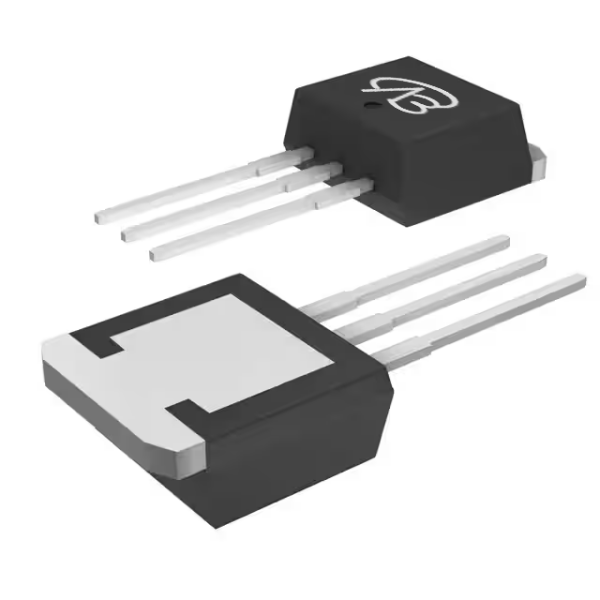
Comparative Analysis: AOW20S60 (N-channel) vs. VBN165R20S
Analysis of the Original Model (AOW20S60) Core:
This is a 600V N-channel MOSFET from AOS in a TO-262 package. Its design core is to provide a reliable and efficient switching solution for medium-power offline and high-voltage applications. Key advantages include a high voltage rating of 600V, a continuous drain current of 20A, and an on-resistance (RDS(on)) of 199mΩ at 10V gate drive. This combination makes it suitable for applications requiring good current handling and voltage withstand capability in a standard through-hole package.
Compatibility and Differences of the Domestic Alternative (VBN165R20S):
VBsemi's VBN165R20S offers a direct pin-to-pin compatible alternative in the same TO-262 package. The key differences are performance enhancements: VBN165R20S features a higher voltage rating (650V vs. 600V) and a significantly lower on-resistance of 160mΩ at 10V gate drive, while maintaining the same 20A continuous current rating. This results in potentially lower conduction losses and improved efficiency.
Key Application Areas:
Original Model AOW20S60: Well-suited for 600V-class applications such as offline switch-mode power supplies (SMPS), power factor correction (PFC) stages, and motor drives where a balance of cost and performance is needed.
Alternative Model VBN165R20S: An excellent upgraded choice for applications demanding higher voltage margin and lower conduction loss. Its superior RDS(on) and 650V rating make it ideal for high-efficiency SMPS, industrial motor controls, and solar inverter circuits where reduced power dissipation is critical.
Comparative Analysis: AOU3N50 (N-channel) vs. VBFB165R04
This comparison focuses on a lower-current, high-voltage switch where package size and cost are often primary concerns alongside basic performance.
Analysis of the Original Model (AOU3N50) Core:
This AOS MOSFET in a TO-251 (IPAK) package is designed for cost-sensitive, compact high-voltage applications. Its core parameters include a 500V drain-source voltage, a 2.8A continuous current, and a relatively higher on-resistance of 3Ω at 10V gate drive. Its compact size and adequate voltage rating make it a common choice for auxiliary power supplies, LED driving, and low-power offline applications.
Compatibility and Differences of the Domestic Alternative (VBFB165R04):
VBsemi's VBFB165R04 provides a pin-to-pin compatible alternative in the TO-251 package. It offers a substantial performance upgrade: a much higher voltage rating of 650V, a higher continuous current of 4A, and a significantly lower on-resistance of 2200mΩ (2.2Ω) at 10V gate drive compared to the original's 3Ω. This translates to better voltage robustness, higher current capability, and improved efficiency.
Key Application Areas:
Original Model AOU3N50: Suitable for low-to-medium power 500V applications such as small offline adapters, LED ballasts, and snubber circuits where minimal cost and compact size are priorities.
Alternative Model VBFB165R04: A superior choice for applications requiring enhanced performance within the same compact footprint. Its 650V/4A rating and lower RDS(on) make it ideal for more demanding low-power SMPS, industrial control auxiliary power, and high-voltage switching circuits needing better efficiency and margin.
Conclusion
In summary, this analysis reveals clear upgrade paths offered by the domestic alternatives:
For the 600V/20A class represented by AOW20S60, the alternative VBN165R20S provides a direct upgrade with a higher voltage rating (650V) and significantly lower on-resistance (160mΩ vs. 199mΩ), enabling higher efficiency and reliability in applications like SMPS and motor drives.
For the compact 500V/2.8A class represented by AOU3N50, the alternative VBFB165R04 offers a substantial performance boost with higher voltage (650V), higher current (4A), and lower on-resistance (2.2Ω vs. 3Ω), making it an excellent choice for upgrading the performance of low-power high-voltage circuits without changing the board layout.
The core takeaway is that selection depends on precise requirement matching. In the context of supply chain diversification, these domestic alternatives not only provide reliable, pin-compatible replacements but also deliver performance enhancements in key parameters. This gives engineers greater flexibility and resilience in design trade-offs, cost control, and performance optimization for their high-voltage power applications. Understanding the specific parameter advantages of each device is key to unlocking its full potential in your circuit.

Download PDF document
 Download now


